


The Reservation You Made Years Ago
At Mingles, Mosu and Kwonsooksoo, a long-imagined dinner meets a restaurant that has been changing too.
Mosu’s abalone taco survived the move. The dining room did not.
Before the restaurant reopened, Sung Anh had considered retiring the dish. One guest had objected strongly enough to make him reconsider—or so he joked in a 2024 interview. Behind the joke was an attachment that had begun to influence the menu. A signature dish can acquire an awkward kind of permanence.
There was considerably more at stake than a taco. Mosu had closed in January 2024, and Anh had separated from his previous business partner. When the restaurant returned in 2025, it occupied a new address in Yongsan. The three-star dining room preserved in older reviews is not the restaurant taking reservations now; the reopened Mosu holds two stars in Michelin’s 2026 guide. An old accolade cannot simply be packed with the crockery and unpacked at the next address. [1][2][3]
For the guest who has kept Mosu somewhere in the future, the distinction is more than administrative. The restaurant may have entered their imagination as a photograph of a room, an account of one course, or a name repeated by someone whose taste they trusted. None of those impressions comes with an expiry notice. A saved article remains quite capable of describing a dinner that can no longer be bought.
Then a table becomes available. The dates work. The price, though substantial, is no longer prohibitive. A few hours must now accommodate an evening that has enjoyed years without practical limitations.
It would be easy to make this the beginning of a disappointment. That would deprive the restaurants of their most interesting possibility: they might be good enough. Not good enough to settle the guest’s life, but sufficiently absorbing to release dinner from that assignment. The taco is still worth being curious about.
Across Seoul, the kitchens have been getting on with their own lives. At Mingles, an early dessert survives within a changing menu. At Kwonsooksoo, sauces prepared years ago now season the food. Continuity is being worked at, rather than left to the name above the door. What part of the old interest still belongs to the meal available now?
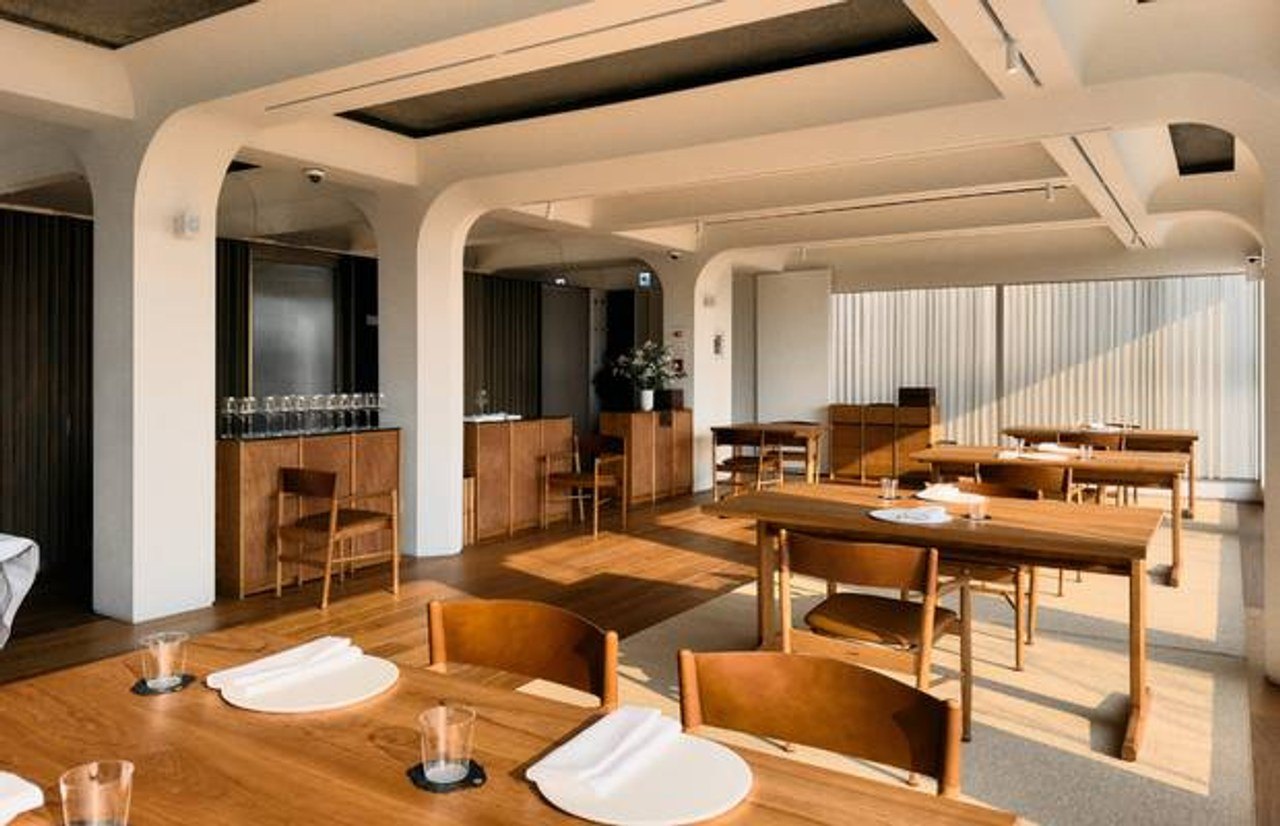
Mosu’s dining room, pictured in its 2026 Asia’s 50 Best listing. The present address opened in 2025.
Photo source: Asia’s 50 Best Restaurants, Mosu listing. Photographer not credited. Source
The dish that stayed
At Mingles, continuity arrives at dessert. Jang Trio was on the menu when Kang Min-goo opened the restaurant in 2014. Ten years later, he told the Korean magazine Den that it had never been removed. The current Michelin assessment still identifies it as a signature. This is a long working life for an idea whose first attraction might easily have been surprise. [4][5]
The construction is specific. Doenjang, fermented soybean paste, goes into crème brûlée. Ganjang, soy sauce, is used with caramelised pecans. Gochujang gives its seasoning to puffed rice. In Kang’s 2024 description, vanilla ice cream and whisky foam complete the dish. The three fermented ingredients do different jobs; they are not interchangeable declarations of Korean identity. [4]
It is a more convincing proposition than adding an unfamiliar paste to a familiar dessert and waiting for the explanation to make it interesting. Custard, nuts and puffed rice provide different densities and different ways of carrying seasoning. There is something to investigate with the spoon. There is also ice cream. An ambitious restaurant is allowed to make its ideas immediately attractive.
The early coverage of Mingles is instructive because it records a restaurant before its present weight of recognition. In November 2015, Time Out described lamb with doenjang and foie gras marinated in plum wine and soybean paste, then wrapped in white kimchi or kelp. Jang Trio was already a favourite. Kang wanted Korean guests to find “newness in familiarity” and visitors to encounter a meal particular to this place. [6]
Those are historical dishes, not promises about the next menu. They show, however, that fermented seasonings were part of the kitchen’s thinking rather than a late addition to its international credentials. The wrapping of the foie gras matters as much as the luxury of the liver. White kimchi changes the proposition; simply putting foie gras on a Korean menu would not.
Kang’s study of jang subsequently became a book project. In a 2023 interview with the Korea JoongAng Daily, he explained the traditional relationship between doenjang and ganjang: fermented soybean blocks steeped in brine yield both the paste and the liquid seasoning. The two are related products of a process, not simply separate condiments selected from a shelf. [7]
That connection makes the dessert more interesting after its novelty has worn off. A kitchen can return to the same ingredients and continue to find distinctions within them. Longevity need not mean a greatest-hits menu being defended against the present.
Mingles now charges ₩320,000 for lunch and ₩420,000 for dinner, before drinks and additions. Its booking notice dates those tariffs from 1 March 2026. The restaurant has three Michelin stars. Those facts explain the current commitment; they cannot establish how much anyone should want it. [8][3]
There is no useful conversion of that dinner into handbags, airline upgrades or a certain number of ordinary lunches. Such comparisons usually tell us what the person making them likes to buy. A meal can be affordable and still feel difficult to authorise. It can also be comfortably within reach and no longer seem worth the expense. Those are different decisions, and neither is clarified by insisting that a memorable evening is an investment.
The more useful question at Mingles is whether the cooking still attracts you when the third star is set aside. A dessert with soybean paste, caramelised pecans and chilli-seasoned rice gives that question some content. There was a reason to want it before the award.
The restaurant carries its interest in Korean making beyond the food. Kang’s 2024 account names furniture, ceramics, glass, cutlery and metalwork by young Korean makers among the collaborations that furnish Mingles. The room is therefore another part of what he is offering, rather than neutral packaging around the cooking. [4]
That ambition deserves to be judged at the scale at which a diner meets it. A cup must be pleasant to lift; a plate must allow its contents to be eaten. Authorship does not excuse awkwardness. When the objects work, however, there need be no competition between appreciating them and enjoying dinner. The restaurant can make room for both kinds of attention. A guest who has wanted the place partly for its appearance has not necessarily misunderstood it.
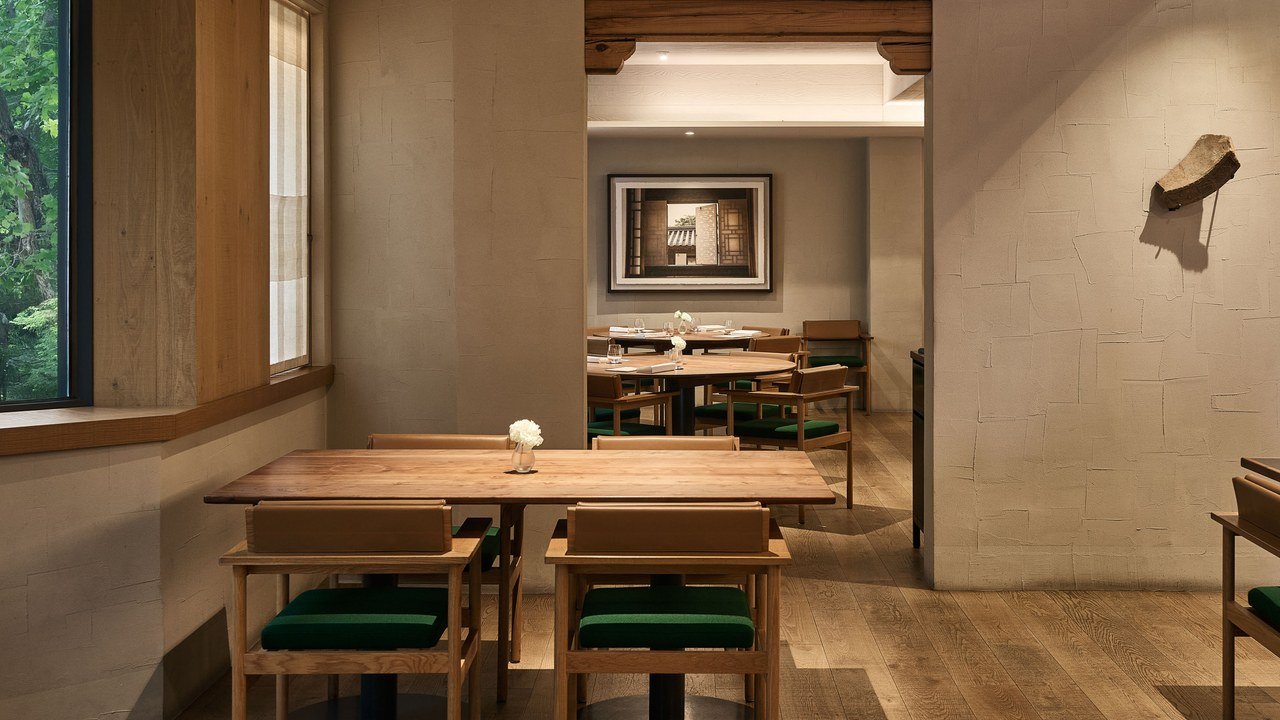
Mingles, from the restaurant’s own image gallery. The photograph’s capture date is not supplied.
Photo source: Mingles, official restaurant gallery. Source
What is in the bowl
The Mingling Pot provides a firmer interruption to all this thinking about the future. In his account of dinner at Mingles on 7 May 2025, the independent reviewer Matthias Ruhl described a hot anchovy broth containing a fish dumpling, a stuffed morel and Hanwoo enclosed in cabbage, with abalone, sea cucumber, peas and angelica. He particularly admired the broth’s concentration and the differences among its contents. [9]
The description identifies a serious culinary task. A bowl with several expensive ingredients is not necessarily a coherent dish. The broth must bring its contents into relation without making them indistinguishable. A dumpling encloses its filling; a mushroom offers another structure; cabbage changes the way the beef is encountered. The interest is in moving between them.
Michelin’s current description emphasises the long-simmered pot and its use of dried seafood, vegetables and fruit. The ingredients named in Kang’s 2024 account were not identical to those in Ruhl’s spring dinner. The dish has a recognisable organising idea without requiring every component to remain fixed. [5][4]
This is exactly the kind of evolution a long-anticipated restaurant ought to be permitted. The guest who saved a menu has preserved a moment, not secured an agreement. A seasonal substitution can be evidence of attention rather than a failure to deliver the image. What matters is whether the dish retains the intelligence that made it worth remembering.
The bowl also complicates the usual picture of contemporary Korean dining as familiar flavours translated into a succession of European-looking plates. Here, the relationships happen within one vessel. The dinner can be carefully sequenced without requiring every ingredient to make a separate entrance.
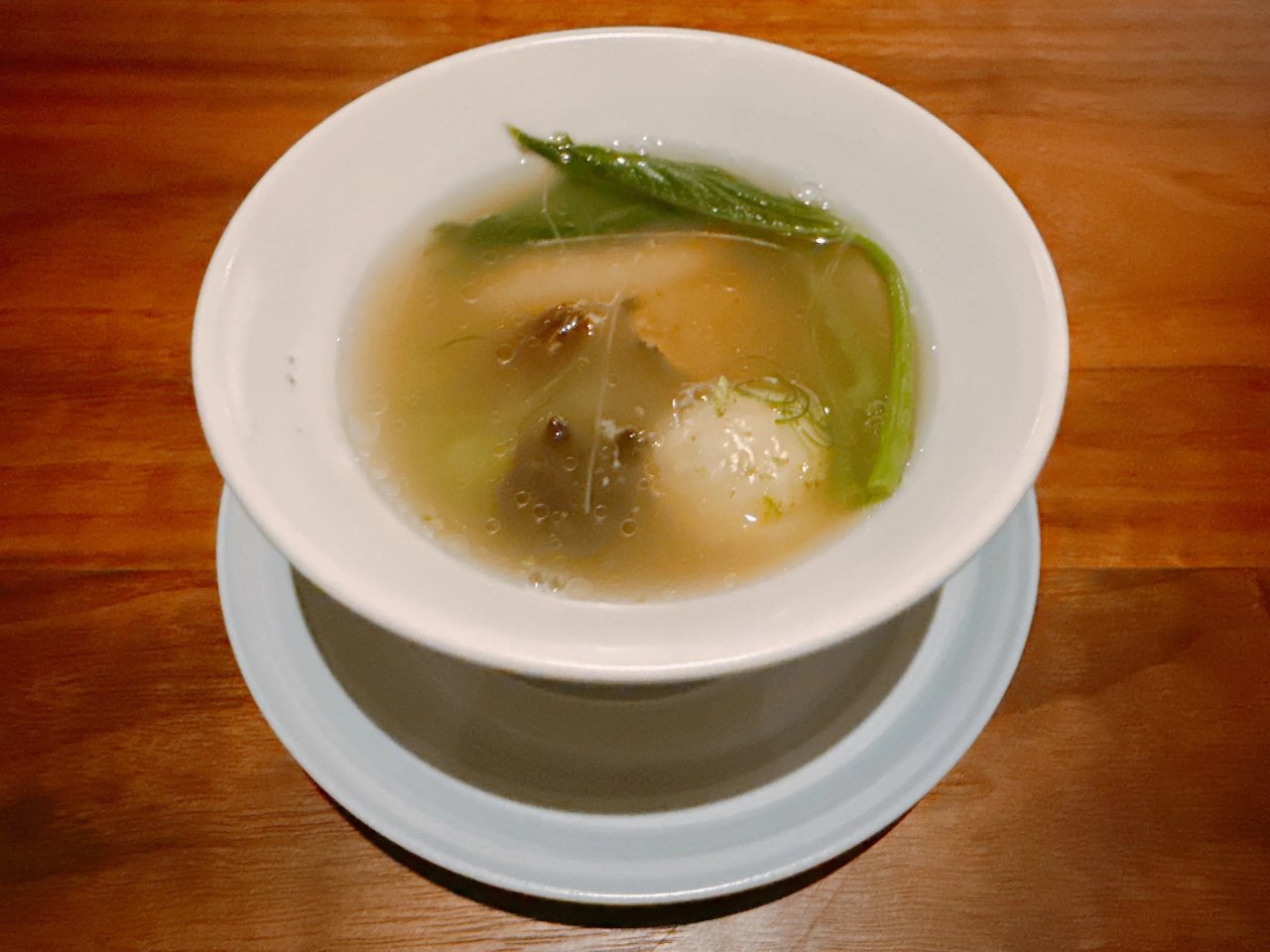
The Mingling Pot at Mingles, 7 May 2025. A historical serving, not a fixed promise about a future seasonal menu.
Photo source: Matthias Ruhl / Travels for Stars. Source
Ruhl’s enthusiasm did not extend evenly across that 2025 meal. He found some early courses less forceful and thought the beef tenderloin could have arrived warmer. His account nevertheless singles out the pot and the signature dessert among the successes. An excellent dinner can contain actual differences in quality. [9]
A guest need not reconcile every course into a single verdict before leaving. Too-cool meat is a defect in the experience that was sold. A dish that simply fails to persuade is not necessarily the same kind of failure. Neither requires the diner to regret the entire evening; nor does a difficult reservation oblige anyone to excuse either one.
At Mosu, the food takes a different route towards distinctiveness. Its current published signatures include flame-grilled abalone in a crisp soybean shell and toasted acorn noodles with butter and black truffle. The taco brings a mollusc usually treated with considerable ceremony into the practical scale of something held in the hand. The noodle dish puts a less internationally prestigious ingredient beneath a very prestigious garnish. [2]
In neither case does the expensive ingredient settle the question. The shell has to be more than a clever container; the acorn has to contribute something the truffle cannot supply. Conversely, it would be perverse to object to the truffle simply because it is expected at this level. Butter and truffle can be delicious. The responsibility is to make their presence useful.
There is a helpful small detail in Ruhl’s January 2023 review of the former Mosu. He liked the thin shell and tender abalone but finished the taco wishing for more acidity. A lime had been on the plate; he acknowledged that he could have used it. His reservation was about his own mouthful, not an accusation that the kitchen had omitted the answer. [10]
The detail is a relief. Not every part of a distinguished dinner needs to be received as a completed statement. Sometimes the guest can season it.
The same historical review admired the acorn noodles more than the burdock tarte. That judgement cannot be transferred to the reopened kitchen. It does establish that these were dishes capable of provoking a preference rather than merely registering as ingenious. Mosu is interesting because transformation might produce something you actively want to eat again, not because transformation is an achievement in itself. [10]
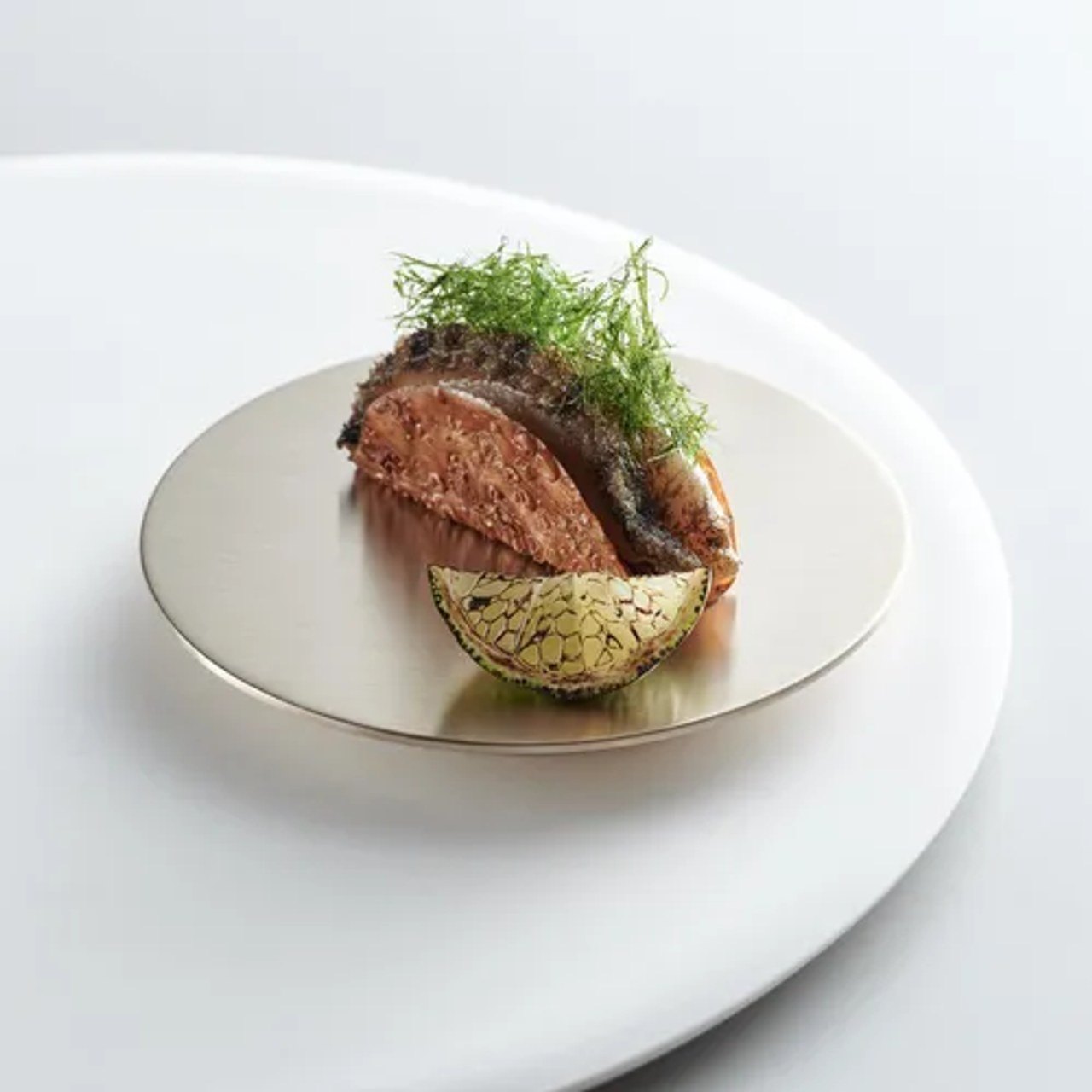
Mosu’s abalone taco, from its current Michelin image gallery. Presentation and garnishes can change.
© Mosu. Photo source: Michelin Guide. Source
A table with its own history
At Kwonsooksoo, time enters the kitchen well before the reservation.
In a February 2026 interview with the Korean culinary publication Mingchu, Kwon Woo-joong described the restaurant’s fermentation operation in Gapyeong. He used a 2021 soy sauce for general cooking and a fish-and-meat soy sauce dating to 2016 for a different purpose. The years were attached to working ingredients, not merely displayed as proof that something had been allowed to become old. [11]
Age is an incomplete culinary argument. An older sauce is not automatically the right sauce. Selection, concentration and placement matter: the seasoning has to suit the food it will touch. What makes these particular vintages significant is that the restaurant has accumulated a stock of choices. Its past can be used in the preparation of a present meal.
Kwonsooksoo opened in July 2015. The individual setting was there from the beginning. Maison Korea’s opening report described specially made furniture intended to accommodate eating from a soban, the small traditional table. The idea was not to deposit a handsome object on an otherwise conventional setting and trust the explanation to complete the effect. The furniture was part of how the meal would be used. [11][12]
The opening report was equally precise about procurement: sweetfish arrived from Bonghwa every other day; white dandelions came directly from farms. These were the terms on which Kwon’s cooking was introduced in 2015, alongside the specially made tables. The promise was attached to named materials and the work of obtaining them. [12]
Such details age more interestingly than a claim to timelessness. The fish belonged to a season and a supply arrangement. The dandelions were not guaranteed to return forever. A reader drawn to that early account might still have good reason to book, but would be going to see where that appetite for ingredients had led. Expecting the kitchen to preserve every dish would defeat part of what originally made it desirable.
The doksang, or individual table setting, does not require solitary dining. Companions can remain together while each person has a defined surface for the food. It is an architectural decision measured in the distance between a diner and a bowl, rather than the height of a ceiling.
A raised platform can, of course, become another way to make food seem untouchable. Its usefulness depends on allowing the guest to eat comfortably from it. The original attention to the table itself is persuasive because it acknowledges that problem. No claim about comfort should rest on a photograph alone; a beautifully proportioned setting still has to work for the body using it.
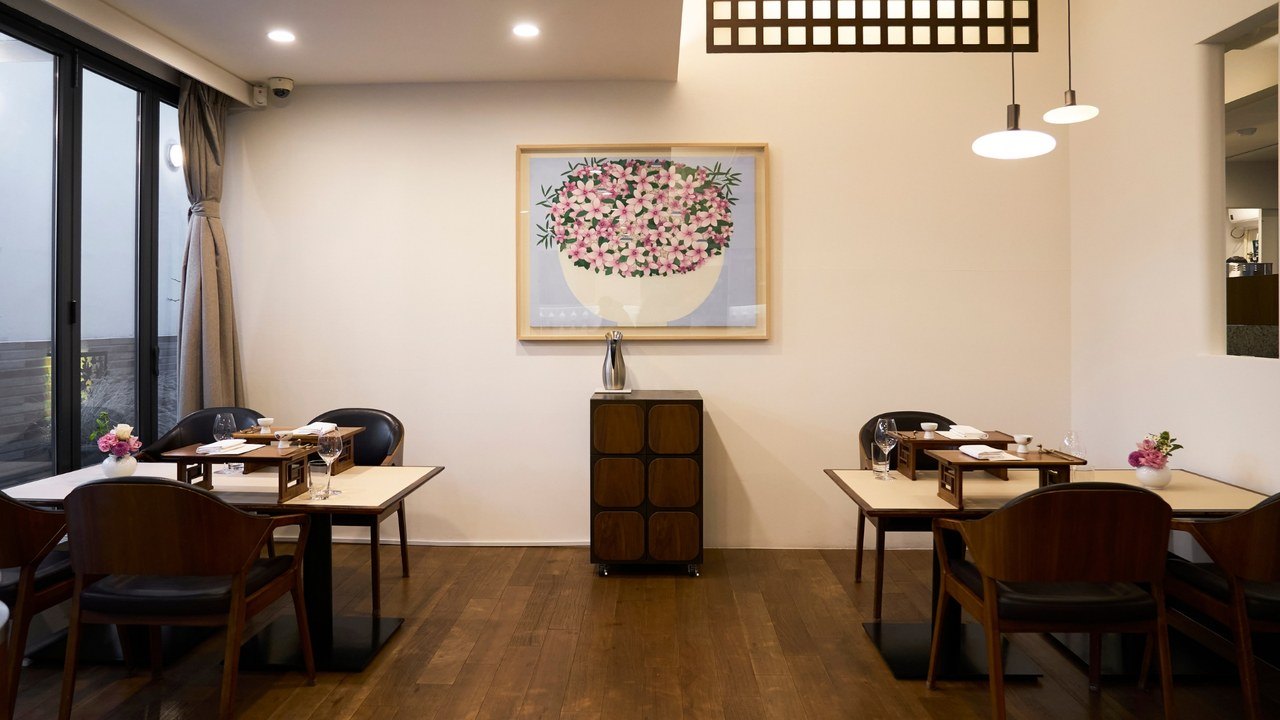
Kwonsooksoo’s individual settings: a small wooden table above the main table. Published in February 2026.
Photography: Joon-taek Jeong / Fun & Benefit Studio, for MINGCHU. Source
The restaurant’s early meal structure is equally revealing. In February 2016, Maison Korea described a juansang of small foods served with traditional Korean alcohol: beef jerky, a preparation of beef and smoked octopus, and cured mullet roe. Fish, pot rice and accompanying dishes followed. The article recommended the restaurant for a formal meeting between a couple’s families before marriage. [13]
The recommendation broadens the meaning of desirability. An address can become important because it appears capable of receiving other people properly. The interest may lie in being a good host as much as in eating a celebrated course.
The current Michelin account still describes an opening of small bites with Korean spirits, an individual setting for the main course and a dessert trolley. The beginning and end give the guest more than a series of solitary objects to inspect. There is selection and grouping within the sequence. [14]
The distinction is worth preserving. A tasting menu can direct attention beautifully, but it can also do so much deciding that the diner is left with little beyond approval. Several foods arriving together allow appetite to participate. A guest can return to something, alternate between dishes or discover a combination without being told that this is the intended way to understand it.
Kwonsooksoo’s kimchi trolley takes that freedom seriously. Mingchu’s 2026 report describes eight varieties, including layered kimchi made by enclosing Hanwoo brisket, octopus, prawn and abalone in fermented white kimchi, then fermenting it again with pear juice and seasoning. Guests are offered a choice. [11]
The lavish filling is easy to notice. The harder question concerns the second fermentation: what does it contribute to the cabbage, the filling and their liquid? The answer needs to be in the mouthful, not in admiration for the process. This is nevertheless a substantial reason to seek out the restaurant. Kimchi is being developed as the centre of a dish rather than deployed as a sharp accessory to a more expensive ingredient.
The trolley makes that intention legible without requiring a lecture. There are different things to choose from. Familiarity need not end curiosity, and unfamiliarity need not be embarrassing. Both are ordinary reasons to ask what is in the bowl.
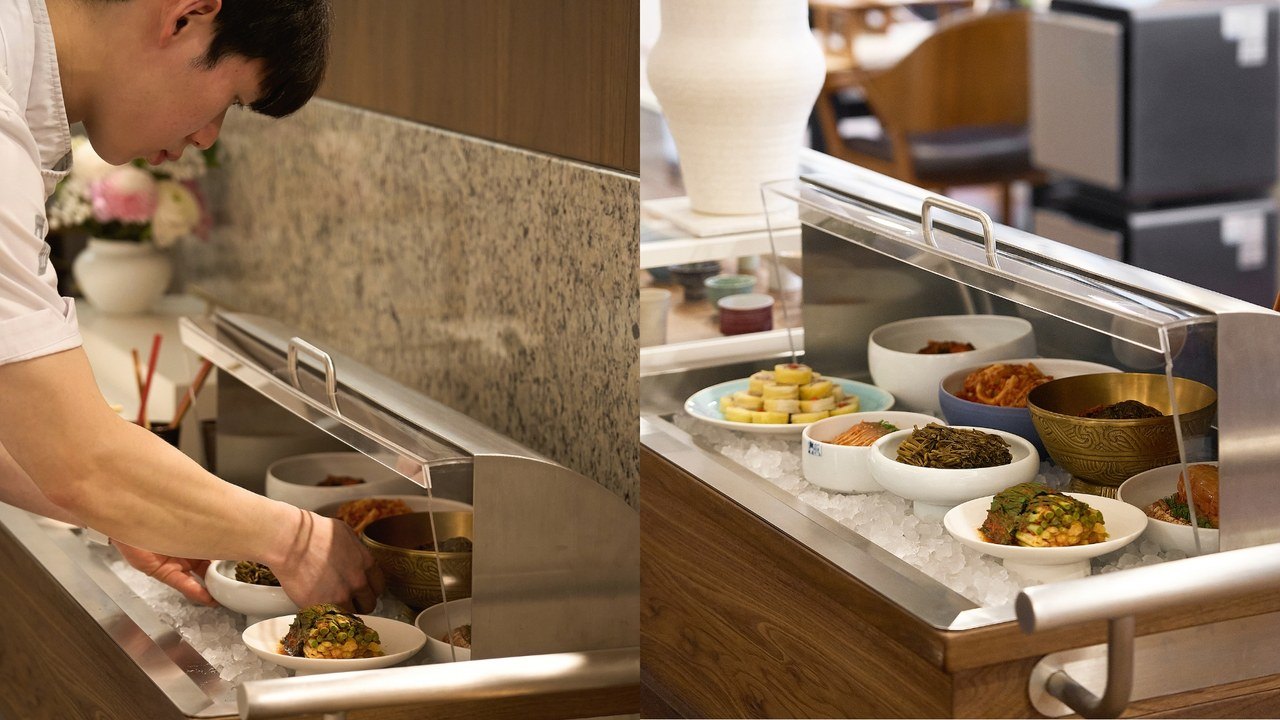
Kwonsooksoo’s kimchi trolley, photographed for MINGCHU’s February 2026 feature. The source’s two-image arrangement is preserved.
Photography: Joon-taek Jeong / Fun & Benefit Studio, for MINGCHU. Source
The evening does not need a perfect guest
One published account of Kwonsooksoo begins with a near-cancellation. The writer of My Annoying Opinions, describing a March 2024 lunch with their wife, had been drained by the programme they were leading and doubted their appetite for another long meal. They went, and counted it among their best meals of the year. The occasion had none of the ideal readiness that an important reservation can seem to demand. The guest arrived tired. [15]
The memorable choice was between lamb and pot rice made with a Korean mountain green. The writer ordered lamb; their wife had the rice, accompanied by banchan and mugwort soup. The lamb was good. The rice prompted envy. A lengthy restaurant review had found its way to a very ordinary dining-table predicament. [15]
The rice was not a moral correction to the surrounding luxury. It belonged to the expensive meal. The account’s charm lies in that change of attention: the prospect of another demanding lunch had given way to curiosity about what was on the other side of the table.
The review praised the service while noting that the staff’s effort to explain everything in English sometimes left details unclear; the writer thought an explanation in Korean to their companion might have conveyed more. The intention to welcome and an imperfect result existed together. [15]
This is a more useful picture of hospitality than uninterrupted reassurance. Good service has to establish what the people at the table need, including when less explanation, a different language or a moment without intervention would help. Warmth is not the same thing as intimacy. A professional can make an evening considerably easier without becoming part of the guest’s personal story.
There are practical limits to that work. Kwonsooksoo’s published reservation conditions restrict the dietary changes its kitchen can make. Its English booking information specifies an additional two-glass wine component for dinner, while its autumn notice revises several course prices. These are matters to settle before making a deposit, especially when the dinner is intended as a gift. A host should not discover at the table that the person being treated cannot comfortably have the meal. [16][17][18]
The same principle applies to the room. Michelin describes different outlooks at the reopened Mosu: one level towards the working kitchen, another towards the sunset. A photograph of chefs at work does not establish the view from every table. Asking which space is being reserved is not fussiness; it is part of deciding what kind of evening to have. [19]
Kitchen activity may be exactly what someone has travelled to see. Another guest may prefer not to divide attention between a companion and the cooks. A room with a view can be worth choosing for the view. There is no more sophisticated answer that applies to everyone.
When the booking has been deferred around work, travel or care for another person, these practical details acquire particular weight. The menu price is only one condition of being able to go. There must also be time to eat it, suitable company when company matters, and an acceptable consequence if plans change. A legible cancellation deadline is part of the welcome.
A dinner that costs this much should not require social endurance in addition to payment. Where a pairing is optional, declining it ought to complete the discussion. Where an additional course costs more, the amount should be clear before a guest agrees. And an explanation of an unfamiliar preparation should help someone eat it, not leave them searching for an appropriately appreciative response. These are ordinary standards of professional service. They do not become extravagant demands because the evening matters.
Nor does knowing a great deal about a restaurant make its guest easier to receive. Years of reading can create an unnecessary reluctance to ask simple questions. The person who has finally obtained the table may feel they should already know what the sauce is, how the course is meant to be shared, or whether a drink will arrive without another order. A short, unembarrassed answer can contribute more to the occasion than a lengthy account of the chef’s philosophy.
What the restaurant cannot do is ensure that the guest feels exactly as expected. The person making a long-postponed booking may still want the cooking and the sense of arrival together. There is nothing embarrassing about that. But the kitchen can be held to account for the cooking in a way it cannot for the arrival. The distinction protects a good meal from an unreasonable task and a paying guest from an unreasonable excuse.
Still on the menu
There is a tendency to make the eventual dinner answer a rather crude question: was it worth the wait? At these restaurants, the wait has altered the object being judged. Mosu has moved. Mingles has continued to revise its dishes around a retained dessert. Kwonsooksoo has ingredients in use that were not yet mature when the restaurant opened. The meal has been developing without the prospective guest’s supervision. [2][5][11]
That need not diminish the pleasure of finally going. It might improve the terms of the encounter. A guest can know enough to be interested without arriving to verify a memory of something they never actually experienced.
There is room, too, to admit that the reservation still matters. Enjoying an expensive dinner does not require an alibi of education or cultural duty. Someone can like the food, the room, the attention and the satisfaction of having arranged the evening. There is no need to discover a disappointment in order to prove that the experience has been considered intelligently.
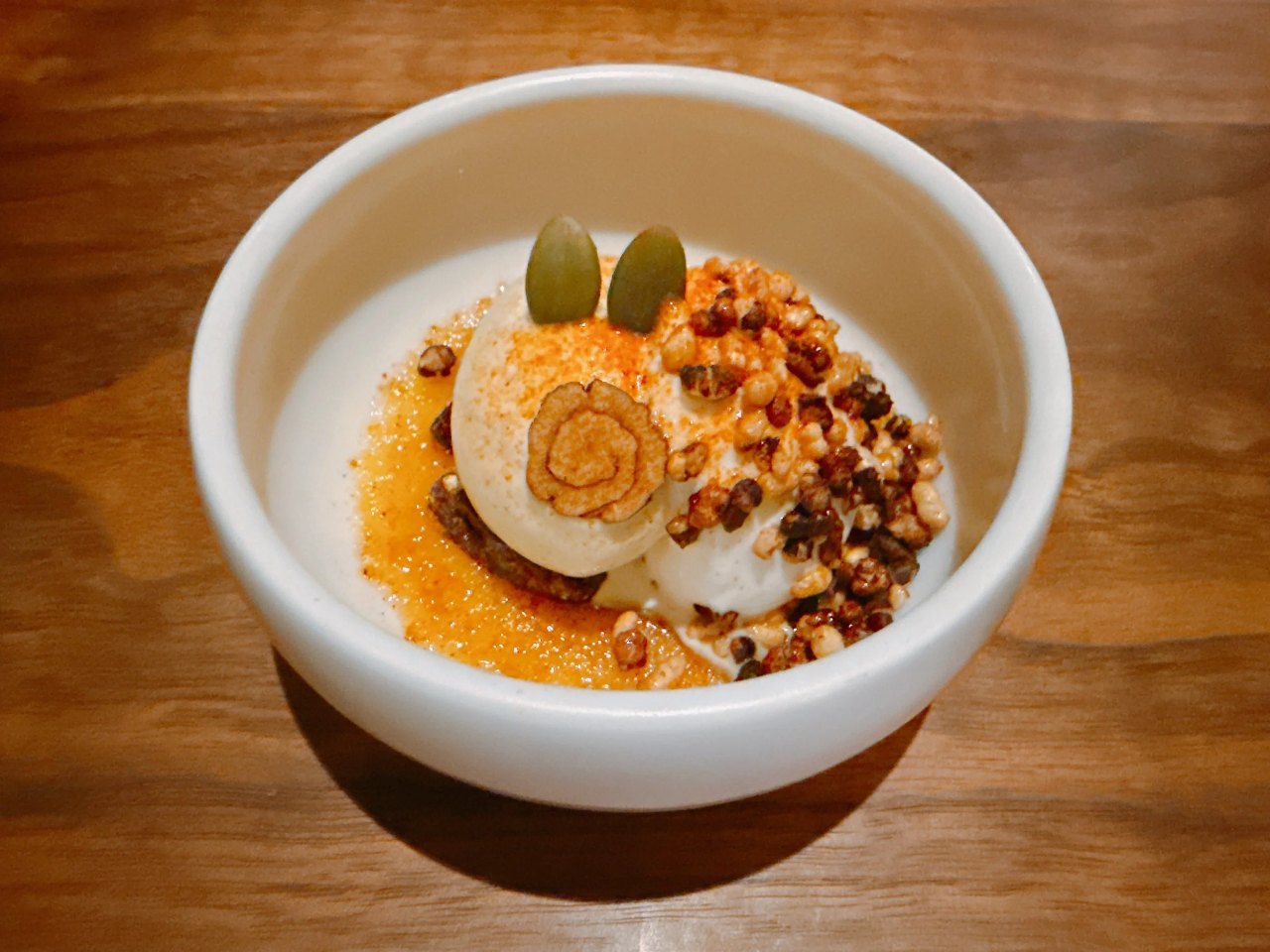
Jang Trio at Mingles, 7 May 2025. The dessert’s core idea predates the restaurant’s present recognition.
Photo source: Matthias Ruhl / Travels for Stars. Source
The changes that make an old plan workable may be unremarkable. Lunch instead of dinner. A different season. A smaller party. The current menu rather than the one preserved in a screenshot. None necessarily makes the experience a diminished version of the original.
Equally, an old restaurant list is not a set of outstanding obligations. The number of years a name has remained on it does not create a debt. A guest may discover that the interest has gone; they may also find that it has become more precise. Less concerned with securing the table, more concerned with what the kitchen has done.
At Mingles, the last course brings the question down to size. It was being written about in 2015 and remains part of Mingles’ identity now. In the photographs and descriptions, the practical appeal survives the accumulated recognition: custard, caramelised pecans, puffed rice, ice cream. There is enough going on to reward attention and enough that is recognisable to make attention pleasurable. [6][5]
The restaurant must keep making the dish worth its place on the menu. The prospective guest can consider a smaller matter. After all this time, doenjang in crème brûlée: does that still sound good?
Before you book
Published information checked 9 October 2026. Prices are per person in Korean won; drinks and additions can change the total. Dated dishes and photographs above are not guaranteed future menu items. Confirm the final charge and conditions in the reservation itself.
Mingles 밍글스
Cheongdam, Gangnam. 2F, 19 Dosan-daero 67-gil. Seasonal Korean tasting menus: lunch ₩320,000; dinner ₩420,000, effective 1 March 2026, before drinks and supplements. Use the restaurant’s CatchTable listing; private rooms are handled by telephone, +82 2 515 7306.
The published deposit-refund scale is 100% at least four days before, 50% three days before, and none within two days or for a no-show. Confirm the deposit amount at checkout. A reliable recurring release schedule and detailed accessibility provisions were not established; ask directly about the relevant date, step-free route and accessible toilet. [8][5]
Mosu Seoul 모수 서울
Itaewon, Yongsan. 4 Hoenamu-ro 41-gil. The address reopened in 2025, not the former three-star dining room. Its current Michelin rating is two stars. The official booking listing indicates lunch ₩320,000; dinner ₩420,000, before drinks. Book through Mosu’s CatchTable page, linked from the restaurant website. Telephone: +82 2 6272 5678.
Consult the dated release notice for the month required; no unchanging release rule is asserted here. Confirm the deposit, cancellation deadline, private-room charges and dietary accommodation before payment. Ask which dining level is allocated and about the full step-free route, including toilet access. [20][19]
Kwonsooksoo 권숙수
Cheongdam, Gangnam. 4F, 37 Apgujeong-ro 80-gil. Korean tasting menus with individual settings. An autumn booking notice lists lunch ₩250,000 / ₩290,000 and dinner ₩390,000 / ₩430,000; older headline tiles still show different amounts. The English conditions separately specify a ₩120,000 two-glass dinner wine component. Obtain a written all-in quote and clarify the non-alcoholic provision. The price-change notice names 1 October but the year was not visible in the accessible excerpt. [18][17]
Book through CatchTable or contact +82 2 542 6268. Published online conditions specify two to eight guests and dietary limitations. Standard deposit refunds: 100% at least four days before; 50% two–three days before; none within one day. For five or more guests, the website specifies a seven-day full-refund deadline, with no refund thereafter. Cancellation/change requests go by email under the restaurant’s terms. Confirm the applicable release notice, final checkout conditions and physical accessibility directly. Historical menus and the former address are not the current offer. [16]