



THE THINGS WE STILL WANT
In Cheongdam and elsewhere in Gangnam-gu, and across the river in Hannam, five places test the distance between wanting an exceptional experience and enjoying it.
Reporting note: This feature draws on Korean- and English-language reporting, published interviews, project documentation and public listings. It is not based on visits or tastings conducted for EDIT27. Historical dishes and individual accounts are attributed. Photographs are archival; their dates and subjects are identified in the captions.
There is a compelling argument for an expensive dinner in a parcel of crisp chicken skin.
In a July 2025 account of Eatanic Garden, published in MINGCHU’s Korean-language edition, Chen Bin-yan described Son Jong-won’s interpretation of samgyetang: chicken, sticky rice, chestnut, ginkgo and ginseng enclosed in the skin, with a herbal broth served separately in a little teapot. The soup had become two things to eat and drink, without abandoning the ingredients that made the original worth reconsidering.
You do not have to believe this improves on samgyetang to want it. The point is not that a familiar dish has finally become important enough for expensive crockery. It is that someone has found another way of arranging its pleasures. A meal can reward expertise without requiring its ingredients to have been rare, its diner to be important, or its reference to be obscure.
Chen also described cod steamed with radish and aromatics inside kelp, then given a concentrated sauce containing semi-dried pollock. His assessment emphasised the sauce’s glossy concentration and appetite-provoking salinity. These are dishes documented on an earlier menu, not promises about tonight’s courses. But they establish something more useful than a photograph of a dining room: a culinary reason to investigate the reservation.
Eatanic Garden occupies the thirty-sixth floor of Josun Palace in Yeoksam-dong. Its booking listing puts lunch at ₩250,000 and dinner at ₩370,000. Two dinner menus therefore cost ₩740,000, before anything additional. That number deserves to remain legible even when the writing turns to memory, seasonality and care.
For someone who can afford it, a meal this expensive may be an entirely sensible celebration. The pleasure of arranging something substantial for another person should not have to pass an examination in emotional security. Nor should a reader who finds the price prohibitive be told that the problem is an insufficient appreciation of craftsmanship. Affordability and quality answer different questions. Neither cancels the other.
The difficulty begins when a good dinner is expected to do a second job: certify that the diner has reached the right life.
A neighbourhood contest makes that expectation conveniently geographical. Cheongdam, Hannam, Gangnam: choose the correct address and the rest will apparently follow. Except Cheongdam is already within Gangnam-gu. Hannam is in Yongsan-gu, across the river. Eatanic Garden’s Yeoksam address is neither Cheongdam nor the shopping area around Gangnam Station. Later, Pine & Co will take us to Sinsa-dong, also within Gangnam-gu. There is no honest three-way administrative contest here.
There is, instead, a proposition to test: whether an address can reliably tell us what kind of pleasure we will receive, how much effort it will require, or how confidently we will know what to do with it. These five places offer considerably less agreement than their reputations might suggest.

Photograph © kallerna / Wikimedia Commons · CC BY-SA 4.0 · Uncropped; display size reduced.
The useful kind of effort
Eatanic Garden does ask for commitment. Since December 2025, the hotel has directed reservations through Catchtable, explaining that heavy telephone traffic had made getting through difficult. Its business-casual dress requirement and exclusion of children under eight also help define whom the dinner will suit. Those are conditions to understand before committing, not proof that the restaurant enjoys making people beg.
A fixed menu creates obligations on both sides. The diner gives up some choice; the kitchen undertakes to make that surrender rewarding. A reservation system can distribute a finite service more coherently than a perpetually ringing telephone. But the successful booking is not part of the meal’s flavour. It would be a peculiar form of criticism to award extra points because obtaining dinner had already consumed an afternoon.
What matters after the effort is whether the restaurant helps the guest use what has been bought.
The cooking’s relationship to Korea was not simply instinctive. In a 2023 interview with The Korea Herald, Son spoke of lacking confidence in his knowledge of Korean food, despite being Korean, and wanting to study royal cuisine. International culinary training had not supplied automatic command of the traditions he was now interpreting. That history makes the cod more interesting than an “East meets West” label would. The question is what the kitchen discovers by returning to a sauce.
The restaurant’s illustrated ingredient cards offer one way into the cooking. They also suggest a useful distinction: between leaving someone a text they can return to and insisting that every meaning be delivered aloud before they eat. A card can remain on the table while a conversation continues. Information need not always arrive as an interruption.
In an interview with Michelin, Son described wanting unobtrusive, well-timed service and a room in which guests could laugh. An operator’s intention is not proof that every evening succeeds. But Michelin’s 2024 service award to Eatanic Garden’s team provides independent recognition, rather than merely another adjective supplied by the hotel.
This presents a problem for the fashionable assumption that an overbearing dinner can be cured by a plainer room. The more persuasive alternative here may be a capable team in an unapologetically expensive one.
Explanation can deepen pleasure. Without it, a diner might miss the relationship between the cod and the pollock preparation. But hospitality should distinguish between offering that connection and requiring a visible demonstration that it has landed. A guest absorbed in a conversation has not necessarily failed the chef. Neither has someone who finds a dish delicious without being moved by its story.
There is work on the other side that should not disappear beneath the word “effortless.” In that 2023 Korea Herald interview, Son said he had not taken time off during his first year in charge. That is a historical account, not a description of current schedules. It should not be treated as an amenity. A guest can admire concentrated work without accepting uninterrupted work as its necessary proof.
The desirable bargain is not that nobody works. It is that the work contributes to dinner rather than becoming something the diner must continually acknowledge. The chicken parcel remains the test. The cooking still has to carry the evening.
What happens after the beautiful entrance
Cheongdam’s House of Dior Seoul makes a different kind of transformation: the apparent conversion of a building into cloth.
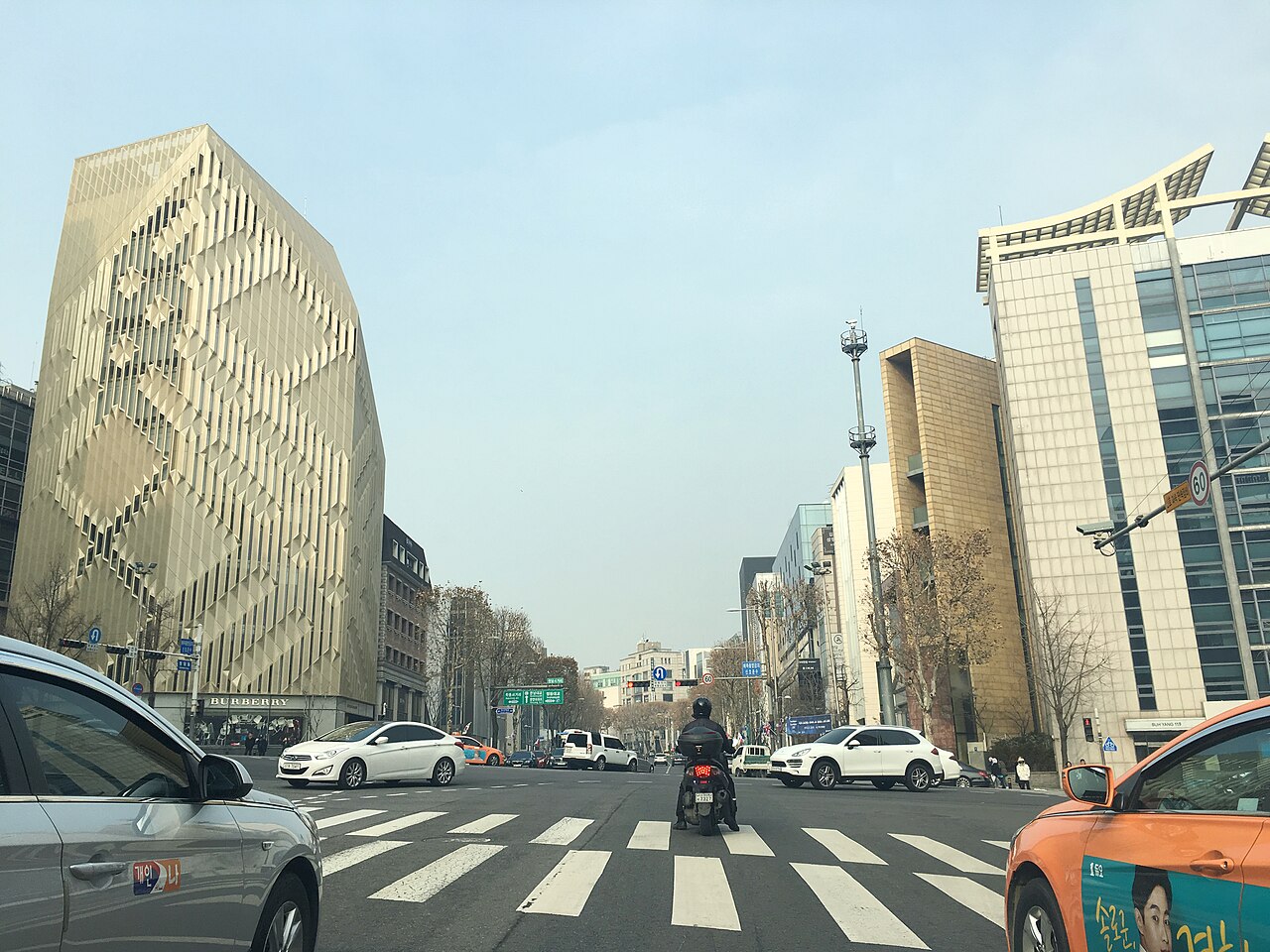
Christian de Portzamparc’s façade rises in large white folds, its entrance caught between curved shells. The published project documentation identifies those shells as moulded fibreglass, not stone or fabric. It names the Korean teams involved in making the effect possible, including DPJ & Partners on local architectural and façade development and Design Base on the fibreglass work. Peter Marino designed the interiors.
The building is a sound reason to go to 464 Apgujeong-ro even before deciding whether to buy anything. Its achievement is not that it hides commerce. It makes a difficult construction look improbably supple. The seams and joins belong to that achievement, too. A façade can be advertising and accomplished architecture at the same time.
Photograph © Cyberdoomslayer / Wikimedia Commons · CC BY-SA 4.0 · Uncropped; display size reduced.
Within the brand’s offer, the black lambskin medium Lady Dior is listed at ₩9.2 million. Cannage quilting gives the body its disciplined pattern; the pale-gold-finish D.I.O.R. charms introduce a little dangling excess. The detachable strap permits another way to carry it. None of this requires apologising for the letters.
A recognisable object can be pleasurable partly because it is recognisable. Recognition may make a gift intelligible. It may preserve a design someone has liked for years. It may simply be part of the composition: remove the conspicuous detail and the object becomes less itself. To insist that an expensive bag would be more sophisticated without its name is not neutral judgment. It is another styling preference.
But the listed materials and the visual achievement do not tell us whether this is the right bag to live with. At twenty-four centimetres across, it is a particular size, not an abstract promise of elegance. Inspection should include the opening, the strap, the way the handles meet the hand, and the care the leather will require. That is not a philistine interruption of the romance. It is how a wanted object becomes a usable one.
The boutique listing offers English and Korean service and identifies departments for fashion, jewellery, watches and homeware. It is a retail address, not an invitation to roam private client areas. Looking at the building and shopping in the store are different activities. Neither needs to be disguised as cultural research to be legitimate.
A Korean customer’s account complicates what such an address is supposed to guarantee.
Yonhap reported in May 2026 on a customer identified as A, who had used a beaded Dior bag for more than eight years before seeking repair. The transaction involved a department-store concession in Gangnam-gu, not House of Dior Seoul, and a different model from the black lambskin bag discussed here.
According to the report, A was told the bag needed to go to Paris, but it was repaired by a Korean independent business. It came back after more than a year. A later recognised it in the repairer’s social-media footage. Yonhap reproduced an apology message supplied by the customer and reported Dior’s offer, through the customer’s lawyers, of repair in Paris or a refund. A June follow-up recorded the transfer of the resulting complaint to Seoul’s Namdaemun police. These reports establish a dispute, not a court finding or a pattern across Dior stores; a subsequent resolution was not established for this article.
It would be particularly lazy to insinuate that a Korean repair must be inferior to a French one. The relevant questions concern accurate information, authorised work and responsibility. “Paris” is not itself a repair technique.
What makes A’s account emotionally significant is its resistance to the usual story of luxury fatigue. The documented action was not a new purchase but an attempt to keep using an existing object. We do not know which occasions it had accompanied, whether it had been a milestone or a whim, or whether its meaning had changed. We do know that its owner wanted it repaired.
That request asks a company to remain useful when the customer’s money is no longer new.
Buying through a recognised house can reasonably be intended to reduce uncertainty. When a customer instead has to reconstruct the whereabouts of an object, examine footage and contest explanations, the direction of service has reversed. The buyer is doing investigative work to understand what was presented as professional care.
None of this proves that the bag should never have been wanted. It establishes why wanting one need not mean suspending judgment after the sale.
The alternative has an author
Across the river, Chapter1 Hannam offers a tempting change of visual vocabulary. But it would be a mistake to arrive expecting to have left the business of persuasion behind.

Photograph © Glabb / Wikimedia Commons · CC BY-SA 3.0 · Uncropped; display size reduced.
The current shop occupies the commercial level of Nine One Hannam at 91 Hannam-daero. This is a visitable retail destination, not access to the residential development. The founders’ history also resists a neat opposition between neighbourhoods: Chapter1 began in Sinsa-dong, Gangnam-gu, in 2013, before adding a Hannam branch in 2020. Those dates describe the business’s development, not a claim that its premises have remained unchanged.
In a 2020 Korean-language interview with JoongAng, Kim Ga-eon and Koo Byung-jun described wanting to present good things rather than merely fashionable ones. Kim came from fashion visual merchandising; Koo had studied design and worked in exhibitions. They explained how they downplayed individual brands, composing products within Chapter1’s larger image. Kim wanted Korean craft to receive greater recognition.
The project is not less commercial because its branding operates through selection. Selection is the service. The founders’ professional experience helps explain why an object might become desirable here when it could have been overlooked elsewhere. There is nothing inherently fraudulent about that intervention. Good retail can make work intelligible, bring makers an audience and allow unlikely things to be considered together.
It can also sell the reassurance of not appearing to need reassurance.
A familiar logo tells its story quickly. A room of less familiar objects may require more explanation. That can be interesting, rather than exclusionary. The relevant distinction is whether the explanation opens the object to a newcomer or makes knowledge a condition of belonging. The absence of a logo settles neither question.
Consider Jeon Bo Kyung’s leaf-shaped bowl, listed in Chapter1’s catalogue at ₩150,000. It is made from paper-mulberry stems finished with lacquer, approximately fourteen and a half centimetres long. The product photographs show a shallow black form with an irregular, ridged interior and upturned ends. A leaf’s tendency to curl has been translated into a small vessel.
It is an appealing thing to imagine on a table, whether carrying dessert or doing nothing. Its achievement need not depend on the buyer recognising its maker. Nor must every object justify itself through frequent use. The desire to look at a particular form is a substantial reason to own it.
The care notice is equally specific. Pressure or impact can damage the material. The bowl must not go into a dishwasher, microwave or oven; the lacquer’s colour can change. The listing states that after-sales repair is unavailable. Displays vary between branches, so the catalogue is not evidence that this particular piece is sitting in Hannam today.
These details prevent a familiar critical shortcut. The handmade object is not automatically the durable alternative to branded fashion. Here, delicacy is part of the bargain, and repair is not promised. That does not make the bowl bad. It makes it a poor recommendation for someone seeking carefree tableware, and a potentially good one for someone who wants this form enough to handle it accordingly.
There is a difference between accepting a disclosed limitation and discovering an undisclosed one later. The bowl asks its owner for care before purchase. In the Dior dispute, the contested issue is what the customer was told after handing over an object. It would be dishonest to collapse those situations into an equivalence between two retailers.
It would be equally dishonest to grant Chapter1 moral superiority merely because its preferred vocabulary suits a design magazine.
EDIT27 participates in this economy. An obscure maker, a difficult material and a carefully chosen photograph can become another set of credentials we encourage readers to display. Our preference for the less obvious is no guarantee that we have escaped the obvious mechanism. Sometimes the most useful editorial intervention is to stop explaining why a bowl reveals a better person and explain why it cannot go in the dishwasher.
That information does not diminish its beauty. It permits a decision.
An entrance fee is not an initiation
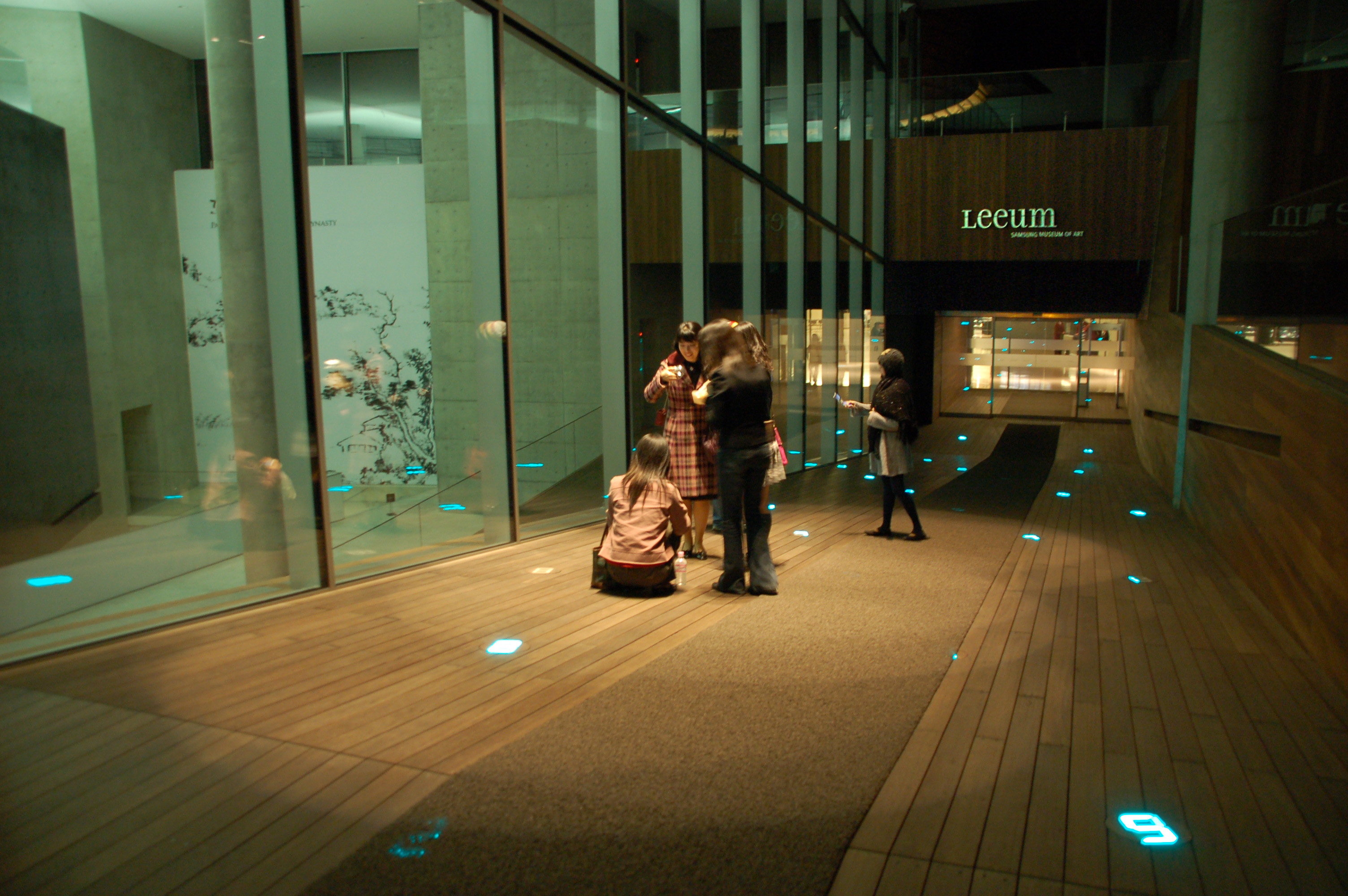
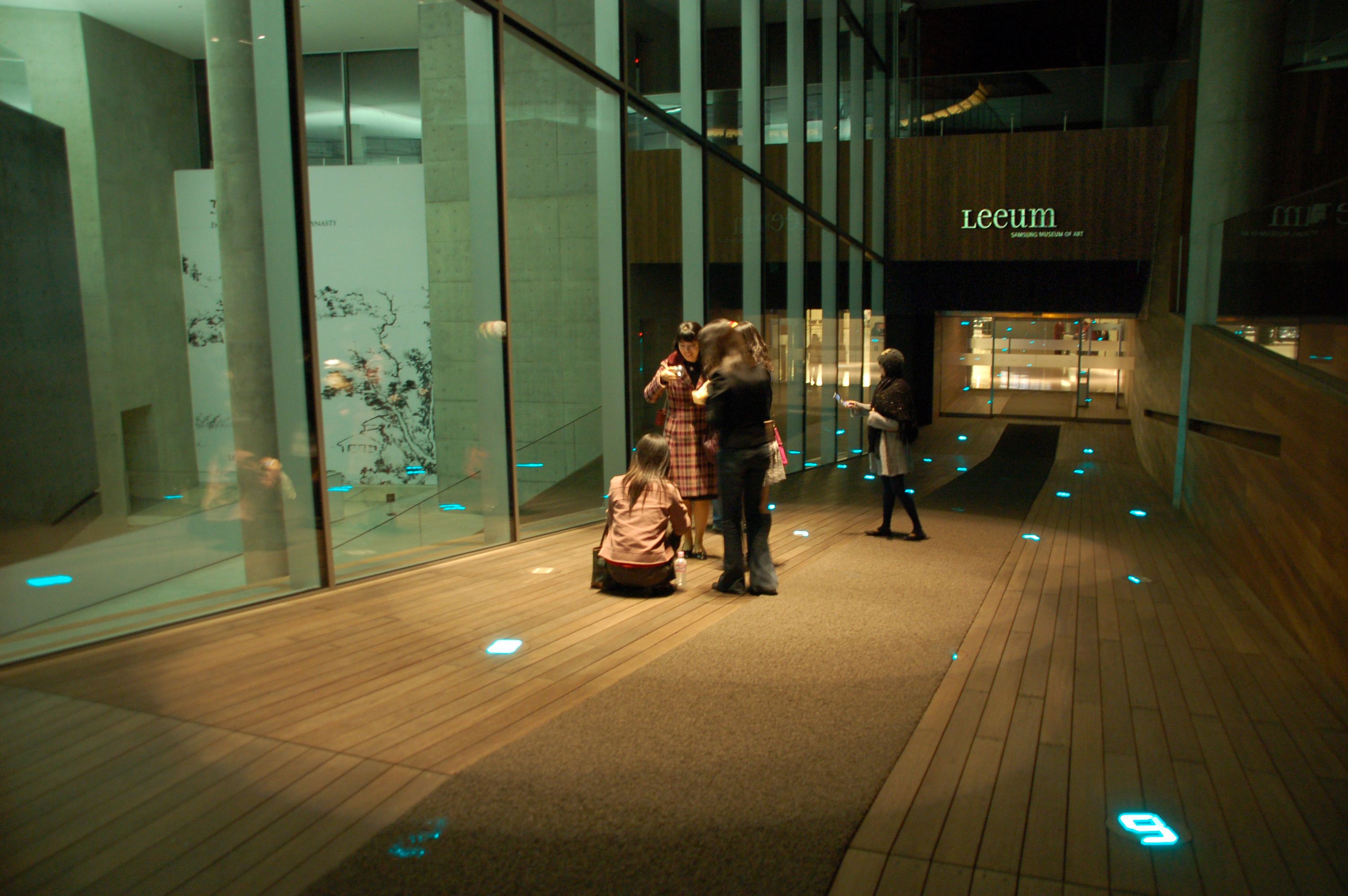
Leeum, also in Hannam-dong, changes the nature of the transaction more decisively. A museum ticket purchases access to an exhibition, not possession of an object. That is a different opportunity, not a purified version of shopping.
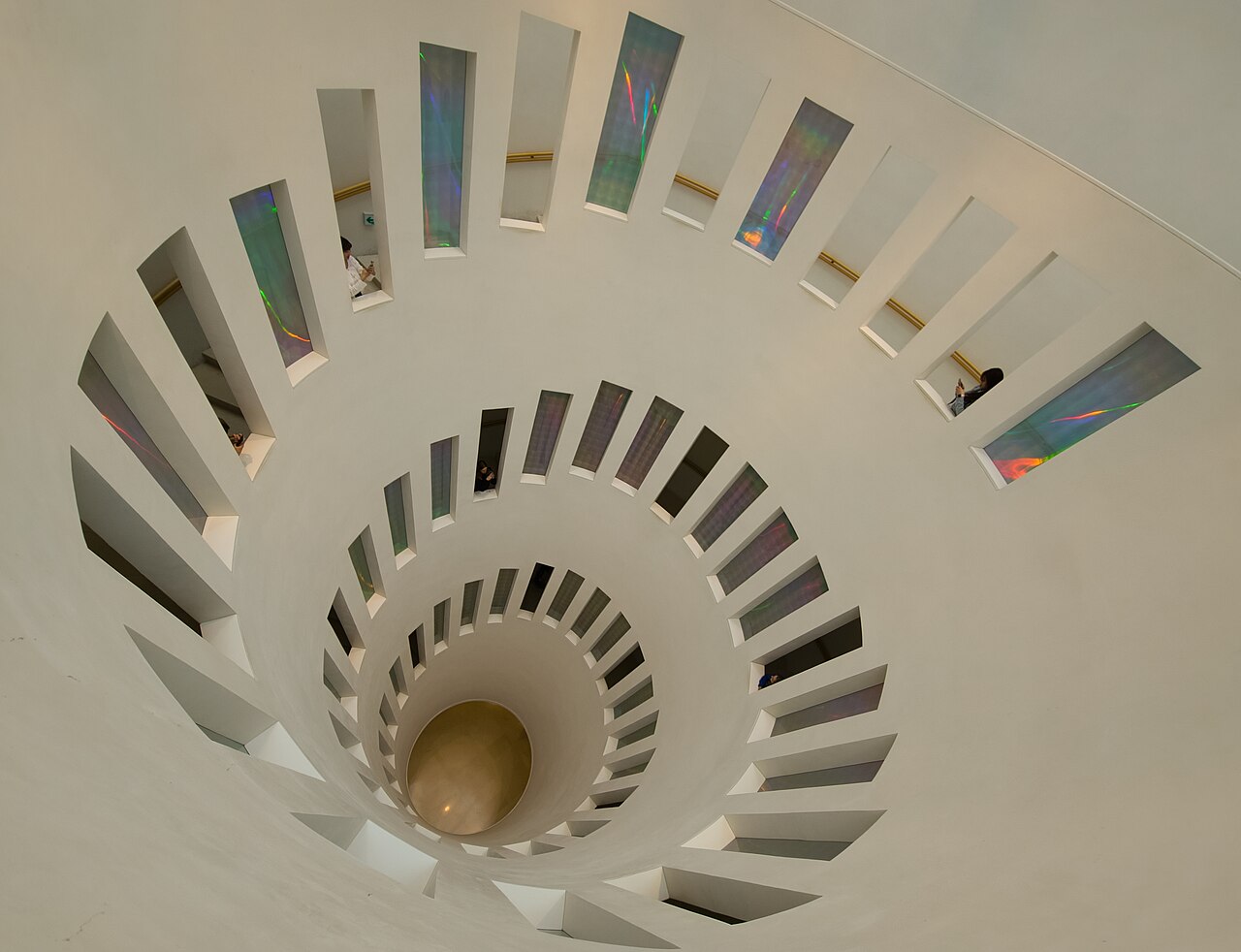
Koo Jeong A’s OUSSSMOS, running from 5 September to 27 December 2026, brings around thirty-five works into the museum’s galleries and other spaces. Among them is Gravitta, a luminous structure derived from the curves of a skatepark. Another work, Mobiousss, is an eight-metre stainless-steel commission whose configuration resolves into an infinity sign from above, as described in News1’s reporting on the exhibition. These are reasons to visit, not simply reasons to be seen visiting.
Photograph © takato marui / Wikimedia Commons · CC BY-SA 2.0 · Uncropped; display size reduced.
The contrast between the two is useful. One borrows a structure associated with movement; the other changes its legibility with the viewer’s position. You need not accept a theory of luxury, or already possess the correct artistic vocabulary, to have something to investigate. The physical arrangement supplies an initial question. The vocabulary can follow.
The exhibition also includes R, a series begun in 2005 extending to 1,001 drawings. Works are rotated during the exhibition, while others remain in their boxes. Here, an incomplete view is part of the presentation, not something a visitor can necessarily correct through greater diligence. The desire to see everything encounters an artistic decision. It is worth understanding that decision before mistaking it for either profundity or obstruction.
Difficulty is not always a sales technique. A work can require a change of position, patience or information because those things materially alter the encounter. The test is different from whether a shop assistant can give a clear account of repair. Art does not owe every visitor an immediate conclusion. A museum does owe visitors intelligible conditions for entering and finding their way.
Koo herself complicates the romance of modest materials. Speaking to The Korea Herald around the exhibition, she rejected the idea that sugar cubes and pencil leads were inherently fragile, poetic substances: they were industrial products, readily obtainable. She described the difficulty of being an artist approaching people who did not necessarily understand the usefulness of the proposed work.
This is a better corrective to luxury mythology than another celebration of simplicity. Neither the unassuming material nor the famous institution excuses us from looking at what has been done. The artist’s account also gives the work a social edge that photographs alone would miss: making something happen can require negotiation with people who have no obligation to find the artist important.
Leeum’s financial and cultural setting is not concealed. The museum names Samsung Life as sponsor of OUSSSMOS and the Chanel Culture Fund as supporter of the parallel Idea Museum programme. Those connections belong in the account. They do not establish that the art is insincere, any more than a fibreglass couture façade becomes architecturally worthless because it sells clothing.
For visitors, the immediate distinctions are practical. OUSSSMOS costs ₩18,000 for a standard adult ticket. The museum lists its traditional-art permanent exhibition as free. Advance reservations open fourteen days ahead; walk-in ticketing is possible, with capacity-related waiting. An exhibition should not be described as accessible without saying what access involves.
Nor does a ticket turn a visitor into a more sophisticated consumer than the person inspecting a handbag. There is no reason the same person should not enjoy both. What matters is whether the hours at the museum produce an encounter worth having, not an alibi for the other purchase.
Photograph: lumoplank / Wikimedia Commons · CC0 · Uncropped; display size reduced.
The game you do not have to play
The most useful answer to the question of effort comes from a place that could easily have supplied the opposite one.
Pine & Co is a basement cocktail bar in Sinsa-dong, Gangnam-gu. Its entrance has been staged to evoke an older Seoul residential doorway; a bell is part of the approach, as described in MINGCHU’s August 2026 interview with its founders. This is designed nostalgia, not evidence that a surviving neighbourhood relic has accidentally become fashionable. On paper, the setting appears well equipped to make ordering a drink into a demonstration of belonging.
Published criticism gives the technique something sensory to answer for. In a February 2025 account, the writer behind Adventures of the Barstalker singled out Nuruk, a whisky highball incorporating the Korean fermentation starter. Served in a bowl, it brought the aroma of roasted barley into the act of drinking. That is a meaningful use of presentation: the vessel affects what can be smelled, rather than merely making a photograph less predictable.
Public menu listings give ₩26,000 for Nuruk, an indicative price rather than a tariff confirmed directly with the bar. It is not a cheap-drink escape from expensive Seoul. It offers a smaller commitment, with a different kind of pleasure, and should be judged on those terms.
In Jain Song’s MINGCHU interview, co-founder Hong Du-ui described a change in his ambition. Initially, he wanted to show people something unprecedented. Now he questioned whether doing what he personally wanted was enough. His partner, Park Beom-seok, emphasised the guest’s whole experience rather than the isolated cocktail.
There is no confession of failure here. What is interesting is the adjustment in the audience for the work. Novelty aimed principally at proving the maker’s originality and novelty that gives the customer pleasure may produce similar-looking drinks. They are not the same operating ambition.
The distinction appears in a small decision: Pine & Co retains a paper menu alongside its retro-game digital version. Play is available without being the sole route to ordering. Hong also described allowing staff to propose drinks and change the menu platform.
That is an owner’s account of working authority, not independent evidence about pay or schedules. Still, authority to change something is more substantial than a vague instruction to care.
The interview also documents Bingsu: a gin-and-tonic reworking with coriander gin, mandarin sorbet and lime, eaten with a spoon.
The pleasure proposed is neither austere nor especially discreet. A cocktail can be cold, playful and conspicuously clever. The point is not to eliminate its theatre. It is to leave the guest some choice about participating.
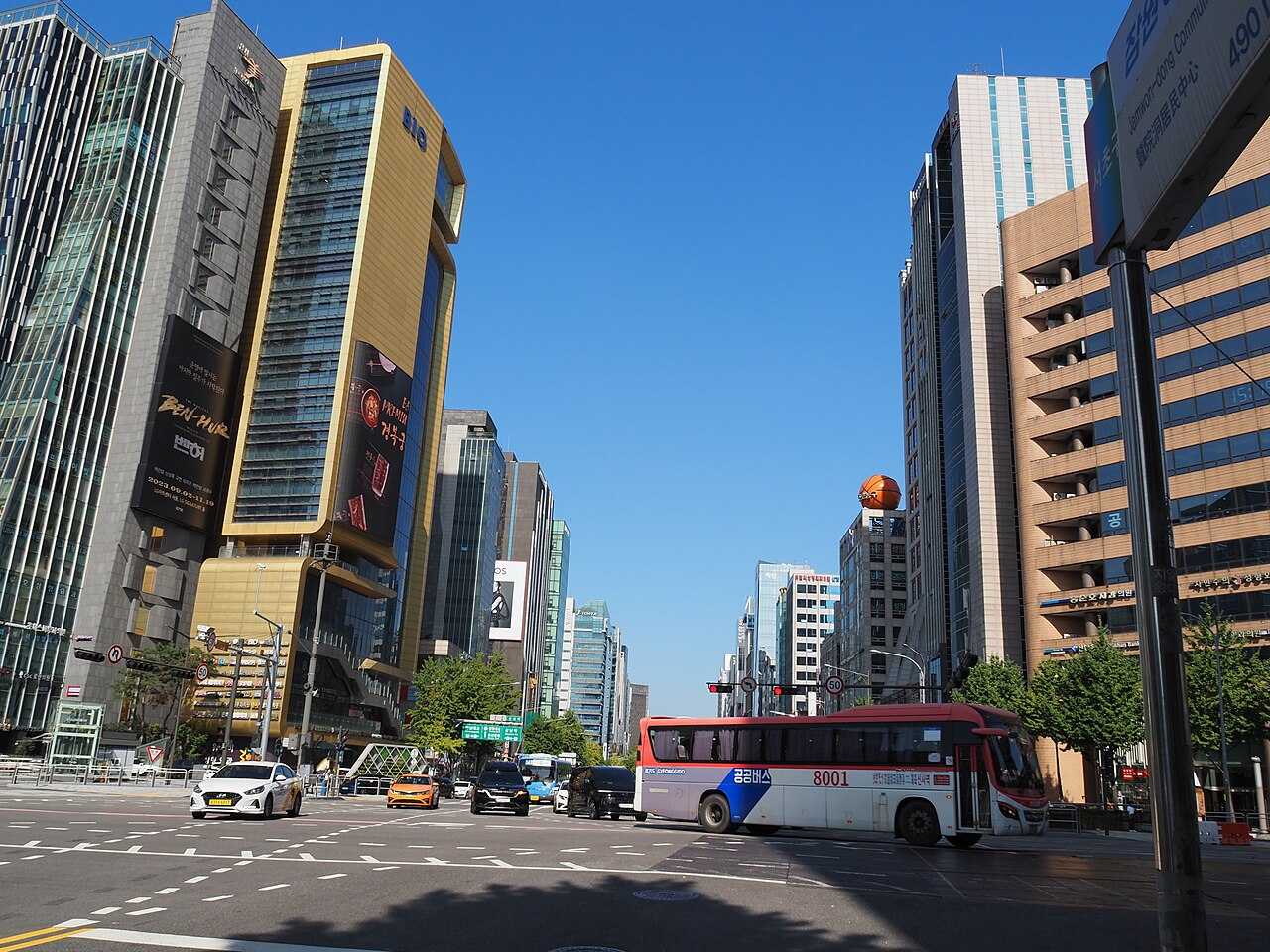
Photograph © nakashi / Wikimedia Commons · CC BY-SA 2.0 · Uncropped; display size reduced.
This is where the neighbourhood contest finally becomes unhelpful. The bar with the staged entrance offers an ordinary paper menu. The grand hotel’s chef argues for unobtrusive service. The understated craft object requires careful handling and has no repair service. The museum’s unassuming materials are industrially produced. None of those facts supplies a personality for the surrounding postcode.
They do provide reasons to make particular choices.
An expensive dinner may be worth the planning because the cooking offers something compelling. A bowl may be worth looking after because no sturdier one produces the same visual pleasure. A museum may justify an afternoon without every work yielding an answer. A branded bag may remain desirable after the buyer understands exactly how recognisable it is.
What need not be accepted is a second, indefinite obligation to prove that these pleasures were the correct ones.
That obligation can come from the prestige of the purchase. It can also come from the critic who expects the buyer to outgrow it. Neither has much to say to the person trying to keep an eight-year-old bag in use. The account does not establish a wish to become someone else. It records a request to have an existing object put right.
There is room for that kind of continuity in a life imagined through new experiences. There is also room to change one’s mind, to discover that the elaborate dinner is delightful, or that the admired object is inconvenient, without making either discovery a theory of everyone else.
The black Lady Dior still has its letters. The more demanding question is not whether its owner should have learned to want something less conspicuous. It is whether the pleasure survives use, whether the promised care follows it home, and whether those letters remain part of what they like.
There is no prize for ceasing to like them.
Practical notes
Checked online on 9 October 2026. Prices are in Korean won and may change. These addresses span Gangnam-gu and Yongsan-gu; they are not one convenient walking itinerary. Confirm date-specific booking terms before committing.
Eatanic Garden — 이타닉 가든
Yeoksam-dong, Gangnam-gu: 36F, Josun Palace, 231 Teheran-ro. Go for an extended Korean tasting menu, not a guaranteed reprise of the historical dishes described above. Listed menus: ₩250,000 lunch / ₩370,000 dinner. Wednesday–Sunday, lunch 12:00–14:30; dinner 18:00–22:00. Reservations are through Catchtable. Principal limitations: fixed-menu commitment, business-casual dress requirements and no admission for children under eight. Confirm dietary accommodation, extras, the deposit and cancellation terms at booking. Official information.
House of Dior Seoul — 하우스 오브 디올
Cheongdam-dong, Gangnam-gu: 464 Apgujeong-ro. Go for de Portzamparc’s folded façade and, where relevant, to inspect fashion and leather goods. Published hours: Monday–Saturday 11:00–20:00; Sunday 11:00–19:00. English and Korean service are listed. Viewing the exterior does not require a purchase. The specified black lambskin medium Lady Dior is ₩9,200,000. Principal limitation: architecture does not establish product suitability or aftercare quality. Confirm stock and written care terms. Official boutique information.
Chapter1 Hannam — 챕터원 한남
Hannam-dong, Yongsan-gu: GF/B1 commercial level, Nine One Hannam, 91 Hannam-daero. Go to examine furniture, lighting and craft within the retailer’s composed setting. The branch advertises 11:00–20:00 daily. This is retail access, not entry to private residences. Jeon Bo Kyung’s 닥줄기 나뭇잎 볼, the paper-mulberry leaf bowl, is listed online at ₩150,000. Principal limitation: catalogue availability does not establish Hannam display stock. Confirm before travelling for a particular object; the bowl’s handling restrictions and lack of repair service matter. Official branch updates.
Leeum Museum of Art — 리움미술관
Hannam-dong, Yongsan-gu: 60-16 Itaewon-ro 55-gil. Go for KOO JEONG A: OUSSSMOS — 구정아: 우스모스, 5 September–27 December 2026. Tuesday–Sunday 10:00–18:00; ticketing closes at 17:30. Standard adult exhibition admission is ₩18,000; the traditional-art permanent exhibition is listed as free. Reservations open fourteen days ahead; walk-ins may wait. Principal limitation: the exhibition is time-limited, and individual works have their own presentation or participation conditions. Do not assume a skatepark-derived installation permits skating. Official visitor information.
Pine & Co — 파인앤코
Sinsa-dong, Gangnam-gu: B1, 33 Seolleung-ro 157-gil. Go for cocktails that translate Korean ingredients into different drinking structures, including the documented grain-led approach of Nuruk. The bar advertises 19:00–02:00; confirm the chosen service night and use its official reservation link. Public menu platforms list Nuruk at ₩26,000, but an operator-issued current tariff was not independently confirmed. Principal limitation: drinks, price and availability need reconfirmation; plan it as a cocktail stop rather than relying on it for dinner. Official bar information and booking link.




.png)


