



.png)
The beef needed a background.
In a 2022 interview with the Korean restaurant trade magazine 월간식당, Isokwoohwa founder Lee Jun-hyeong explained the Louis Vuitton trunk used to present his Hanwoo. He had considered the photograph before the customer took it. The trunk would help communicate the quality of the purchase and make the diner feel properly looked after. It was a remarkably candid account of restaurant design. 1
There is something refreshing about that candour. The object was doing a job. It supplied a familiar luxury vocabulary to an ingredient whose distinctions require considerably more explanation. Recognising the trunk takes a moment; understanding the beef may take a conversation. A restaurant with a room to fill has obvious reasons to favour the first transaction.
The difficulty for the diner is that several purchases arrive on the same bill. There is the animal, selected and divided into cuts. There is the cooking. There is the right to occupy a particular room, at a particular time, with people whose evening one may be responsible for. Each can have value. None proves the quality of the others.
A private room can be worth paying for even when its beef is available elsewhere. A host should be allowed to hear the person across the table, discuss something confidential and finish a sentence without supervising the grill. Good service removes those small obligations without replacing them with a running commentary. An explanation of the next cut is welcome; an obligation to admire it is less so.
Nor did Seoul discover expensive, carefully managed beef dining with the arrival of the tasting counter. Samwon Garden opened in 1976. Byeokje Galbi began in 1986. Their histories place contemporary private rooms within a much longer business of entertaining families, colleagues and guests. Treating corporate dining as inherently vulgar would miss a considerable part of what these restaurants were built to do. 2 3
The more useful distinction lies between a restaurant that provides an accomplished occasion and one that has something particular to teach us about the meat. A traveller with one free dinner should be able to tell which reservation is being offered. Prestige tends to blur the difference.
Consider the grade. Korea’s quality-grading system assesses marbling, meat colour, fat colour, texture and maturity; within 1++, marbling scores of seven, eight and nine are distinguished. These are meaningful criteria applied to a carcass. They are not an assessment of dinner. The grade cannot report on the trimming, the time spent in storage, the thickness of a slice or the moment someone removes it from the heat. 4
It also cannot settle a preference. A diner interested in the greatest possible proportion of intramuscular fat is asking a different question from one interested in comparing muscles, cattle or regional supply. Both may order excellent Hanwoo. Neither needs to pretend that a preference has been resolved by arithmetic.
The restaurant earns its margin in the decisions after, and sometimes before, that classification. Why buy this animal rather than another at the same grade? Which cut should be served raw? Which needs a different thickness or treatment? What gets used when the most easily sold portions are gone? Such questions are less photogenic than a marbling score, but they begin to distinguish a buyer from a retailer of expensive portions.
Aging deserves the same scrutiny. Thirty days, sixty days, a larger number still: the duration can be made to sound like a measure of generosity. The useful information is the treatment chosen for the particular cut, and the reason to stop. A menu that sells time should be able to explain what the time is for.
So should a menu that sells a sequence. Born & Bred founder Jung Sang-won has described sushi omakase as an influence on his Hanwoo matgimcharim, an entrusted menu. It is a contemporary adaptation with an identifiable author, not an ancient Korean ritual newly made available to visitors. Its merit depends on what the progression reveals. 5
There is no obligation for every serious beef dinner to adopt that grammar. Banchan, the accompanying dishes, can remain within reach. Rice and soup can belong to the meal rather than signal its final act. A table can decide to pause, eat something sharp or fermented, and return to the grill. The freedom to vary one’s own mouthfuls is worth preserving; it need not be explained away as a less refined form of service.
That leaves a more demanding standard than a beautiful room, and a less convenient one than a ranking. The seven restaurants below offer different evidence: wholesale knowledge, retained skills, a cooking method, a regional herd, a treatment of beef, a tightly priced format, an institution of hosting. The reservation is worth considering when that evidence corresponds to the dinner one actually wishes to have.
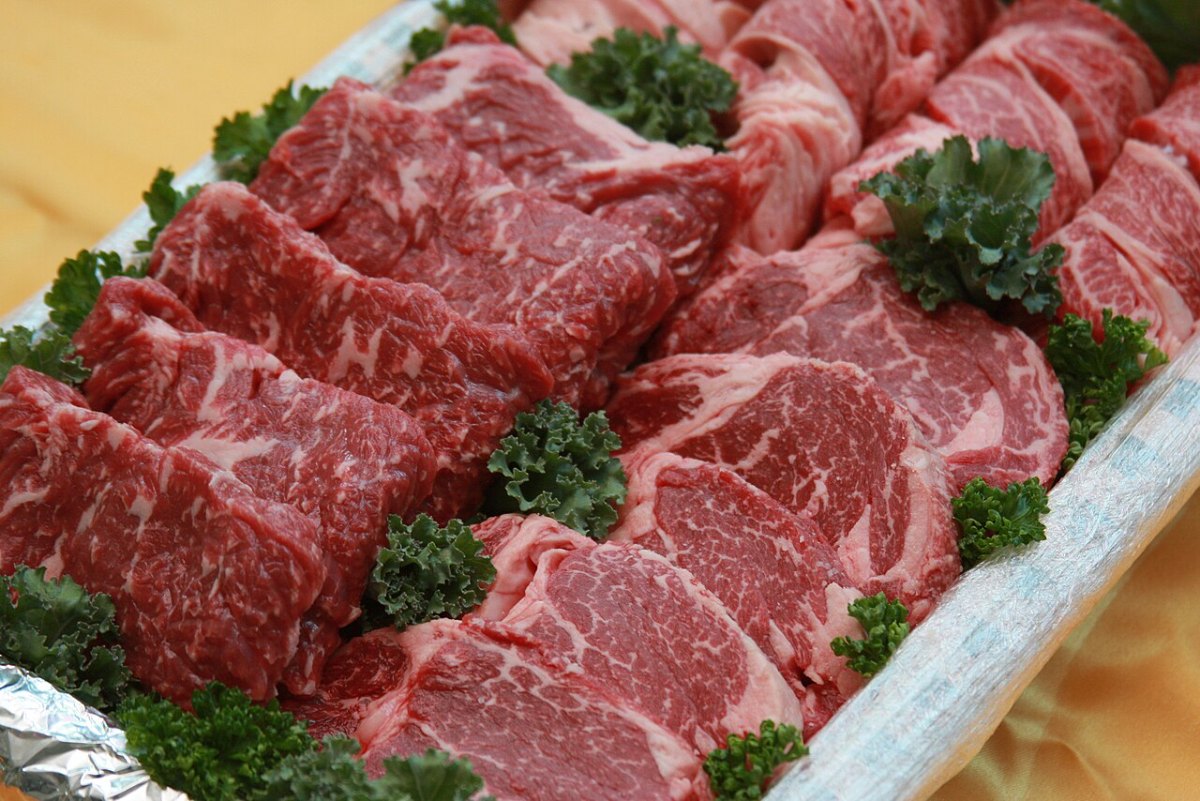
Hanwoo from Seosan, photographed in 2017. Regional context: this is not a restaurant dish from the selection.
© Seosan City Government · CC BY-SA 4.0 · Resized for this edition; photograph retains its stated licence.
Born & Bred
본앤브레드 신관 · Majang
The detail to retain from Jung Sang-won’s 2023 interview with the Korean Food Promotion Institute is his choice of beef for yukhoe: kkuri-sal, a shoulder cut. Among the more visible garnishes and accounts of distinguished customers, it is the detail that returns attention to the animal. Raw seasoned beef requires a choice of muscle; it is not simply an opportunity to serve the most expensive cut uncooked. 5
Jung grew up in Majang, where his father worked in Hanwoo distribution. The restaurant’s official account gives that background a further practitioner in head chef Kwon Hee-moon, whose training included breaking down and trimming beef in the district. The case for Born & Bred begins with the connection between those skills and the menu. Its reputation alone would be insufficient. 6
Butchery knowledge becomes useful to the guest when it changes what is served. A shoulder cut given the right role can be more informative than another portion of loin. The test for an extended beef menu is whether the differences survive the procession: whether one remembers distinct decisions rather than a cumulative impression of richness. A great deal of expensive meat can make a surprisingly imprecise argument.
Born & Bred distributes its proposition across three floors of the new building. The basement Speakeasy carries the fullest entrusted-menu format. The second floor allows à la carte dining, while the third-floor private rooms offer a fourteen-course sequence, described by the restaurant as shorter than the basement experience. These are different dinners, and should be booked as such. 6
For a reader interested chiefly in cuts and their treatment, the basement has the strongest rationale on paper. For a table with a conversation to conduct, a private room may be the better choice. The second floor offers the possibility of choosing less, which is an advantage rather than a concession. Appetite is a poor thing to surrender merely because a longer menu exists.
There is a limit to the provenance claim. A family history in distribution establishes experience; it does not identify the farm behind every plate. The useful question at booking is what the intended menu will show of the restaurant’s selection and cutting. This is one of the few addresses here for which an exploratory, meat-led reservation has a substantial documented basis.
Booking note. New building: 1 Majang-ro 42-gil, Seongdong-gu. Following the announced 1 October 2026 increase, the published second-floor tasting menu is approximately ₩190,000 per person; the basement menu is approximately ₩380,000 per person. Confirm the private-room menu separately. Select the floor as well as the restaurant, and do not confuse this address with Born & Bred Original. 7
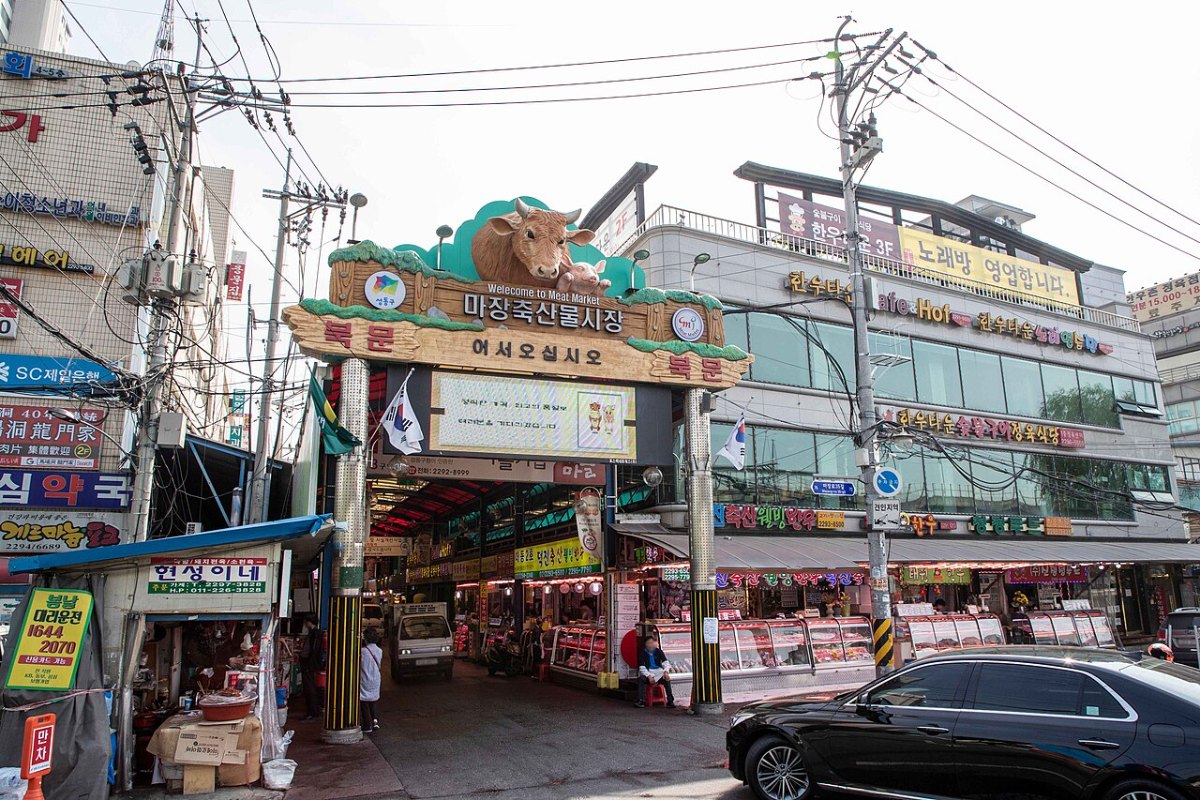
The meat-market entrance in Majang-dong, May 2019. District context for Born & Bred’s wholesale background.
© Korea Tourism Organization / Lee Bumsu · KOGL Type 1 · Resized for this edition; photograph retains its stated licence.
Byeokje Galbi, Bangi
벽제갈비 방이본점 · Songpa
A restaurant’s staff history can be more revealing than its list of guests. In a 2023 report, Michelin identified Byeokje employees with more than thirty years’ service and an operation that purchased whole animals. Together, those details describe a business capable of retaining knowledge, rather than borrowing the authority of a founding date. 3
The report followed beef from Majang auctions through cutting and allocation to the group’s restaurants. It also described the development of the diamond-shaped scoring used on grilling cuts. There is nothing uniquely Korean about making a cut in a piece of meat; what matters here is the continued attention to how the cut behaves, and the people trained to reproduce the decision. 3
Whole-animal purchasing is not in itself a guarantee of excellence. It does, however, impose a more interesting responsibility than ordering only easily sold portions. The less immediately marketable parts have to find a purpose. A restaurant group can support that work through scale, something that fashionable suspicion of large operations sometimes overlooks.
The Bangi main restaurant should be judged within that system, rather than confused with the group’s newer The Cheongdam address. Here the useful starting point is saenggalbi, unmarinated beef rib, and the meal around it. Korean trade coverage records a table of accompaniments including white kimchi, water kimchi and scallions. That supporting work deserves scrutiny alongside the beef: a diner paying at this level should not be left with a memorable protein and an anonymous meal. 8
The expense is substantial and easy to underestimate. Seolhwa saenggalbi is listed at approximately ₩160,000 for 200 grams. This is a portion, not an evening. A series of agreeable suggestions from the server can take the table beyond the price of a formal tasting menu without ever announcing that transition. 9
We would keep the order legible: the unmarinated rib, then cold noodles, rather than assemble an inventory of the most expensive cuts. The point is to investigate the competence of an established Korean grill restaurant. An elaborate room or a long bill would provide weaker evidence.
Byeokje earns consideration through the organisation behind the meal. Its history makes the bill more intelligible. At these prices, it should also make the standard more exacting.
Booking note. 1-4 Yangjae-daero 71-gil, Songpa-gu. Allow approximately ₩160,000 for a 200-gram portion of Seolhwa saenggalbi, before other dishes and drinks. The Bangi Catchtable notice specifies second-floor rooms for app bookings; discuss other seating directly. 9 10
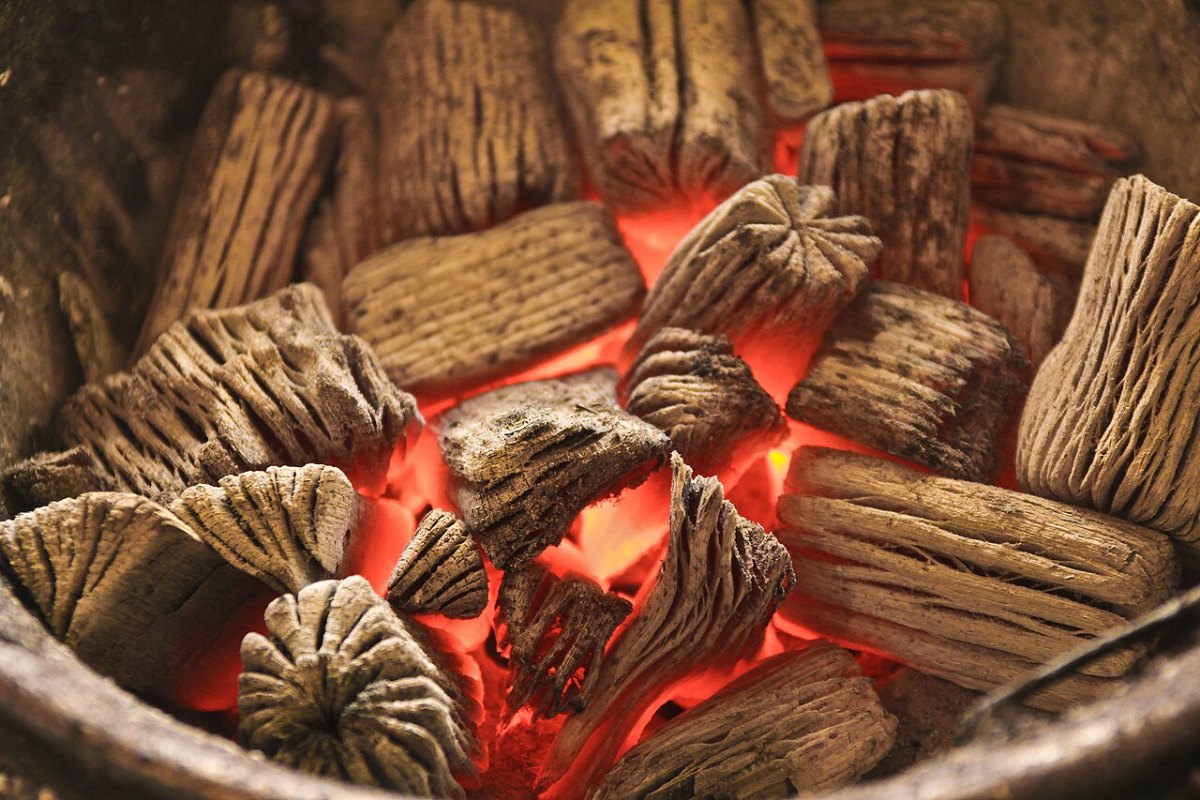
Charcoal embers, 2014. A reference to the heat source, rather than a photograph of a particular dining room.
Photo: mino park · CC0 1.0 · Resized for this edition; photograph retains its stated licence.
Daedo Sikdang, Wangsimni
대도식당 왕십리본점 · Wangsimni
The finishing dish gives Daedo its clearest argument: kkakdugi bokkeumbap, rice cooked in the pan with cubed-radish kimchi. It belongs to the same cooking surface as the beef. There is no need to invent another course to explain why the meal should continue. 11 12
Daedo uses a heavy cast-iron pan prepared with beef fat. That alone makes it a useful corrective to the assumption that charcoal is the indispensable sign of serious Korean beef cooking. A restaurant can be distinctive because it commits to another method and builds the rest of dinner around it. 13
The history is worth separating from the mythology. The restaurant dates its beginning to 1964. Seoul’s Future Heritage record identifies a sale to Kitchen Borie in 2010 and describes the systematic transmission of established preparations, including scallion salad, doenjang and kkakdugi. Continuity here concerns the work passed on, not uninterrupted ownership by the founding family. 13
That is a more useful account of preservation than the suggestion that a restaurant must remain outside ordinary business life to stay authentic. Recipes need people to make them and an organisation willing to retain them. Standardising a preparation can flatten it; it can also prevent the loss of a method. The result has to be examined, rather than inferred from the corporate name.
The menu has moved on as well. Descriptions that present Daedo as a restaurant selling only loin are outdated: current listings include an assortment and other cuts. Yet the original-cut Hanwoo loin remains the most coherent first order. At approximately ₩49,000 for 170 grams, it provides a clear point of entry before the table decides whether to continue. 12
Order the kimchi rice afterwards. The other listed finish, doenjang juk, a soybean-paste porridge, offers another direction, but the rice makes the relationship between grill and final dish particularly explicit. Either should be considered part of the restaurant’s identity, rather than an optional carbohydrate after the important purchase. 14
Do not arrive expecting the continuous personal attention of a tasting counter. Korean diner accounts describe some participation in grilling; the amount of staff assistance should be established when booking. For a table happy to take part, that need not diminish the evening. The meal gives its diners decisions to make. 14
Daedo’s place in this selection rests on that recognisable structure. The practical test of its continuity would be the loin, the pan and the finish, not an increasingly elaborate order.
Booking note. Wangsimni main restaurant: 3 Muhak-ro 12-gil, Seongdong-gu. Original-cut Hanwoo loin is listed at approximately ₩49,000 for 170 grams; kimchi rice and doenjang porridge at approximately ₩6,000 each. Arrange seating with the original branch and confirm cooking assistance and room requirements. 12 13
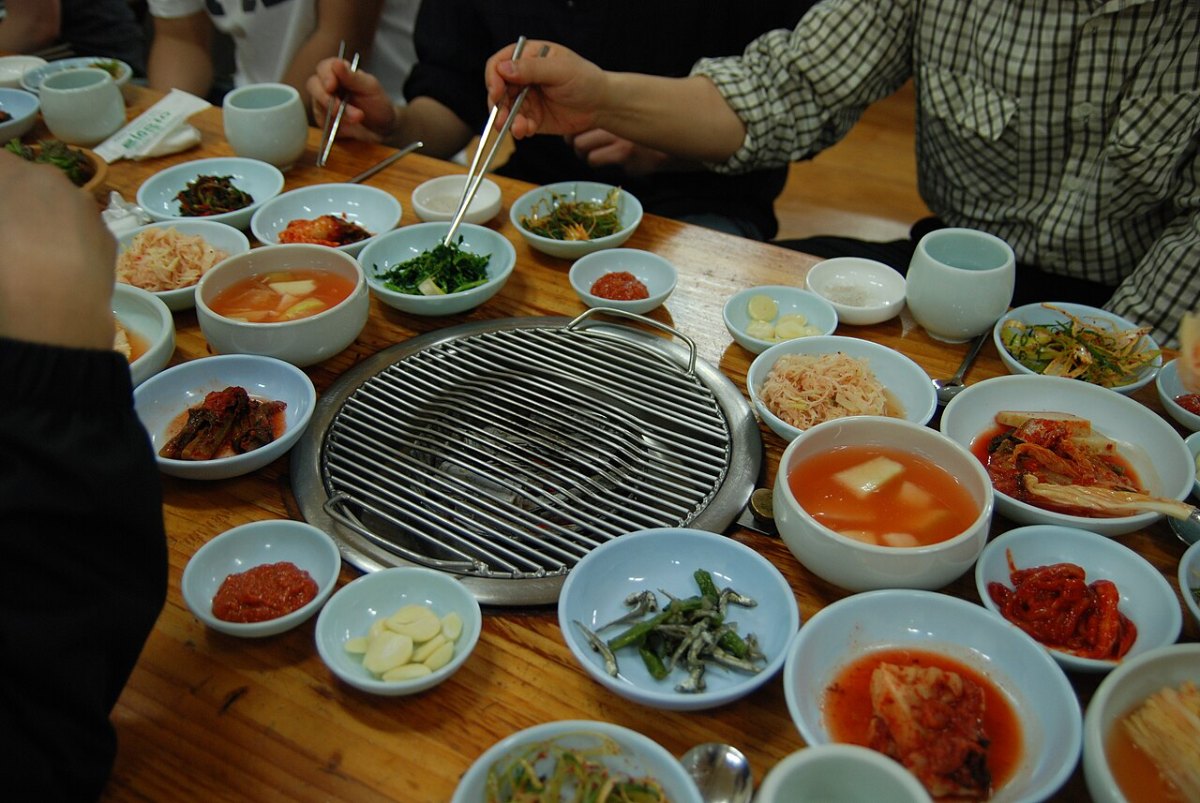
Banchan around a Hanwoo grill in Hoenggye, 2008. An archival view of the shared table; not Daedo Sikdang.
© suksim · CC BY 2.0 · Resized for this edition; photograph retains its stated licence.
Boreumsae
보름쇠 · Gangnam
Boreumsae supplies a reason to interrupt the conversation about marbling: Jeju black cattle. The distinction concerns a regional cattle tradition and a relationship with farming, rather than a more elaborate name for the highest available grade.
BusinessWatch’s 2016 account traced the operation to Kim Kyung-soo’s work with farmer Song Dong-hwan and the development of a Jeju beef business before the Seoul opening in 2015. Michelin’s restaurant entry continues to identify a connection to the operation’s own farm on the island. The history and the current description support a regional argument worth investigating. 15 16
They do not establish the provenance of everything a guest might order. Boreumsae’s booking menu groups aged meat under 제주흑·한우 숙성육, a heading encompassing Jeju black-cattle beef and Hanwoo. The reservation question should therefore concern the available cut: which is black-cattle beef, and what is known about that supply? Asking the restaurant to make the distinction is reasonable. Assuming the answer from the name is not. 17
The aging history is unusually specific. A 2019 report in Kyunghyang Shinmun described fifty to eighty days of dry aging in carcass form before deboning, with timing related to the animal’s size. That is evidence of a developed practice at the time of the report. It should not be converted into a promise about every piece served today. 18
There is also no reason to approach this beef as a rarer route to the same melting texture. Michelin describes a firmer, less fatty style. Taken as a critic’s description rather than our own tasting note, it provides a useful warning about expectations. A regional difference loses much of its interest when it is advertised simply as a more exclusive version of a familiar sensation. 16
The most informative order would be a confirmed black-cattle cut and, where available, a second cut chosen for comparison. The listed black-cattle beef-and-chive soup deserves attention too. A farming relationship should have consequences beyond the centrepiece of a presentation tray. 17
This is the clearest regional counterpoint in the selection. Its claim is substantial enough to merit a conversation before booking; the missing item-level details are precisely what that conversation should resolve. Privacy can be arranged as a separate requirement. It need not carry the burden of making the beef significant.
Booking note. 36 Teheran-ro 81-gil, Gangnam-gu. The booking menu lists premium tenderloin at approximately ₩89,000 and black-cattle beef-and-chive soup at approximately ₩14,000. Confirm portion weight, cattle provenance and any private-room arrangement directly for the chosen date. 17 16
Sooksoodoga
숙수도가 · Seongbuk
Forty-six to 720 hours is a more interesting description than 720 hours alone. Michelin gives that range for Sooksoodoga’s aging, alongside control of temperature, humidity and air exposure. The smaller number matters: it leaves room for different treatments instead of requiring every piece to justify the same headline. 19
An aging claim can still become a sales device. Without knowing the cut, the conditions and the intended result, the maximum duration tells the diner remarkably little. Sooksoodoga earns attention because its stated method is variable. The question at the table is whether that variation is intelligible in the choice of beef and its preparation.
The menu offers a manageable way into the subject. Its two listed courses, approximately ₩96,000 and ₩106,000, each specify 150 grams of 1++ Hanwoo and a choice of loin or tenderloin. Two diners interested in comparison could ask to order differently, rather than defaulting to the same cut because one sounds more prestigious. The meat allocation is worth noting: a composed course is not the same purchase as several freely ordered portions of barbecue. 20
The most revealing accompaniment may be doenjang jochi, a soybean-paste preparation cooked with beef. The menu specifies Gangwon-style house doenjang and tojang. That dish creates a second point of interest in maturation and the supporting meal, without requiring another demonstration of steak. It would be our preferred addition. 20
Elsewhere, the yukhoe is listed with Grana Padano. That detail usefully prevents the restaurant from being mistaken for a preservation exercise. It is a contemporary kitchen making a set of choices; those choices should be judged for their coherence, not dressed in a borrowed language of ancient custom. 20
The reporting is more specific about aging than individual supplying farms. That limits the provenance argument we can make here. It does not discredit the technique, but it separates Sooksoodoga from a restaurant whose central distinction is a named farming relationship. These are different kinds of knowledge, and a diner is entitled to value one more than the other.
The Seongbuk location is no guarantee of independence from fashion, and no reason on its own to make the detour. The useful reason is narrower: an opportunity to examine a considered treatment of beef in a meal that leaves space for fermented soybean paste and rice. That is enough to distinguish a booking from a change of scenery.
Booking note. 28 Dongsomun-ro 17-gil, Seongbuk-gu. Published courses are approximately ₩96,000 and ₩106,000 per person, each with 150 grams of Hanwoo; aged loin or tenderloin is also listed at approximately ₩68,000 for 150 grams. Reserve through Catchtable and confirm seating rather than assume complete enclosure. 20 21
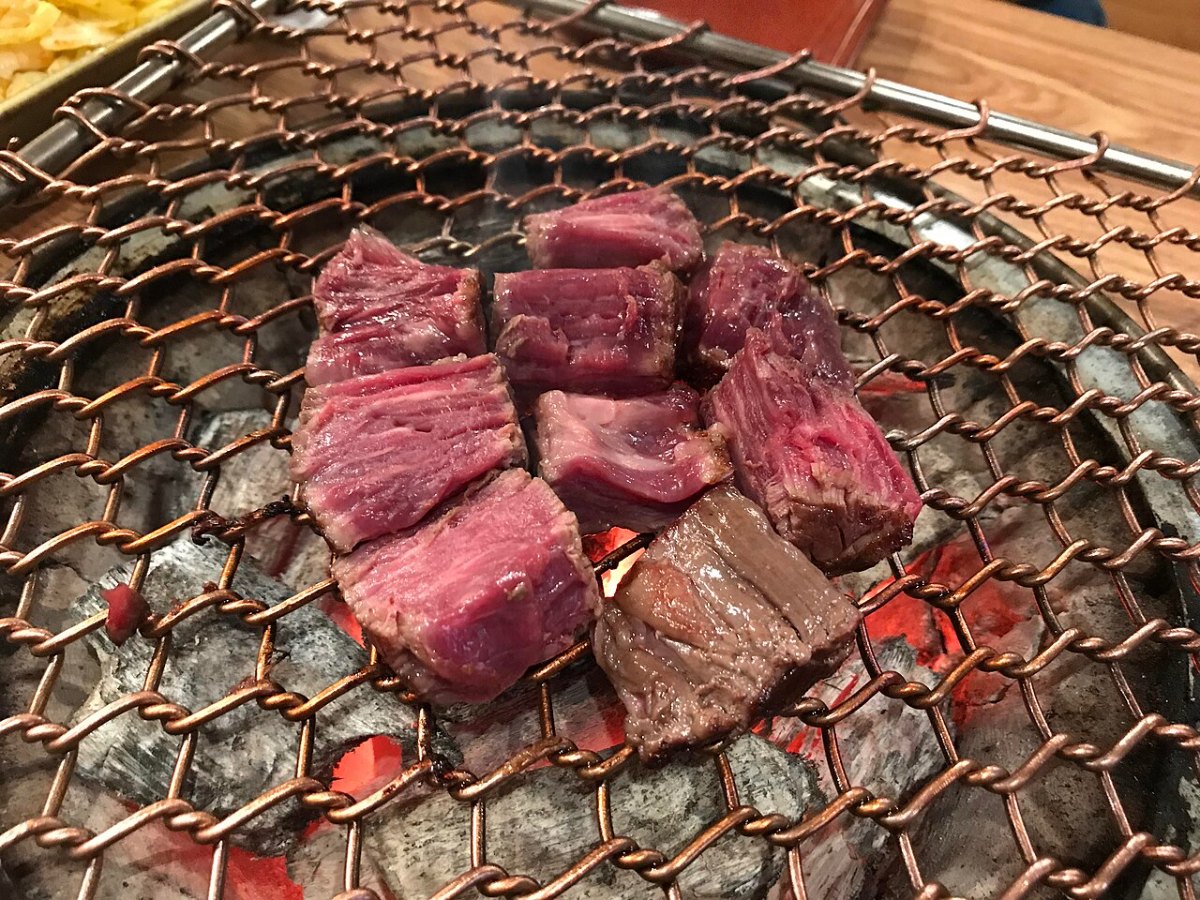
Hanwoo grilling over charcoal in Seoul, March 2018. The individual restaurant is not identified in this feature.
© lazy fri13th · CC BY 2.0 · Resized for this edition; photograph retains its stated licence.
Isokwoohwa, Hannam
이속우화 · Hannam
At approximately ₩59,000, Isokwoohwa’s hall course belongs in a different purchasing discussion from a ₩380,000 basement menu. Quantity, sequence and service are not equivalent, and price alone cannot decide between them. It can, however, reveal the error in treating every difficult Hanwoo reservation as the same sort of restaurant. 22 7
The Hannam original sells a defined occasion at a controlled entry price. That has considerable practical appeal. A guest can know the cost of the food before sitting down, and a host need not decide how many additional portions to order in front of the table. The format removes a familiar piece of dinner administration.
Lee Jun-hyeong’s 2022 trade interview offered an operational explanation for the pricing: direct involvement in distribution and the use of different cuts across related businesses, including burgers, to limit losses. The photographic staging was one part of a model that also depended on purchasing, portioning and selling the animal efficiently. 1
It would be lazy to dismiss those skills because the resulting photographs look commercially calculated. They are commercially calculated. The better criticism concerns what the diner might mistake them for. An accomplished, repeatable evening does not necessarily reveal a singular supply of cattle, a regional identity or an unusual piece of butchery.
The course descriptions, moving from seasoned raw beef through grilling and other preparations to a rice-and-doenjang finish, help explain the proposition. Variety is built into a sequence that does not require every guest to be interested in comparing muscles. A restaurant is allowed to make that choice. 23
The private-room course, listed at approximately ₩150,000, is a different menu rather than the hall meal with a simple room surcharge. It should be chosen because that menu and the privacy suit the evening. Treating it as an automatic promotion in culinary importance would reproduce the confusion this feature is trying to avoid. 22
There is a further change to keep in view. In May 2026, the Electronic Times reported Sodomall’s acquisition of the Isokwoohwa brand, within a plan connecting restaurant brands, manufacturing and distribution. The announcement tells us something about the business’s replicable value. It tells us nothing conclusive about the quality of the next dinner service. A sale cannot stand in for a tasting note. 24
For a diner arranging an occasion in Seoul, the standard course has a clear rationale. For a visitor with a single evening devoted to understanding Hanwoo, our booking priorities would lie elsewhere in this selection. There is no contradiction. The reservation has to answer the guest’s purpose, not the booking platform’s measure of demand.
Booking note. Hannam original: basement, 61 Hannam-daero 20-gil, Yongsan-gu. Published hall and room courses are approximately ₩59,000 and ₩150,000 per person respectively. Book the specific branch and format through Catchtable; related Isokwoohwa addresses have distinct names and menus. 22 23
Samwon Garden
삼원가든 · Gangnam
Samwon Garden opened in 1976. Any account that treats formally hosted beef dining as a recent intrusion into Korean food has to accommodate that date. Founder Park Soo-nam’s restaurant belongs to the history of the occasion itself: the decision to bring other people somewhere that knows how to receive them. 2
This asks for a different kind of competence from a narrow tasting counter. A host may have several generations at the table, different appetites and no wish to turn dinner into instruction. The restaurant has to accommodate the people before it can expect their attention. Michelin’s assessment specifically recognises Samwon Garden’s scale and the grilling skills of its service team. 25
Those are defensible reasons to consider it. Celebrity patronage would add very little to the argument. The capacity to cook for a table while allowing the host to remain part of the conversation is already a substantial service proposition.
Ordering still requires precision. The menu separately lists traditional marinated galbi at approximately ₩65,000 for 200 grams and explicitly identified Hanwoo saenggalbi at approximately ₩130,000 for 200 grams. The two descriptions should not be collapsed. A celebrated Korean barbecue restaurant’s name does not establish the origin of every beef dish on its menu. 26
For this feature’s purpose, the unmarinated Hanwoo rib is the more informative starting point. For someone interested in the restaurant’s established repertoire, the marinated signature may answer a different question. The server should be able to make the origin and preparation clear before the order is placed.
The limit of the recommendation is equally important. Samwon Garden’s strongest publicly documented case concerns the institution of the meal: its history, its scale and its service. The evidence is less specifically organised around an individual farm, a distinctive aging treatment or an extended exploration of cuts. A diner whose principal objective is to investigate those matters has stronger reasons to choose another address.
For a host, that distinction may be immaterial. Making a table comfortable is not a lesser restaurant ambition simply because it resists the language of discovery. Samwon Garden earns its place here as a reminder that discernment includes choosing the appropriate dinner. It does not require every restaurant to perform the same task.
Booking note. Main restaurant: 835 Eonju-ro, Gangnam-gu. Hanwoo saenggalbi is listed at approximately ₩130,000 for 200 grams; traditional marinated galbi at approximately ₩65,000 for 200 grams. Confirm origin, room and event arrangements with the main restaurant, and distinguish it from the separately marketed Byeolchae offering. 26 27
What remains
Sodomall’s acquisition of Isokwoohwa is worth returning to. The reported ambition was to connect restaurant brands with manufacturing and distribution. An evening organised around a private table also had value as a format that could be repeated. 24
A restaurant that has selected intelligently should be able to explain the selection. A kitchen asking to be paid for aging should know why a particular cut received that treatment. A room sold at a premium should offer a practical improvement in the evening: privacy, control of pace, attentive service without unnecessary intrusion. These are ordinary obligations at extraordinary prices.
The difficult decision for a growing business is what to standardise. A recipe, a cutting specification or a training programme can preserve a method. A service script is less useful when the table’s requirements differ from the scenario it anticipates. Someone still needs the knowledge, and the authority, to make a different decision.
A new interior can be commissioned. Retaining an experienced cutter, recognising the value of a less marketable muscle, or knowing when a table needs silence requires a less conspicuous commitment. It also gives a restaurant something to lose.
That is where our attention would remain after the photographs have dated: with the person who chooses the animal, the person who cuts it, and the person trusted to take it off the heat.
Reporting note. This is a research-led editorial assessment, not a record of meals eaten by EDIT27. Korean-language reporting, official restaurant material and published menus were consulted on 9 October 2026. Historical practices are dated where relevant; prices are indicative and should be reconfirmed for the chosen branch, date and format. Photographs are licensed archival context, not records of EDIT27 restaurant inspections. Linked source numbers and image credits form part of the article.


.png)