



.png)
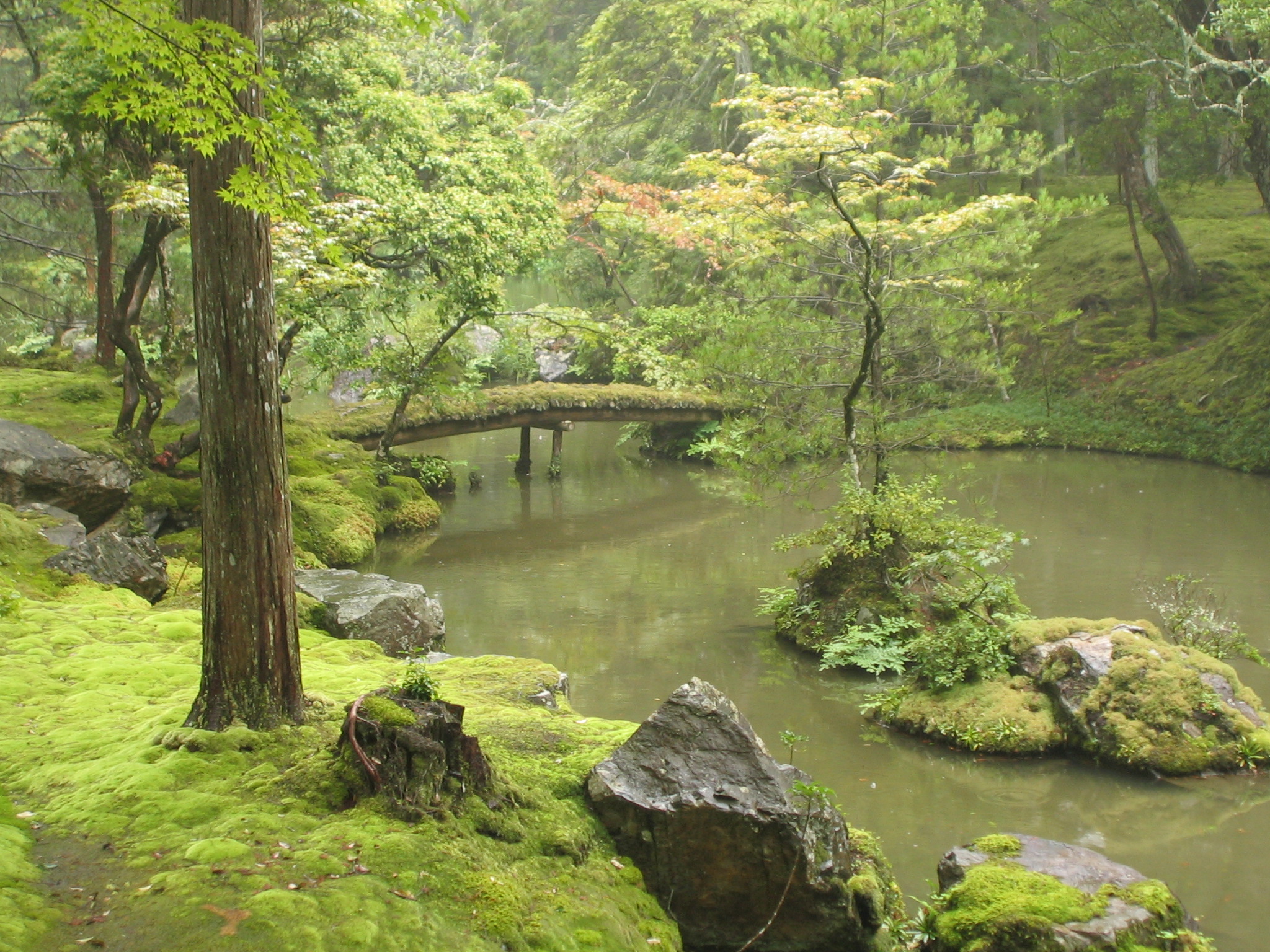
The moss at Saihō-ji is not the survival of a perfect original plan. When Musō Soseki re-established the temple in 1339, its garden included white sand and pines. The green came later, through a history that included floods and changes to the grounds. There are now more than 120 varieties of moss. The landscape people cross continents to see owes something to what its makers did not intend.
That is a good reason to want to go. So is the relationship between the garden and the temple’s modern main hall, completed in 1969, with 104 abstract sliding-door paintings by Dōmoto Inshō. The visit brings together things that a tidier account of Kyoto might keep apart: a medieval foundation, a twentieth-century building, abstraction and a garden transformed over time. Its interest survives the removal of the word “exclusive”.
© Ivanoff~commonswiki / Wikimedia Commons · CC BY-SA 3.0
It is worth establishing the attraction first. Too much writing about difficult access begins by putting the person who wants to enter in the wrong. They have wanted too much, misunderstood something, failed to appreciate that the place has a life beyond their holiday. Occasionally all of that is true. It is also possible to know a great deal about a garden, care about it for years and simply be sad that a visit cannot be arranged.
Travel is peculiarly good at attaching large hopes to small transactions. A booking may stand for a postponed anniversary, money finally saved or the prospect of an afternoon without anyone needing anything. The institution receives an application for two people on a Tuesday. It cannot see what has accumulated around it.
An experienced traveller has another difficulty. Knowing how to make arrangements can become a way of understanding the world. More notice, a better intermediary, a different date: there is usually something to try. It takes a moment to recognise a situation in which the procedure has worked perfectly and the answer is still no.
These are not all the same answer. There is no table. There is a table, but you have not booked it. The room is private. The service is not one the business provides. Somebody has treated you unfairly. A serious account of visiting Kyoto has to keep those distinctions intact, even when disappointment makes them feel much the same.
The garden is part of the visit
Saihō-ji, 西芳寺, also known as Kokedera, 苔寺, offers ordinary visits through an advance online booking system. No introduction is needed. Applications open two months ahead and remain possible until the preceding night, subject to availability. The programme includes sutra copying in the main hall and time in the lower garden. The upper garden is not part of the regular admission.
The significant condition is not difficult to translate: the temple does not offer garden-only entry. Someone who cannot undertake sutra copying for religious or other reasons is asked to consult staff. There is no invitation here to misrepresent belief. There is, however, an institutional decision that the most photographed part of the premises should not become detachable from the temple around it. The published guidance makes that decision explicit.
For a visitor, the sequence changes the object of attention. The hall and Inshō’s work are not merely the waiting room before the landscape. A modern painted surface has its own place in the experience, as does an activity requiring the hand rather than a camera. One need not claim a spiritual transformation to find this arrangement worthwhile. Nor must a person who came principally for garden history pretend that copying a sutra was the reason for the journey.
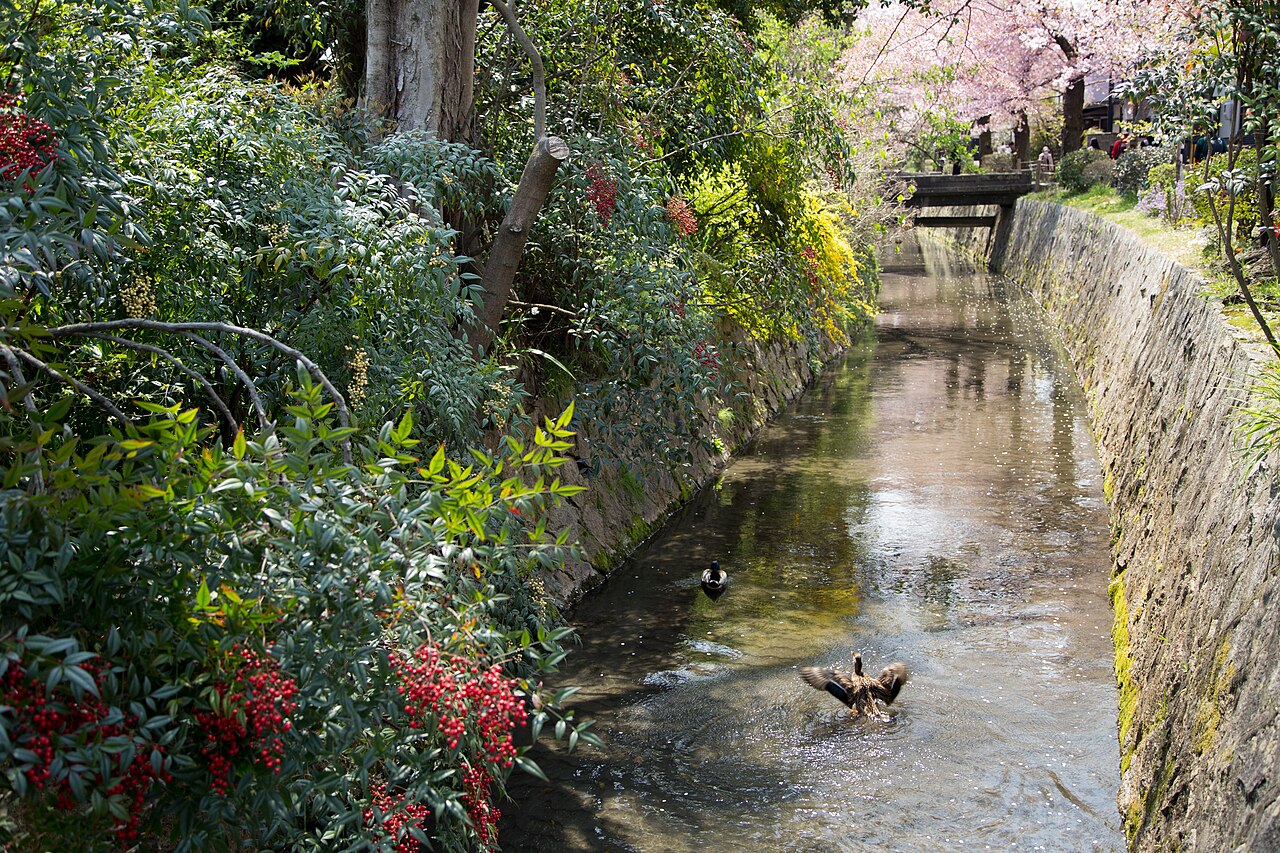
The grounds also deserve more than a photograph taken from a path. Saihō-ji’s lower garden is organised around a pond and islands; its upper dry landscape belongs to a different area with different visiting conditions. In the documented pond views, tree trunks interrupt the green, water separates its surfaces and the ground rises and falls. “A carpet of moss” is convenient shorthand, but it flattens the thing being admired. The pleasure is partly in those differences of plane and scale.
The restricted numbers have a practical history. In the temple’s account of its reservation system, general garden visiting began in 1928. Growing attendance eventually brought congestion, noise and rubbish. After discussions with authorities and neighbours failed to resolve the problems, small visits arranged by return postcard were introduced in 1977. The temple says the change also reduced pressure on the garden.
The explanation is neither obscure nor especially flattering to anyone. A thoughtful visitor still occupies space; a group with a serious interest in landscape can still obstruct a road. The inconvenience is not cancelled by good intentions. At the same time, reduced capacity should not be confused with an assessment of who is capable of appreciating the place. It limits numbers, not the distribution of sensitivity.

© Bryan Ledgard / Wikimedia Commons · CC BY 2.0
What makes Saihō-ji’s account unusually interesting is its admission that advance booking created scarcity value. The temple recognises that the system helped turn the garden into something to see once in a lifetime. A solution to excessive attendance became part of the attraction. That is an awkward result for an institution hoping to encourage a continuing relationship rather than a single celebrated visit.
Its response includes Saihokai, a membership programme introduced in September 2023. For the year from April 2026 to March 2027, the annual fee is ¥15,000, with dedicated visit allocations and member activities. Ordinary reservations remain available without membership. The temple explains that it lacks the established parishioner base on which many temples rely; conservation and renewal require dependable support.
There is a sensible financial argument here. An institution responsible for a vulnerable garden needs more than the occasional intensity of a stranger’s admiration. It also needs to pay for work that is not interesting enough to appear in most accounts of the visit. Membership can provide some continuity between people who value a place and the expense of keeping it going.
But the arrangement should still be described plainly. Money purchases an advantage in access. It does not establish that a member cares more than someone who can afford a single visit, or lives too far away to return. The serious question is how general access and paid priority are balanced, not whether support for conservation makes that question impolite. The published material consulted for this feature does not quantify the allocation between the two.
Some of the other limits have consequences that cannot be softened by a good explanation. Standard visits are for people aged thirteen and over. The temple says the steps and gravel make the garden unsuitable for wheelchairs and that changes are difficult within the protected property. Chairs are available in the hall, but that does not solve the route outside. These are different issues from a full booking calendar.
A parent may respect the age rule and prefer a place the whole family can visit. A wheelchair user may understand the conservation problem and still regard exclusion from the garden as a loss. Neither owes the institution a gracious account of how the restriction improved the trip. Clear information lets people make their own decisions; it does not turn every limitation into something to admire.
For those able and willing to take part, the offer remains compelling: modern art, a temple practice and a landscape whose history is less obedient than its photographs suggest. It is quite possible to accept those terms without treating acceptance as a test of character.
A reservation in your own name
At monk, モンク, the hotel cannot make the arrangement for you. The restaurant’s booking instructions ask guests to reserve directly; bookings through hotels, travel agencies, guides and credit-card companies are not accepted. This is worth knowing before congratulating a concierge on their ability to solve difficult things.
The rule does not turn monk into an invitation-only restaurant. Quite the reverse: it directs customers to a public procedure. Reservations open two calendar months ahead at noon Japan time. There is no waiting list and no booking by email or Instagram message. The restaurant attributes those communication limits to the demands on a small team. An intermediary is not the missing step.
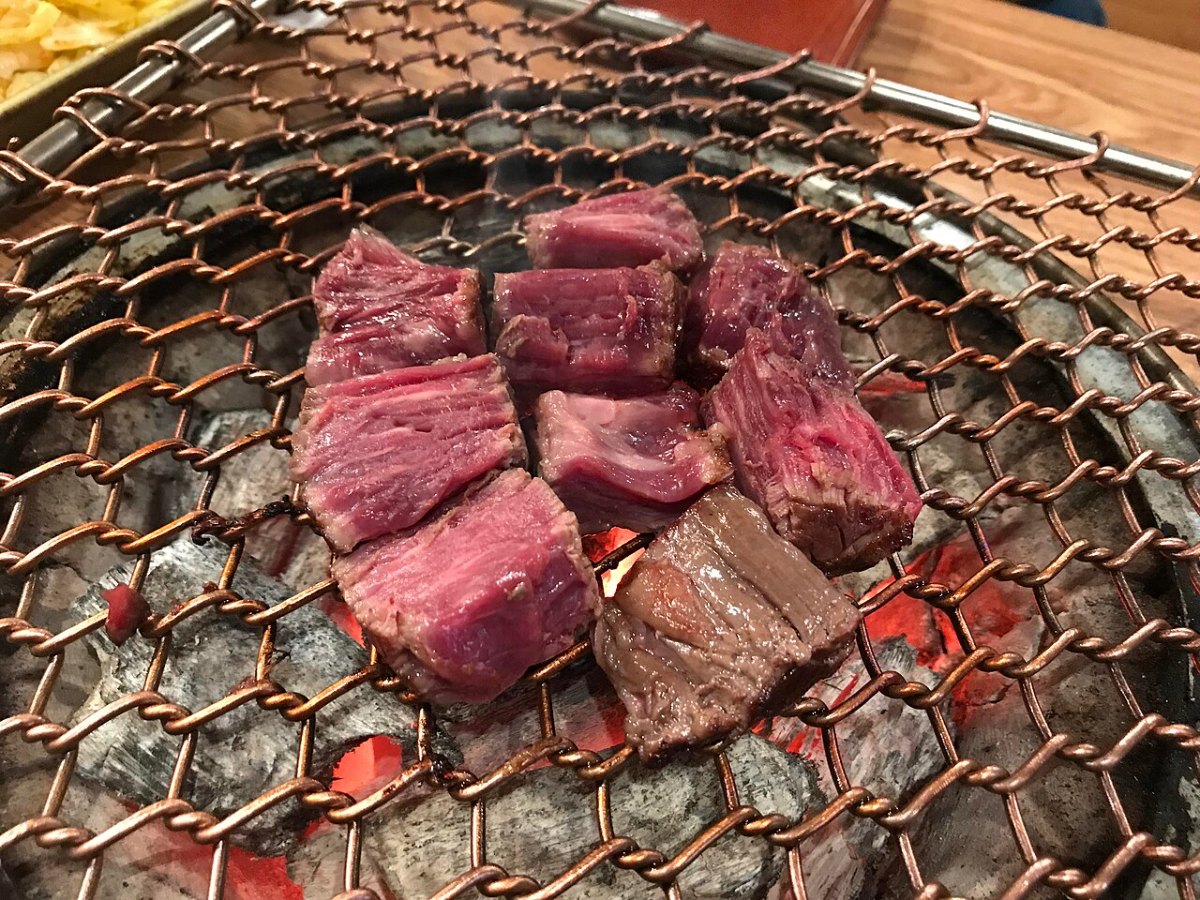
Yoshihiro Imai’s food gives a more persuasive reason for wanting dinner than the existence of a booking contest. A published spring menu includes Shōgoin turnip with pizza crust, Spanish mackerel with daikon and citrus, and wild boar with beetroot. Its pizza choices extend to Kujō green onion and butterbur shoots. This is a seasonal example, not a forecast of an October meal.
The combinations suggest a kitchen in which local ingredients do not have to enter a ceremonial format to be taken seriously. Pizza is particularly useful in that respect. The diner recognises what has arrived and can attend to what is different about it. A green onion does not require a complicated construction to justify its presence. The crust, the topping and the way they have been cooked still have to be good.
“Simple” is often the wrong compliment for such food, because it makes the work disappear. In a conversation published by sake producer Masumi, Imai describes the very narrow margin for getting vegetables right in a wood-fired oven. Judging that moment demands concentration. The same conversation describes his paid arrangement to harvest produce from a farmer’s fields. What the guest receives depends on knowledge and relationships maintained well before anyone sits down.
Photograph: Yiannis Theologos Michellis / Wikimedia Commons · CC0 1.0
Those details permit a judgment about the ambition of the cooking, not a claim that a particular dinner has fulfilled it. This feature is not based on a meal at monk. The distinction matters most when a restaurant is much desired: a writer can become an advocate for an experience they have not had simply by describing the reservation with sufficient reverence.
Imai has spoken more directly about why a meal can matter. In a 2021 interview with The Talks, he recalled eating at Enboca while working in a hotel in Nagano. A week later, during a walk in a forest, the memory of its pizza returned with an emotional force he associated with his decision to become a chef. It is his recollection, and a useful counterweight to any easy dismissal of people who invest too much hope in dinner.
Food sometimes does enter a life that way. The difficulty is that the consequence cannot be ordered in advance. A restaurant can undertake to cook, look after a table and honour the service it has advertised. It cannot reliably supply the memory for which a customer has been saving room.
Imai’s own education also complicates the story of access. In a 2018 interview with Papersky, he described spending a week working at Hartwood in Tulum, Mexico. A customer from Tasmania who had worked there helped with the introduction. The experience became part of his thinking about cooking in Kyoto.
That introduction had a purpose: one working cook learning from another kitchen. It does not contradict a later policy requiring diners to book directly. It does show how inadequate the language of deserving access can be. The opportunity arose through a particular relationship and a particular offer of work. Another chef’s lack of that connection would say nothing definitive about their capacity to learn.
For customers, the process can require considerable patience. In her account on Never Ending Voyage, updated in September 2025, travel writer Erin describes five attempts to obtain a reservation and calls the eventual meal one of her favourites anywhere. The effort and the pleasure are both hers. They are not instructions that every other visitor should follow.
There is a point at which the time spent getting a table starts to influence what one needs the dinner to be. An indifferent course becomes harder to admit. A companion who did not enjoy the evening seems to have missed something. The reservation has acquired an interest in defending itself.
Editors are no less susceptible. A special introduction can leave a writer reluctant to disappoint the person who arranged it. An invitation can be generous and the subsequent article still need an unenthusiastic sentence. Gratitude is a reasonable response to someone’s effort; it is a poor substitute for criticism.
None of this suggests that monk’s difficulty is a publicity device. The evidence establishes demand and a limited operation, not a manufactured shortage. Its public profile, including Imai’s 2021 Phaidon book, monk: Light and Shadow on the Philosopher’s Path, coexists with clear published rules. A restaurant may speak to an international audience without being able to feed that audience all at once.
The less glamorous rules are also the more useful ones. Dietary requirements must be disclosed before the meal; vegetarian and pescatarian menus can be accommodated, while vegan, dairy-free and gluten-free menus cannot. Photography is not generally forbidden, but guests are asked to keep it to a minimum. Punctuality matters to the scheduled service. Taxis should not be taken directly to the restaurant along its narrow residential approach.
These conditions describe the service and its surroundings. They are not evidence of a dislike of outsiders. Equally, a hypothetical instance of unfair treatment would need examining on its own facts, not excusing with a vague reference to local custom. A booking problem, a dietary limitation and discrimination are different claims. Precision protects the visitor as much as the business.
Some people will gladly organise an evening around the release of reservations. Others will decide they have spent enough of a working year looking at calendars. Either decision is reasonable. A missed meal can remain a missed meal without diminishing the rest of Kyoto or requiring another restaurant to compensate for it.
The other use of a street
In Gion-machi Minamigawa, 祇園町南側, the question changes again. Hanamikoji is a public road; particular adjoining lanes are private. Kansai Television’s reporting in May 2024 concerned a restriction on entry to a specific private lane, not a blanket closure of Gion. The distinction is less exciting than the announcement of a forbidden district and much more useful.
In that report, district council representative Ōta described crowds that prevented bicycles from passing and people from leaving buildings. An unnamed teahouse proprietress welcomed the new signs, referring to rubbish and visitors touching maiko. These accounts describe impediments to a working day. No philosophy of cultural preservation is necessary to explain wanting to get through one’s own doorway.
The same broadcast included an important qualification from Kazumi Inamura, speaking then as a former mayor of Amagasaki: Japanese visitors, too, could find it difficult to distinguish a public road from a private one. She emphasised communication. Familiarity with a country does not automatically confer knowledge of a particular property boundary.
%20(1)%20(1).png)
The district’s published visitor guidance asks people not to touch, follow, obstruct or photograph geiko and maiko without permission, and not to enter private property without authorisation. A geiko is Kyoto’s term for a geisha; a maiko is an apprentice. Seeing someone on the way to work does not establish that they are giving a street performance.
A person visiting for the first time may experience that sight as an unrepeatable opportunity. The person being looked at may need to keep an appointment. Both understandings can be sincere, but they do not confer equivalent claims on the next few minutes. Admiration becomes an imposition when the admired person cannot get on with the thing for which they are being admired.
Good signs matter. So do comprehensible instructions and consistency about where photography is permitted. Visitors should not be expected to infer ownership from the attractiveness of a lane. But where a private boundary is clear, taking a little more time to obtain a photograph is not a more sophisticated form of visiting.
A magazine has an awkward part in this. We know how to make a working neighbourhood look like a promise. Choose the hour, remove the traffic, select the one photograph in which a figure passes a handsome façade. The reader is left wanting a moment whose apparent spontaneity has been carefully assembled.
Adding “please be respectful” to the final paragraph does not undo that work. Nor is it enough to omit an address while describing the route in loving detail. When the attraction of an article depends on the possibility of encountering someone who has not agreed to be part of it, the commission itself needs reconsidering.
The “us” in this title includes EDIT27. We would like compelling pictures and stories that other publications have not already told. That appetite is not automatically more legitimate than a reader’s wish for a photograph. A press invitation, where one exists, would also need explaining: it would not make the same visit available to everyone reading the result.
Leaving a private lane out of a feature need not turn the omission into another inducement. There is no need to suggest that the withheld address contains the most valuable part of the city. Gion has institutions that have made a deliberate, specific offer to the public. Their work deserves the attention otherwise spent wondering what an unphotographed room might contain.
What the ticket actually buys
Gion Kagai Art Museum, 祇園 花街芸術資料館, opened in May 2024 in the Yasaka Club building beside the Gion Kōbu Kaburenjō theatre. The building dates from 1913. The museum places the materials and practice of Gion’s performance culture before a paying public: something to examine, rather than somebody to intercept. Its operating committee includes Yasaka Nyokoba Gakuen, the institution responsible for training geiko and maiko, according to an IHCSA interview with planning director Yasunari Kikuma.
The displays include yūzen-dyed kimono, Nishijin-woven obi, seasonal hair ornaments, formal black crested garments and the cosmetics and accessories used by performers. The interest is in separating work that is often consumed as one brilliant surface. Dyeing and weaving are not interchangeable processes. An ornament chosen for a season and a garment used for formal occasions answer different requirements.
A visitor can begin with quite ordinary questions. Which part of what I am looking at is woven? Which is dyed? What changes at another time of year? What belongs to the performer’s role rather than personal taste? These are better questions than whether the whole appearance looks sufficiently traditional. They leave room for skilled decisions and for the people making them.

The museum’s QR-linked interpretation offers several languages, including English, Spanish, French and Chinese. That does not establish the quality of every explanation; it does indicate a decision to make information available beyond a Japanese-speaking audience. A public institution should be judged partly on how well a visitor can move from admiration to understanding, not on how little assistance they need to request.
There is a long history of addressing an audience here. The Miyako Odori began in 1872 in connection with the Kyoto Exhibition, during the effort to revive the city after the capital moved to Tokyo. Its history joins dance to commissions in Kyoto dyeing and Nishijin weaving. Public performance, skilled production and earning a living were not incompatible activities introduced by a recent tourist market.
The museum offers a smaller encounter. A geiko or maiko performs two pieces of Inoue-school Kyoto dance in a session of approximately fifteen minutes. The programme notes that the two-piece format follows the customary sequence used in ozashiki entertainment. Capacity is sixty. The combined adult museum-and-dance ticket costs ¥3,100. The scale and duration are stated before anyone buys.
Fifteen minutes will not satisfy a visitor expecting an extended evening of private hospitality. The museum is not selling one. But two dances, seen after considering the garments and implements used in performance, make a coherent experience in their own right. The alternative to a private appointment need not be imagined as its incomplete version.
The optional paid photography session makes a further distinction. Greetings are welcome, but the guidance states: お話するサービスはご提供しておりません—“We do not provide a conversation service.” The photograph is the agreed activity. It does not purchase an open-ended social encounter. Photography and recording of the dance itself are prohibited.
Some visitors will find a photograph without conversation an odd souvenir and decline it. Others will be pleased to have the picture. Neither response needs ridicule. A clearly defined paid encounter can make fewer unreasonable demands than the hope that a stranger will give an unscheduled meeting the appearance of intimacy.
There is, however, a serious limitation in this public invitation. Dance and photography sessions take place upstairs, and the building has no lift. The museum’s wheelchair arrangements concern limited access downstairs and indoor loan chairs. Being able to buy a ticket without an introduction does not make the whole programme accessible.
That fact belongs near the description of the pleasure, not hidden where it can be discovered after a reader has made plans. A museum can make admirable decisions about interpretation and still exclude some visitors from its performances. Welcome is something an institution has to accomplish in several ways; a friendly booking page completes only one of them.
For people able to attend, the museum is worth considering at the start of planning, not after something supposedly better has proved unavailable. There are objects to look at closely, techniques to distinguish and a performance prepared for the audience that has bought tickets. Nothing about the absence of a private introduction diminishes the work.
Another experience in Kyoto may still remain out of reach. A reader can continue to want it, and even resent the circumstances, without giving the absence control of every other afternoon. There is no obligation to discover that the available thing was secretly superior. It is enough to judge it with the attention that was being reserved for somewhere else.
At the museum, the ticket promises two dances. During them, the performer has agreed to be watched and the audience has a reason to look closely. No photograph is required to certify the encounter. When the programme ends, the work has been offered as described; the next part of the performer’s day has not.
Planning a visit
Published operational information checked online on 9 October 2026. Prices are in Japanese yen; a published booking procedure does not confirm availability for your dates.
Saihō-ji / Kokedera — 西芳寺 / 苔寺
Where: 56 Matsuo Jingatanichō, Nishikyō-ku, Kyoto. The visit: sutra copying in the main hall and the lower garden; no garden-only admission. Booking: online from two months ahead until 23:59 the preceding day, subject to availability. The minimum offering is ¥4,000, plus ¥110 per person online system fee, paid by card. Standard visits are for ages thirteen and above. The garden is not wheelchair-accessible; the upper garden is excluded. Membership is not required. Consult the official booking page and participation guidance.
monk — モンク
Where: 147 Jōdoji Shimominamida-chō, Sakyō-ku, Kyoto. The meal: the advertised course costs ¥16,940 including tax and service, before drinks. Dinner is generally Tuesday–Friday; check the booking calendar for additional closures. Booking: reserve personally through the official system, opening two calendar months ahead at noon Japan time. No hotel or concierge reservations and no waiting list. Review dietary restrictions before booking. Cancellation, no-show or a reduction in party size within 36 hours attracts the full food charge. Follow the restaurant’s approach instructions; do not take a taxi to the door. Reservations · Menu · Access.
Gion Kagai Art Museum — 祇園 花街芸術資料館
Where: Yasaka Club, 570-2 Gion-machi Minamigawa, Higashiyama-ku, Kyoto. Admission: adults ¥1,500; museum plus the two-piece dance programme ¥3,100. Admission-only tickets are sold on site without reservation. Combined tickets are sold online from approximately one month ahead, subject to availability. Enter at least fifteen minutes before the dance. Optional photographs cost ¥2,000 per group of up to five, in addition to individual admission. Dance and photography sessions are upstairs without a lift. Check the dated calendar for programme and theatre-viewing changes. Museum and current calendar · Participation and accessibility.
Gion’s private lanes — analysis, not a booking recommendation
The private-lane case is not an address to pursue. Respect property-specific signs, do not follow performers into private space, and obtain consent before photographing them. Private residential addresses are deliberately omitted. The restrictions discussed are not a blanket prohibition on visiting Gion. District guidance.


.png)

.jpg)
.jpg)

