



Seoul · After midnight
Before You Go Back
In Hongdae and Yeonnam-dong, the next record and a late meal are reasons to remain out. What comes of the extra hour is another matter.
The taxi drivers asked for later hours. That is how Jang Yun-su explained the twenty-four-hour service at Gamnamujip, her restaurant in Yeonnam-dong, in a 2024 interview with Koreana. She had started by feeding construction workers at her home after earlier businesses failed. Their early breakfasts brought the drivers; the drivers wanted somewhere to eat later. The working day expanded at both ends. 1
It is an unglamorous explanation for something a visitor might find rather precious: a place that is still prepared to receive you when the evening you arranged has finished. You do not have to describe what happened at dinner, or what you hoped would happen afterwards. There is food to order.
A good hotel can make this small reluctance to go back difficult to explain. There is nothing to complain about. The bed is excellent; tomorrow has been sensibly organised. Returning would be perfectly pleasant. Yet doing so now would settle a question you would rather leave open for another hour.
What to do with that hour? A reservation supplies an answer, though sometimes too complete an answer. The photograph has established the view, the menu the sequence, the confirmation email the time by which the table must be returned. Much of this control is valuable. Someone has taken trouble over your evening. But after a day spent arriving where you said you would arrive, there can be considerable appeal in hearing a record you did not choose.
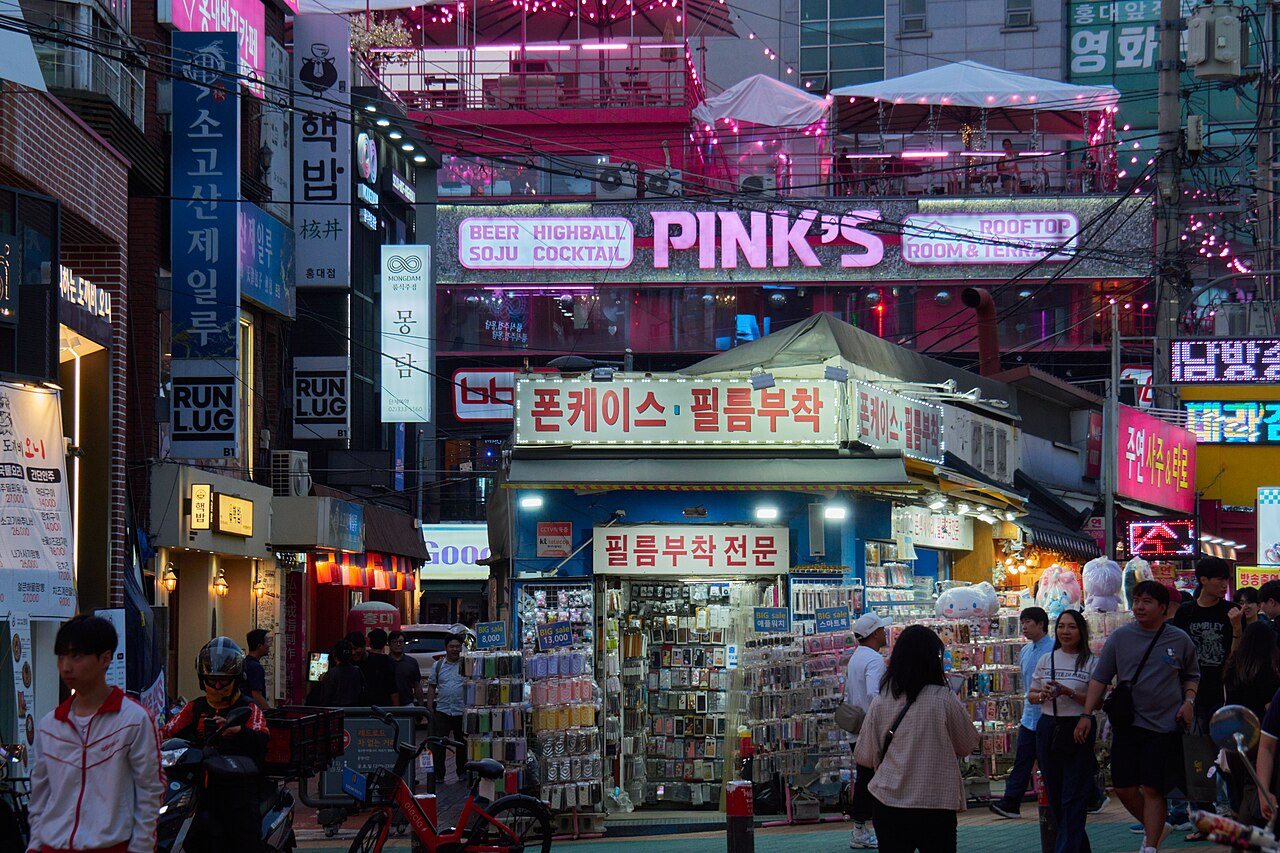
In Mapo, that is a reason to begin again on a smaller scale. Gopchang Jeongol, a basement music bar in Hongdae, puts other people's requests into the room. Further north, Gamnamujip serves individual meals through the night. The Yeonnam section of Gyeongui Line Forest Park leaves a public route available after the evening's organised performances have stopped. They make sense as neighbouring possibilities, not as three appointments to complete. 2 3 4
Photograph: lumoplank · Wikimedia Commons · CC0 1.0 · Uncropped; web-size reproduction.
The request slip
Gopchang Jeongol takes its name from a stew. In ELLE Korea's 2013 account, the name expressed a wish that people should come to music with the same informality as to a shared pot of food. It was a useful warning against excessive reverence. The writer described evenings that developed into dancing to Korean songs from the 1990s. 5
The bar's history gives little support to treating it as a hushed demonstration of expensive audio equipment. A photograph published by music critic Ko Jong-seok in 2020 shows round tables, hanging lamps with coloured glass, a large clock, stacked speakers and people occupying chairs in several directions. The equipment is substantial, but it has not displaced the tables. There is room for dinner plates and the complications of sitting with other people. 6
That photograph is an archival view, not a report on tonight's crowd. Its useful evidence is the arrangement. Nobody has been lined up in rows to face a performer. A visitor may come for the collection and find that the other listeners require some attention too.
The current Tuesday-to-Thursday listing allows the evening to run until 01:00, with last orders at 00:30. Reach it before midnight to have time after twelve; do not plan a first arrival at one. Weekend information is inconsistent enough to require checking. The basement address is 8 Wausan-ro 29-gil. 2
There is nothing particularly freeing about hurrying downstairs to discover that the staff are trying to finish. Give the room time. The most appealing part of a request system is the stretch in which the request belongs to somebody else.
The repertoire has itself been subject to requests. Reporting for Edaily in 2012, Lee Seong-jae described a proprietor who had initially held to 1970s rock before accommodating customers' preference for Korean music from the 1980s and 1990s. Among the songs the report named were Songgolmae's “어쩌다 마주친 그대” and Lee Sang-eun's “언젠가는”. 7
These are not interchangeable examples of something called retro. They are recordings with names, and listeners with particular reasons to ask for them. A strict musical policy might have made the bar easier to describe. Its development suggests a more difficult job: deciding how far a room can change without becoming any room that happens to have speakers.
There is a temptation, when travelling, to make a place answerable to the first appealing account of it. An old bar must remain the old bar; the music should establish its seriousness before anyone has ordered. Regular customers can be less cooperative. They may want the song the visitor considers too obvious, or the one whose appeal depends on knowing every word. Their enjoyment is not a defect in the curation.
Ko's 2020 book, 신촌 우드스탁과 홍대 곱창전골, approached the place through its musical history. In an accompanying selection, he set Jang Hyun and the Men's “미련” beside the Devils' “그리운 건 너” and Lee Jeong-seon's “섬소년”: recordings identified with soul and rock as well as folk. His account also traced Gopchang's predecessor to a small business by the railway in the late 1990s, followed by several moves. 6
The address has not survived by remaining physically untouched. Nor does its collection amount to a single sound. A visitor who knows contemporary Korean pop has reasons to be curious here without declaring one period superior to another. An unfamiliar artist's name is a useful thing to take away; a verdict on several decades of music is less urgent.
Requests are made on paper, according to visitor accounts: write the song down and pass it to the person selecting the records. The collection and the person playing it still determine what can be heard. A slip of paper is not a command, and a request is not guaranteed. 2
The difference from listening through headphones is ordinary and consequential. A favourite has to sit among other people's favourites. Something you would have skipped is allowed to continue. You can remain unconvinced. You can also discover that the part worth hearing arrives after the point at which you would usually have moved on.
For a visitor who does not understand Korean, lyrics remain a real absence. A voice or an arrangement can hold attention without yielding the reference that makes a song matter to somebody nearby. There is no need to turn that limitation into either an obstacle to entry or a romantic account of understanding without words. It leaves something to ask about, provided the other person feels like answering.
Alexander Chee described a different kind of partial familiarity in a 2020 correspondence with novelist Sang Young Park for Korean Literature Now. He recalled Gopchang Jeongol as one of his favourite Seoul evenings. The music returned him to earlier visits to family in Korea and to the bars and discos he had known then. He recognised what he had heard without knowing all the artists' names. 8
A return, in other words, could leave him with new questions. That is more interesting than nostalgia as a finished product, ready to be purchased again. Another listener might hear the same record for the first time, with no family visit or earlier version of Seoul attached to it. The room does not have to make their experiences match.
There are limits to the intimacy this permits. Time Out Korea's 2015 report described group singing and dancing; later visitors have also described a loud room. Someone hoping for a long, quiet conversation should take those accounts seriously. Knowing what to talk about is not much help when neither person can hear. 9 2
The recommendation has to allow for a less agreeable possibility: a crowded room, no seat, music too loud for the evening you had in mind. An old address does not earn exemption from those judgements. Its repertoire is the reason to try it; the experience on arrival still has to justify staying.
That is worth distinguishing from the appeal of a beautifully controlled bar. A dependable seat, attentive service and a conversation that can be heard are not minor achievements. There are evenings on which they are precisely what is needed. The disappointment comes when a room's expense or exclusivity is asked to supply interest that its actual activities do not provide. At Gopchang, at least, there is a fairly legible activity: someone selects a record; everyone who stays gets to hear it.
A documented meeting gives a sense of what has happened around that activity, without making it a service the bar offers. Writing for Korean Indie in 2013, Chris P recalled meeting Ah-reum and Jee-hye of Juck Juck Grunzie at Gopchang during a 2011 trip. Another music writer passed him the band's EP. By the time of his account, the recording no longer fully represented how they sounded. 10
In the interview that followed, the musicians discussed allowing their different ideas to change the work, and the time that process required. Asked which superhero she would choose to be, Jee-hye replied: “I've got a lot of things I want to accomplish as myself!” 10
The answer is funny, and considerably livelier than the language in which professional introductions are usually justified. The conversation concerned unfinished work. There were recordings to make, ideas to argue over and an EP that the band had already outgrown.
Neither that meeting nor Chee's recollection is established as an after-midnight encounter. Their value is in the specificity of what they describe, not in supplying a timetable for another person's good fortune. There is no defensible reason to come expecting musicians to be available for introductions. Their work does, however, give a listener somewhere to go beyond the bar.
An evening can become professionally interesting without becoming a networking exercise. The distinction is often apparent in the first question: whether it asks about the work itself, or about what proximity to its maker could do for you. The first leaves the other person considerably more room.
Romantic interest need not be written out of the picture either. It is simply not an amenity. Two people who like the same song have one thing to discuss, not evidence of a shared future. They may discover that they have misunderstood each other, or that the song is the only thing on which they agree. A bar cannot responsibly promise more.
It is quite possible to spend the available hour without speaking to a stranger. There is still the music, and the mild inconvenience of hearing somebody else's choice. The evening does not become empty because nobody has asked what you do for a living.
A kitchen on another timetable
At Gamnamujip, appetite is easier to accommodate than biography. The restaurant at 25 Yeonnam-ro is listed as open twenty-four hours. Its full name, Gamnamujip Gisasikdang, identifies the business as a drivers' restaurant. Parking is part of the arrangement, rather than an afterthought. 3 11
It now receives much more than the clientele its name describes. Hwang Kyung-shin's Koreana report records ordinary diners, families and visitors alongside the taxi drivers. The service expanded because people asked for meals at inconvenient times; that does not make every current customer a night worker. 1
The practical attraction is a complete order for one. Dwaeji bulbaek, the pork-bulgogi set, is currently listed at ₩13,000. Tofu stew, squid and grilled fish offer other routes through the menu. Recent Korean visitor accounts describe ordering and paying at the counter before eating, with solo meals an ordinary use of the restaurant. 3
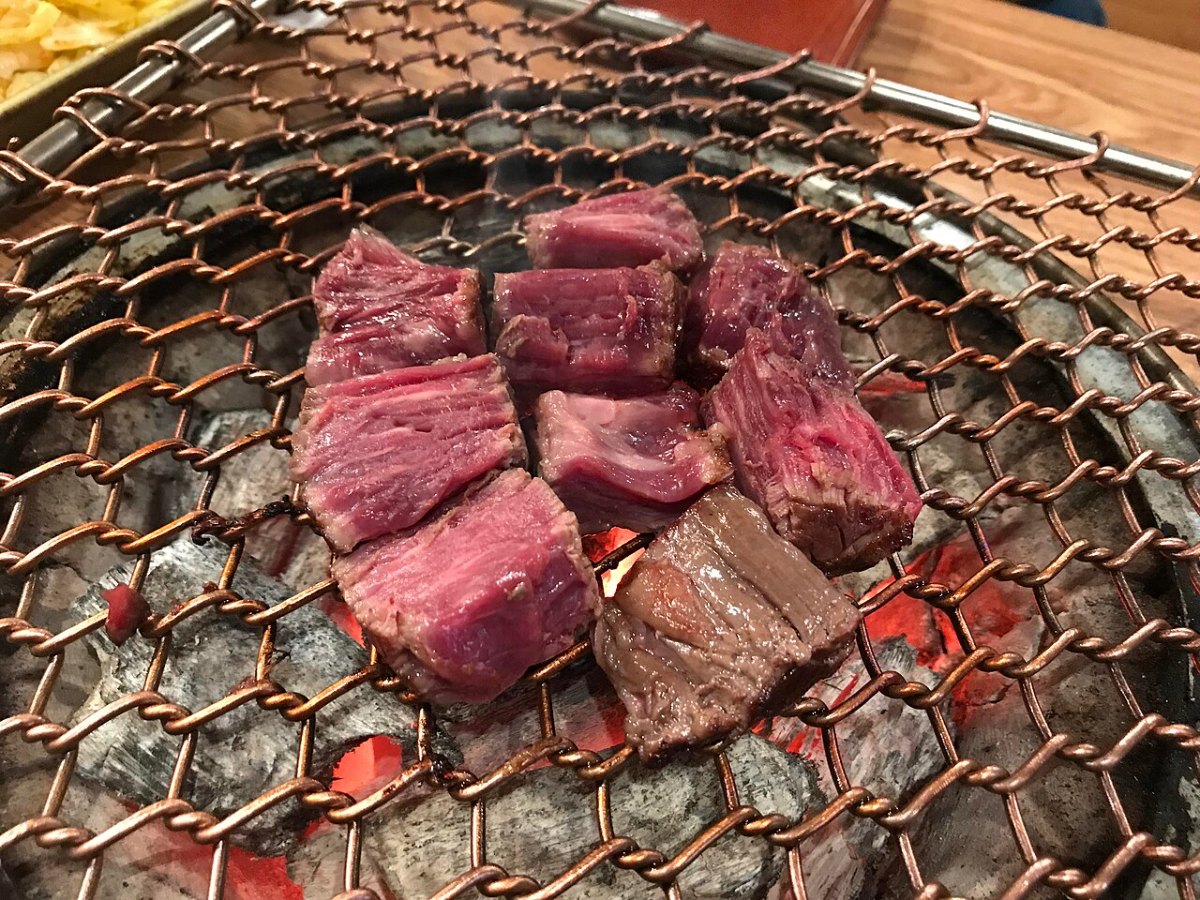
There is no tabletop grill to manage and no need to recruit another person to make a meat order feasible. The pork arrives cooked. Esquire Korea's account describes rice, leafy vegetables, side dishes, a fried egg and a small serving of noodles. Meal photographs support that generous arrangement, although the accompaniments can change. 12
An earlier Korean dining account notices another functional detail: menu information in English, Japanese and Chinese, alongside the rules for ordering and payment. The writer photographs the board and remarks on how much it explains without requiring a member of staff to stop and translate. 13
The observation is useful because accounts of unfamiliar restaurants can make a simple order sound like a trial of courage. A multilingual board is a piece of hospitality too. It takes some of the negotiation out of the meal and lets the person at the counter continue with their work. The current board still needs checking; neither an old photograph nor a translated menu guarantees that every question can be answered in English. But the documented intention is clear enough. The restaurant has made an effort to be legible to people who do not all read the same language.
There is a small pleasure in being offered rice and noodles together. The kitchen has not forced them to compete for a single place on the table. Leaf, pork and rice can be assembled into a mouthful; the side dishes interrupt the sequence. This is part of the reason to order the set rather than think of it as a portion of meat with extras that happen to be free.
A photograph does not establish the quality of tonight's cooking. It does establish the structure of the meal: several things to eat, a modest amount of assembly left to the diner, no ceremonial explanation required before starting. There is pleasure in being given a meal that has already worked out most of the logistics.
The price is not evidence of virtue. Nor are an unelaborate dining room and the word “drivers” sufficient grounds for describing a restaurant as a corrective to fine dining. At this hour, the useful comparisons are more practical. Does it receive one person? Can that person order a substantial meal? Is the kitchen actually operating? Gamnamujip's documented format answers those questions more convincingly than an atmospheric photograph of an empty counter.
© Brit in Seoul · Wikimedia Commons · CC BY-SA 4.0 · Uncropped; web-size reproduction.
The restaurant has also been on television. Its association with Infinite Challenge appears in visitor accounts, while Esquire Korea described an already well-publicised restaurant in 2021. Anyone hoping to find a place untroubled by public attention has chosen the wrong establishment. Popularity does not cancel the reason it exists, although it may change who is waiting for a table. 12 3
The most revealing detail in Koreana's account is less visible. Jang's son wrote down her recipes before leaving for military service. Measurements that had depended on her judgement could be reproduced by other people. The same report described more than twenty employees working in two or three shifts. 1
A twenty-four-hour restaurant needs this kind of continuity. “Always open” can sound like a quality of the building, as though the lights remained on of their own accord. Here the published account offers something less abstract: recipes, staff and a change of shift. An apparently spontaneous decision to eat depends on other people having arranged the ingredients and the working hours.
That need not make a late meal an occasion for solemnity. Paying for dinner is an ordinary transaction. It does suggest a limit to the visitor's claim on the room. The restaurant has work to do after your meal, and people may be waiting to use the seat. A table is not indefinitely yours because you have finally stopped checking the time.
There can be relief in the smallness of what the transaction requires. A meal ordered for one does not solicit an explanation for the absent second person. It might be a choice, a gap between obligations, the result of different appetites or a companion's early start. The service works without deciding which story applies.
This is where an evening spent wondering what it might yet become can recover something as straightforward as dinner. Hunger is a more precise question than whether a trip has been worthwhile. A good meal may eventually become a reason to return to a city. It is under no obligation to announce that while being eaten.
Above the railway
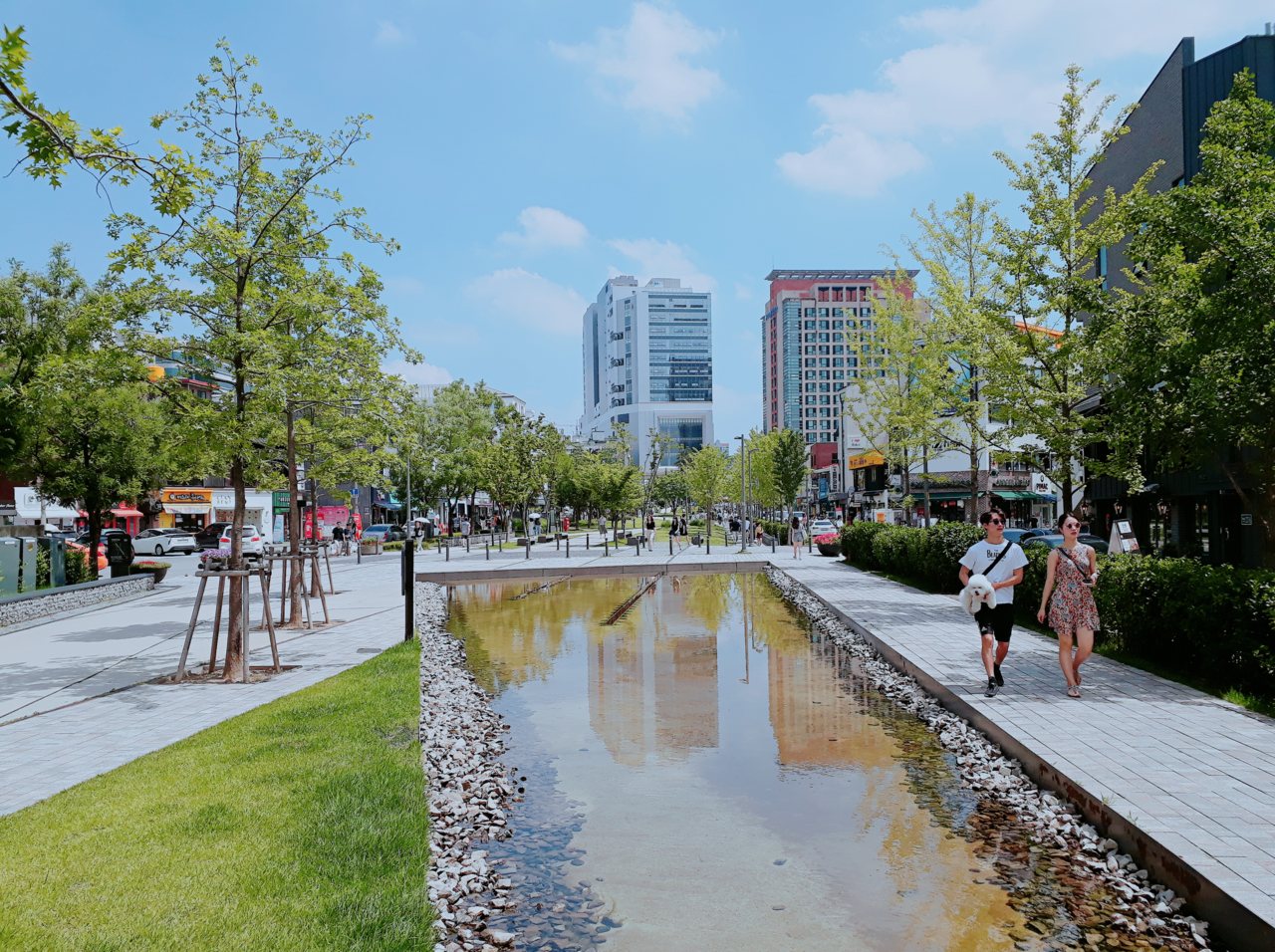
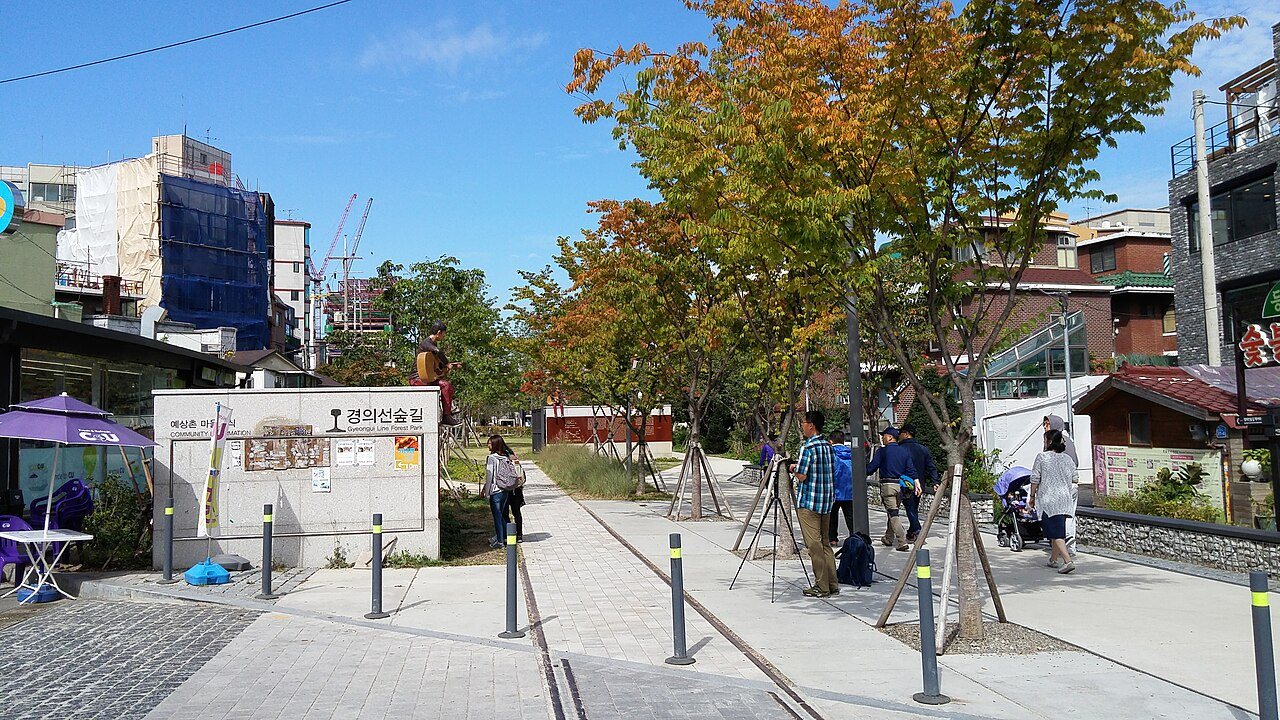
The Yeonnam section of Gyeongui Line Forest Park leaves somewhere to go after the bill. It runs from the Hongik University station area along former surface railway land. Trains did not simply vanish from the geography: the line was moved underground, allowing a public park to occupy the corridor above. The wider park runs for roughly 6.3 kilometres; this evening needs only a portion of it. 14 4
The railway also appears in accounts of the music bar's earlier life. Ko traced its predecessor to a small space near the tracks in the late 1990s. These businesses and this path belong to a neighbourhood that has been rearranged, rather than a preserved collection of agreeable old places. 6
There is a more recent distinction to observe. Seoul's walking-route information places no restriction on visiting hours, but the authorised busking programme for the Yeonnam section finishes at 19:00 under the city's October 2026 rules. Performers reserve time; preparation and clearing away count within the allotted hour. The public path remains available long after that particular use of it has ended. 4 15
So a walk after midnight should not be sold on the expectation of a performance. The regulations explicitly address noise affecting residents, traders and pedestrians. Nearby homes are a reason for the limit, not an unfortunate intrusion into a visitor's night. 15
The attraction then is simpler: a route outside without an additional order or an admission charge. It can hold the interval after a meal, or the unfinished part of a conversation. A path does not make anyone else walking it available to be approached. Neither does it require a solitary walker to manufacture an interesting explanation for being there.
© Christian Bolz · Wikimedia Commons · CC BY-SA 4.0 · Uncropped; web-size reproduction.
Walking with someone changes the demands on a conversation. There is a direction to negotiate and a street to cross; looking away need not mean withdrawing. A subject can be left alone for a while. No new course arrives to restart the discussion, and no empty glass needs to be used as an excuse to end it.
There is also the possibility of discovering that the conversation is over. The route need not be stretched into a romantic test of how long two people can remain outside. A convenient exit is part of what makes an extra half-hour attractive. So is the ability to decide against it.
Rain, cold and tired feet deserve ordinary consideration. An appealing route in mild weather may be a poor proposition tonight. Seoul's official information records wheelchair and stroller access to the park, but station facilities cannot be assumed to remain available after train service. Keep to public paths and an easy way back to the street. 4
For the journey home, check an actual night-bus route or retain the taxi fare rather than relying on the daytime subway map. Seoul's standard taxis apply their highest late-night surcharge between 23:00 and 02:00. Having the accommodation's Korean address ready is more useful than discovering, at the point of departure, how far apart two agreeable parts of the city really are. 16 17
That much preparation leaves the evening with room to change. A return journey does not commit you to a departure time. There is no requirement to reach dawn, collect a new acquaintance or find an idea worth writing down. You might go back with much the same plans you had before dinner, and with an artist's name that was not in your phone this morning.
Chee left his recollection of the records with a wish still to be followed up: “I never knew those artists' names but I want to know them now.” 8
After midnight: the details
Online information checked 9 October 2026. These are published schedules, not telephone confirmations. Venue hours refer to the evening on which the visit begins.
Gopchang Jeongol · 곱창전골
Basement, 8 Wausan-ro 29-gil, Mapo-gu. Currently listed Tuesday–Thursday, 19:30–01:00; last order 00:30. Arrive before midnight. Friday/Saturday information is inconsistent; confirm your date. Published food plates include tofu with kimchi at ₩18,000 and hamburger steak at ₩23,000, drinks additional. Solo visits are documented; no seat is guaranteed. Telephone: +82 2 3143 2284. 2
Important: No operator confirmation of last admission, separate kitchen/drink cutoffs, minimum spend, cover, reservations, age/ID rules or non-alcoholic choices was obtained. Check the relevant conditions before going. Basement access is not verified step-free. Expect a music bar, not a reliably quiet conversation room.
Gamnamujip Gisasikdang · 감나무집 기사식당
25 Yeonnam-ro, Mapo-gu. Korean listings give 24-hour daily service. Indicative individual meals: pork bulgogi ₩13,000; tofu stew ₩11,000; squid ₩14,000. Walk-in counter ordering and advance payment are documented; a group order is not required for an individual set. No membership condition is identified. Telephone: +82 2 325 8727. Confirm holiday service and any overnight interruption for a time-critical visit. 3 12
KTO records a step-free entrance, manual door and chair-height tables; confirm any additional access requirements. The current language offer and allergy handling need checking. Finish the meal and release the table when other diners are waiting. 11
Gyeongui Line Forest Park, Yeonnam section · 경의선숲길, 연남동 구간
Use the street outside Hongik University station Exit 3 as a landmark. Municipal walking information lists no visiting-hours restriction; ordinary access is free and needs no booking or membership. Wheelchair/stroller use is recorded. Station toilets and shortcuts may be closed overnight. The October 2026 authorised busking programme finishes at 19:00; do not expect that programme after midnight. Weather, temporary closures and neighbouring homes matter. Park enquiries: +82 2 719 8830. 4 15
Getting back
Check your actual last train or a live night-bus journey to the accommodation. The published adult Owl Bus fare is ₩2,500 by transport card; routes and intervals vary. Standard Seoul sedan taxis start at ₩6,700 for 1.6 kilometres from 23:00 to 02:00, with distance/time charges thereafter. The late-night surcharge is 40% in that window and 20% from 22:00–23:00 and 02:00–04:00. Premium and app-priced services can differ. Keep the Korean address and enough fare for the return; choose a street pickup, not an unspecified point inside the park. 17 16



.png)