



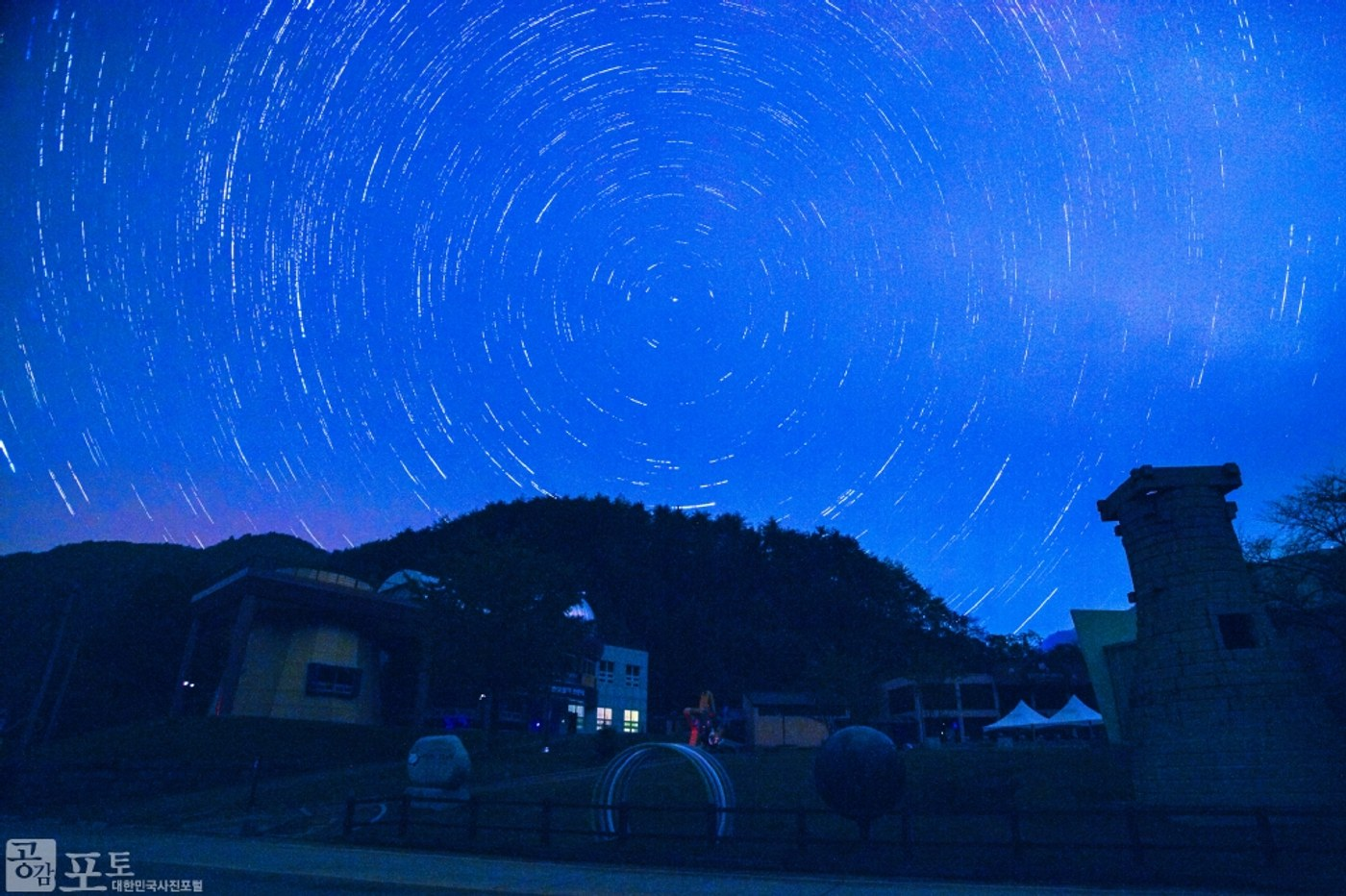
At the head of Cygnus, the Swan, there appears to be one star. Through a modest telescope, Albireo becomes two: one gold, the other blue. The distinction is visible at an eyepiece, not an embellishment added afterwards to a photograph. It is a small, precise extravagance, waiting for someone to show you where to look. [1]
You need not leave a city to see Albireo. What makes a journey to Yeongyang appealing is the possibility of a much larger view around such an encounter: the bright framework of a constellation acquiring a surrounding population; the Milky Way becoming perceptible as a faint, uneven band; the discovery that an apparently familiar sky contains things you have not yet learned to notice. Under suitable conditions, that wider view belongs to the unaided eye. The telescope offers a different pleasure. [2]
In a county-supported June 2026 feature, Yeongnam Ilbo described visitors moving between four telescopes at Yeongyang’s Firefly Astronomical Observatory. A mother remarked on how long it had been since she had looked at stars like this; her daughter thought their drive of more than three hours worthwhile. [3]
The scale of the exchange is appealing: a journey, a view and the person who made it with you. There is plenty to travel for in that.
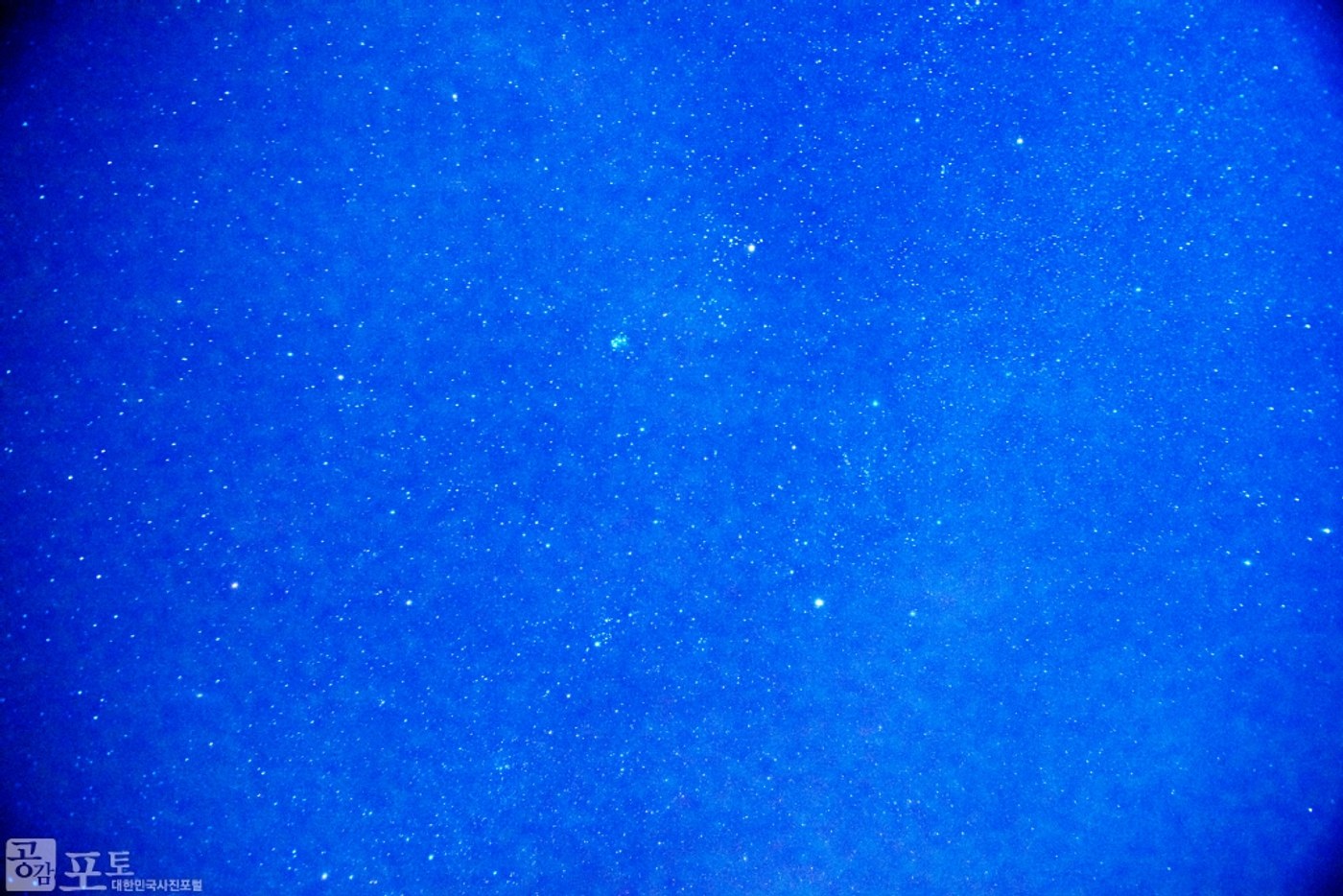
Photograph: Lee Jeong-su · Korea Policy Briefing archive
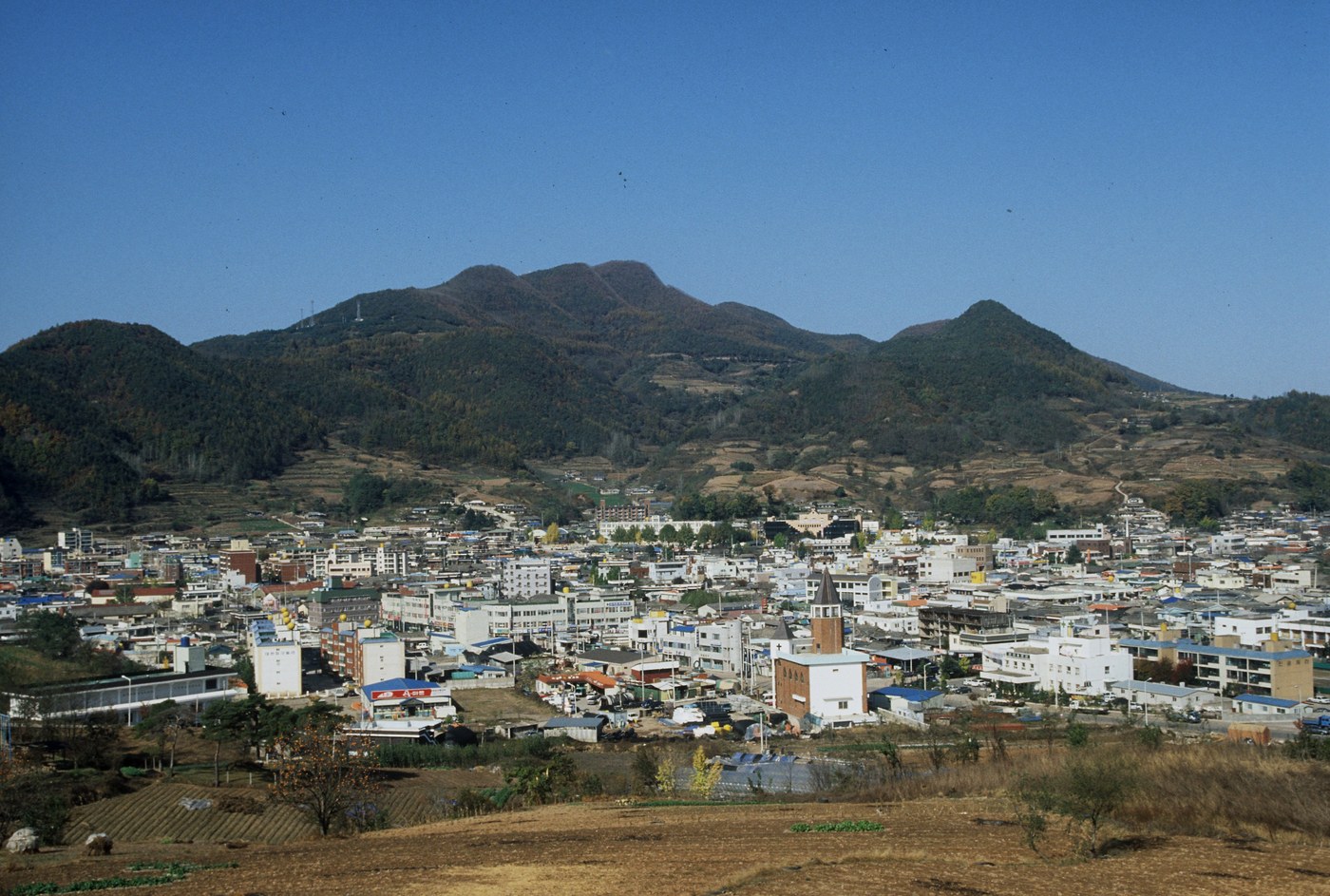
Yeongyang lies in North Gyeongsang Province, in the mountainous interior of eastern South Korea. The park is around Suha-ri, in Subi-myeon, within the Wangpi River basin. In May 2026, Hankook Ilbo reporter Lee Han-ho put the bus journey from Seoul to Yeongyang’s terminal at approximately four and a half hours, with another half-hour by car to the park. His trip required attention to connections and accommodation. This is a destination for an overnight stay, not an excursion to append to dinner in Seoul. [4]
The distance is worth stating without turning inconvenience into a virtue. A journey can be appealing and awkward at the same time. Once a room and the final transfer are arranged, however, the evening has room to become its own undertaking. There is no need to fit the sky between two other reservations.
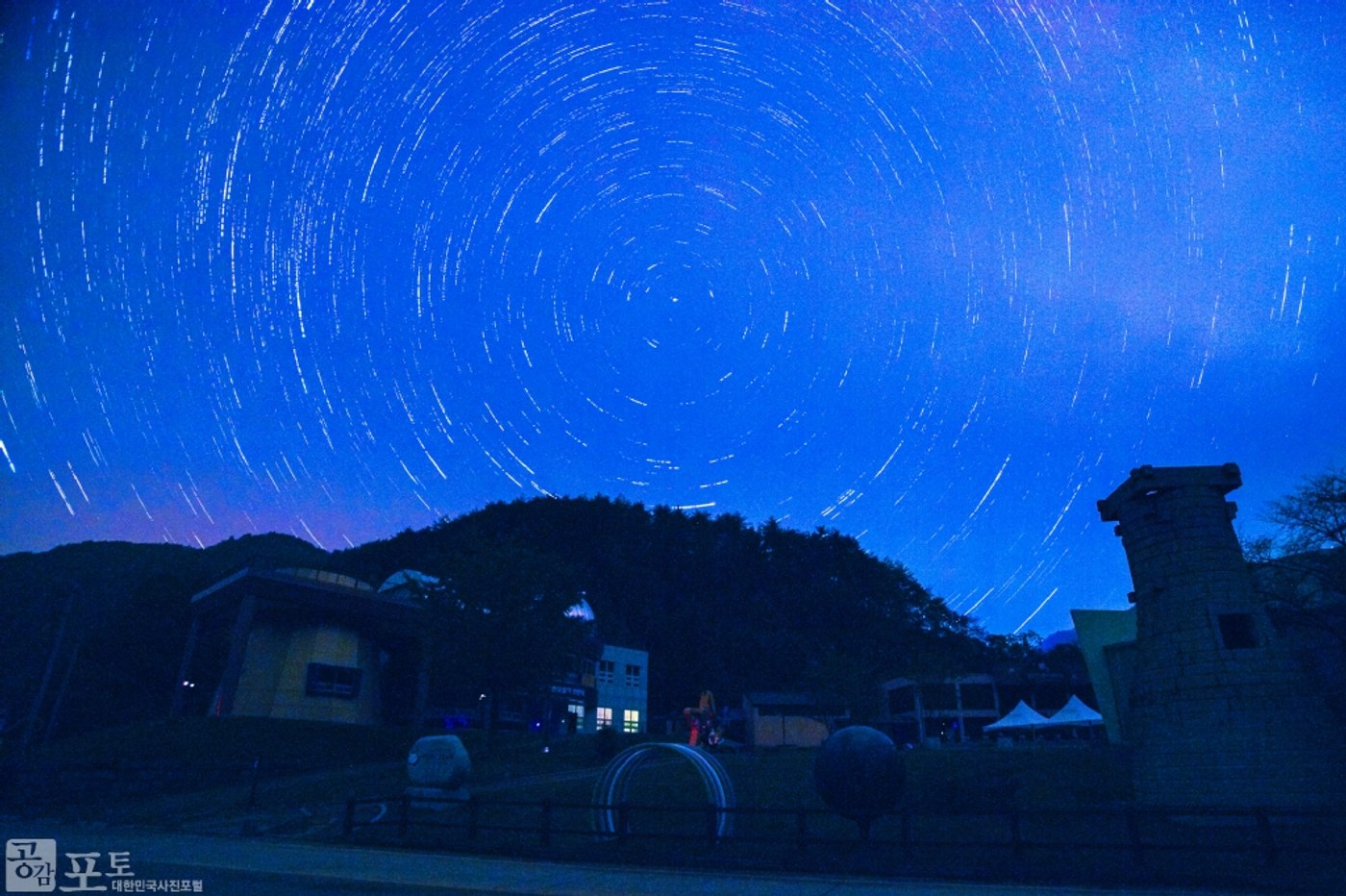
The place at the end of that journey is a public institution. There are exhibits, observing rooms, ecological facilities and accommodation to book separately. Its invitation is more specific than the promise of somewhere remote: come here and someone can help you understand what is visible. That human provision is part of the attraction, particularly for a person whose interest in astronomy has so far been limited to liking the idea of it. [5]
Learning the view
The eye and the camera arrive with different abilities. An exposure gathers light over time; a stack combines information from several frames. Faint structures become conspicuous, colours become legible, and a photograph may show much more than a person standing at the camera could have seen unaided. The National Park Service makes the distinction explicitly in its comparisons of long-exposure imagery and shorter exposures intended to approximate human perception. The photograph is not necessarily exaggerated. It is answering a different question. [6]
For a destination, trouble begins when the difference is left unexplained. Someone who arrives expecting a vividly coloured galactic cloud may overlook the much fainter band actually present. They have not failed to appreciate the night. They have been given the wrong expectation of its appearance.
A guide can make that first encounter less uncertain. The useful instruction might concern where to look, what scale to expect, or which part of a pattern is obscured by the horizon. Each is more helpful than being told how astonishing the experience ought to feel. Once a visitor knows what they are looking for, the looking becomes their own.
There is a physical adjustment, too. The National Park Service advises allowing roughly twenty to thirty minutes for the eyes to adapt to low light. A bright screen or torch interrupts that process. This gives waiting a practical purpose, although it need not turn the group into a solemn assembly of people proving they can endure separation from their phones. Translation, communication and access needs continue after dark. Thoughtful arrangements accommodate them. [7]
Cygnus offers a satisfying progression. Its brighter stars form the Northern Cross, recognisable even where the background sky is bright. In darker conditions, the Swan’s neck follows the Milky Way; binoculars resolve more stars along it. A telescope can then supply the intimacy of Albireo’s contrasting colours. Nothing about this sequence obliges the observer to become an expert. It simply gives different instruments different work to do. Objects actually shown at Yeongyang depend on the season, conditions and programme. [1]
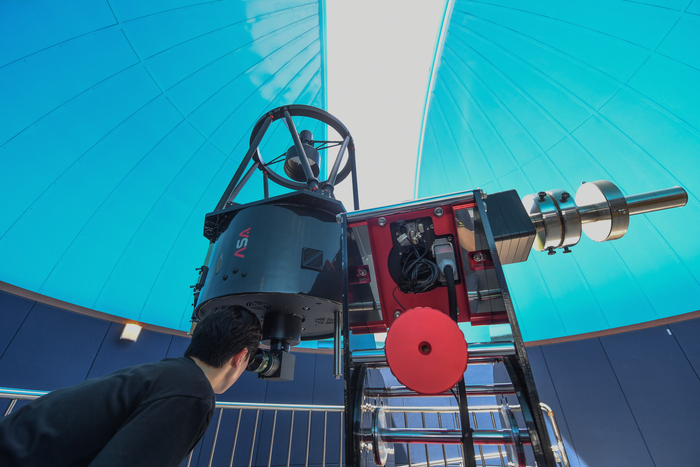
Photograph: Park Gwan-young · © Yeongnam Ilbo
The Moon changes the terms again. Its light makes faint celestial objects harder to distinguish, but the Moon itself is a generous subject. Near the line dividing lunar day from night, shadows bring crater rims and mountains into relief. NASA recommends observing this boundary, the terminator, for just that reason. A partly illuminated Moon may yield more visible texture than a full one. A visitor choosing dates for the Milky Way and a visitor interested in lunar terrain are not necessarily choosing the same night. [8]
These are useful distinctions to know before travelling. They leave room for preference. Someone who came for a dark, wide sky may reasonably be disappointed by a bright Moon, however finely a telescope reveals it. Good interpretation can offer another subject without pretending the original wish has been fulfilled.
Nor does a dark sky describe every condition above it. Artificial skyglow brightens the background against which faint objects must be distinguished. Atmospheric transparency concerns how readily their light reaches us. Clouds, aerosols and natural sources of sky brightness complicate the view further. Astronomer John Barentine’s review of night-sky measurement sets out these different contributions; they cannot be compressed into a claim that one place has a “clean sky”. Low light pollution establishes neither exceptional air quality nor clear weather. [9]
Yeongyang’s appeal survives these qualifications. In fact, it becomes more particular. The possibility is not an unlimited celestial performance. It is an evening in which the conditions may be good, the equipment is available and another person has the knowledge to help you use both.
The light at ground level
Kim Kyung-ho has spent years explaining another part of this night. His subject sometimes requires the observer to stop looking up.
On a firefly walk reported by Yang Bo-ra in JoongAng Ilbo in August 2016, Kim directed attention towards the vegetation. “Now take your eyes off the sky and look at the ground,” he said. The report described luminous larvae there. The flying insects visitors had come to see were only one part of the life in front of them. [10]
The instruction changes the subject without changing the place. Photographs tend to favour the airborne light. A habitat must support the less conspicuous stages as well. Once those stages enter the account, a firefly evening becomes harder to confuse with an installation switched on for its audience.
The late-season firefly associated with Yeongyang’s late-summer viewing is Pyrocoelia rufa, 늦반딧불이 in Korean. Its females are flightless and its larvae live on land. Those details matter to the ground a visitor crosses, not merely to a label in an exhibition. Research on firefly tourism stresses the need to protect the habitats used throughout the life cycle, including stages that spectators may never see. There is no reason to assume these insects will produce the synchronised display associated with other species elsewhere. [11]
Artificial light enters this life as more than a photographic nuisance. In experiments on North American Photinus fireflies, researchers Avalon Owens and Sara Lewis found that effects on mating varied with species, light intensity and environmental context. Those experiments do not measure what happens to P. rufa in Yeongyang. They do make a universal reassurance about harmless light difficult to defend. Colour alone is insufficient: a torch useful for preserving a person’s night vision cannot simply be declared suitable beside every insect habitat. [12]
Kim’s work is more involved than finding an attractive place for an evening walk. In a 2024 report for Dailian, he discussed Yeongyang’s breeding and release programme, the importance of habitat and the years restoration could require. Prolonged heat was a concern for survival. The account describes an intervention with difficulties, rather than a wild spectacle that conveniently replenishes itself each season. [13]
Releases and recovery need to be kept separate. A number of insects introduced into habitat is an account of an action. Establishing whether a population persists requires subsequent observation. An excellent public viewing evening might coincide with useful conservation work, but attendance and photographic success cannot stand in for that evidence.
There is a quieter demand in this distinction. The people responsible must remain interested in results that may be less immediately gratifying than the event itself. The public comes for the luminous adult. Conservation has to keep its attention on the rest of the animal’s life, including the periods when there is little to show a visitor.
By June 2026, Yeongnam Ilbo was still identifying Kim with the county’s Ecological Park Office. The published record connects a researcher explaining larvae in 2016 with a public employee discussing visitors a decade later. It does not tell us everything about those intervening years. It does establish continuity of a kind the destination photograph cannot contain. [3]
His presence also corrects the scale of a visit. A traveller may have one free evening. Someone else’s work must extend across seasons, weather and the unremarkable days when there is no audience. The encounter depends on that longer calendar, however briefly the visitor enters it.
Who decides about the light?
The mountains and comparatively low surrounding illumination gave Yeongyang a favourable starting point. DarkSky International designated Yeongyang Firefly Eco Park as a Dark Sky Park in 2015. Its South Korea directory still listed Yeongyang as the country’s sole certified place when checked on 9 October 2026. The recognition applies to a defined area, not the entire county, and is distinct from the Wangpi basin’s earlier ecological protection. It neither prohibits every light nor guarantees a clear evening. [14] [15]
Recognition was followed by a remarkably earthly question: what authority did the county have over the lamps?
In December 2015, South Korea’s Ministry of Government Legislation reviewed a proposed Yeongyang ordinance. It envisaged shielding lights above 500 lumens, reducing illumination for uses such as signs and sports facilities, and controlling operation with sensors and timers. But the proposed area included private as well as publicly owned land. The ministry’s advice identified insufficient delegated legal authority for the restrictions as drafted. The designation itself did not supply that authority. [16]
This was an advisory opinion on a particular proposal, not a prohibition on protecting darkness. Its importance lies in the people otherwise easily lost from the picture: an owner, an occupier, somebody with a reason to illuminate a piece of ground. A visitor’s enthusiasm for the stars cannot settle their obligations.
Much of the work behind an attractive environmental condition begins here, where a simple preference acquires boundaries, responsibilities and exceptions. The problem becomes interesting precisely because everybody does not own the same switch. A policy that ignores this may look decisive in an announcement and prove difficult to sustain in daily use.
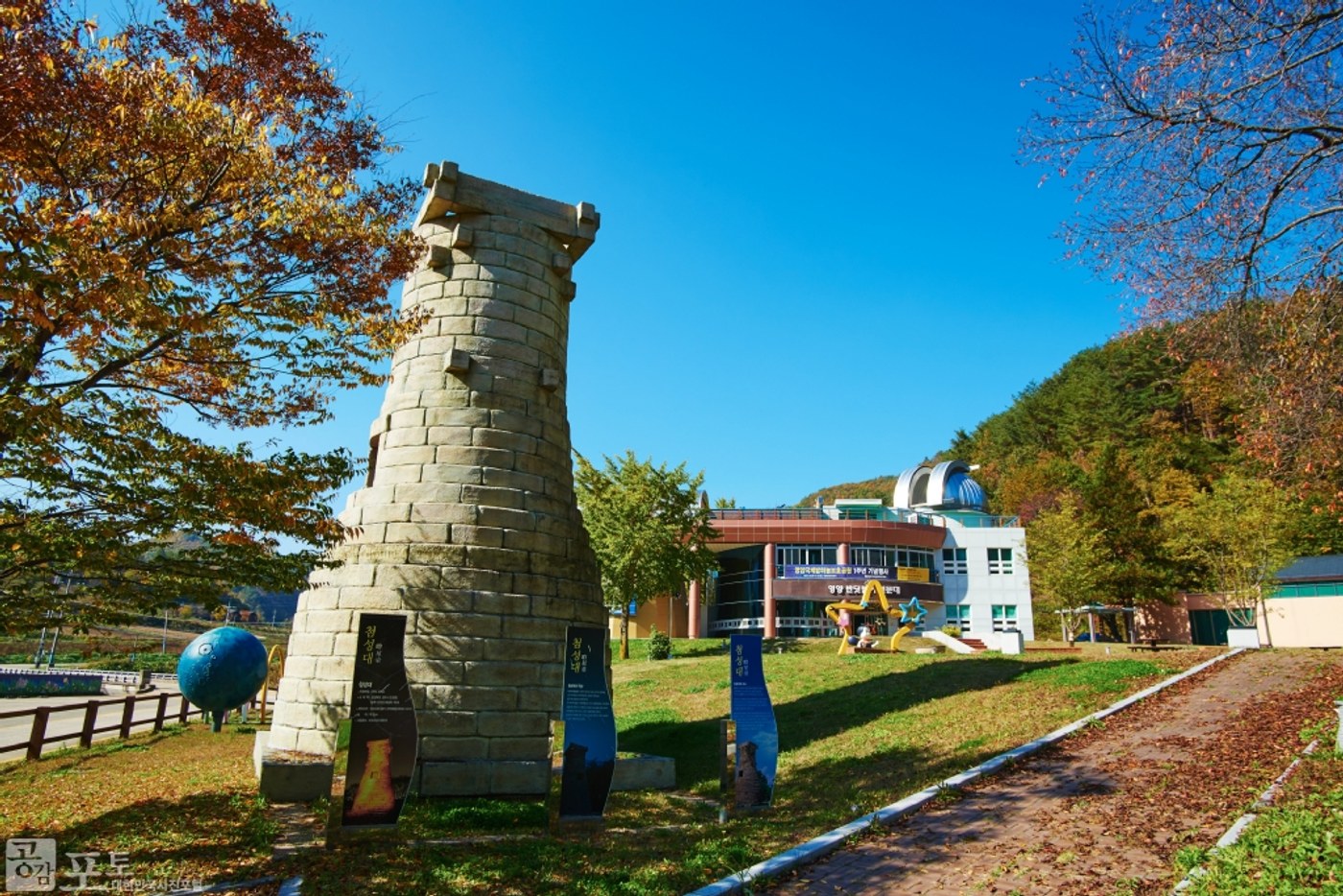
Photograph: Lee Jeong-su · Korea Policy Briefing archive
The details of responsible lighting are less theatrical than a landscape going entirely dark. The principles developed by DarkSky and the Illuminating Engineering Society begin with purpose: establish whether light is needed; direct it where it is useful; avoid unnecessary intensity; control its timing; consider its colour. A well-aimed fixture can serve a task while limiting unwanted spill. The question is what it enables someone to do. [17]
Consider a visitor returning to accommodation, a worker closing a building, or someone who needs extra time at a change in level. These are design requirements, not objections to a beautiful night. A route is not well managed merely because an able-bodied observer with good night vision can negotiate it.
There are useful provisions at Yeongyang. The Korea Tourism Organization’s accessibility listing records accessible parking, a ramped approach and a threshold-free main entrance, with a manual door. These details describe access to a facility; they do not establish the accessibility of every telescope position or outdoor route after dark. For a visitor whose trip depends on those arrangements, that difference belongs in the booking conversation. [18]
A more recent management decision concerned traffic. For the firefly festival scheduled on 4–5 September 2026, the tourism foundation published a closure between 19:00 and 20:30 along approximately one kilometre from the observatory to the ecological-forest management office. Its stated purposes included habitat protection. The nighttime walk would proceed after lights were extinguished, with safety personnel directing sequential entry. [19]
Here was an identifiable piece of road, a defined interval and a plan for moving people through it. The notice also allowed participation in the firefly walk without advance reservation or a numerical cap. Managing arrivals, accommodating people unable to walk the route and maintaining necessary access therefore remained practical questions. The published plan does not tell us how every arrival was handled, or establish an ecological improvement afterwards. [19]
Such scrutiny need not begin with an accusation against tourism. A public event can support local trade, introduce an unfamiliar subject and give people a reason to care. It also creates responsibilities. Its success is partly a matter of whether the operational detail deserves the confidence invited by the publicity.
Comparable sky-brightness readings need a repeatable method: where the instrument points, when the reading was made, and what the Moon and cloud were doing. A single unusually dark reading cannot describe a year. Documentation makes it possible to distinguish a reliable practice from a fortunate result, and a recent change from the ordinary variation between nights. The work is less immediately appealing than taking a photograph, but more useful when somebody later needs to know whether a lighting decision achieved its purpose. [9]
The evidence for Yeongyang is more modest than a completed environmental rescue. There are documented proposals and operating provisions. A recent calibrated series of sky-brightness measurements, accompanied by conditions and methods, was not available for examination for this feature. Neither was evidence establishing a firefly recovery attributable to a particular lighting change. Recognition, management and demonstrated results remain three different things.
That leaves work to assess, rather than a reputation to admire unquestioningly. It also leaves room for useful progress at a scale people can understand: a fixture, a route, an observing record, an arrangement that works better the next time it is used.
The people who stay
Seong Suk-hyeon’s involvement began with learning. Reporting in July 2016 described a residents’ council of roughly fifty people, with Seong as its chair. Members had been meeting at the observatory every two months since February, watching astronomical material and observing constellations and planets. Seong spoke about acquiring knowledge and wanting to preserve the sky for the next generation. The residents were becoming students of their own surroundings. [20]
This is a more substantial form of local participation than appearing in a visitor’s story as somebody who remembers a darker childhood. Learning creates present-tense possibilities. Someone may become able to answer a question, organise a group or distinguish a useful proposal from an attractive description. Familiarity with a place and knowledge about it are not always the same thing.
By August 2026, Seong was the representative of Byeolttaneun Yeongyang, a local astronomy enterprise. On 14 August, it signed an agreement with the Yeongyang Office of Education covering observation and career-experience programmes, teacher training, educational materials and family activities. The agreement records an intention to develop this work, not the completion of every proposed class. Its direction is nevertheless significant: the county’s night could become part of an education for people growing up nearby. [21]
A visiting family has an evening to use. A local school has the possibility of returning, asking a second question, approaching the same sky in another season. Teaching can make that difference productive. The result might be a lasting interest, or simply a subject a child had the chance to encounter properly. It need not produce a future astronomer to justify the effort.
Academy of Korean Studies · Wikimedia Commons · KOGL Type 1
There is another local context that the dark-sky photograph tends to leave out. Yonhap reported 15,969 registered residents in Yeongyang at the end of May 2026. The county had briefly regained the 16,000 mark before slipping below it again. Its recent population gains and losses were being discussed alongside a rural basic-income pilot and efforts to attract residents. Darkness is an asset in a place also concerned with the ordinary question of how people will continue living there. [22]
A traveller may welcome the length of the final connection once the car is arranged. For someone making necessary journeys repeatedly, the same geography may carry a different cost. Neither response requires correction. What would be presumptuous is asking a community to preserve inconvenience because it improves the atmosphere of a holiday.
Seong’s enterprise suggests one way the night can support work locally. It does not tell us that every resident shares the same priorities. Tourism income, dependable services, useful lighting and fewer interruptions may matter in different combinations to different households. The place deserves more than a single representative voice, however committed that voice may be.
The observatory’s small family astronomy camps provide a related opportunity. The June 2026 county-supported account describes a telescope supplied to each participating family, with instruction in setting it up and using it. That moves the visitor from receiving a demonstration towards understanding how the instrument works. [3]
Setting something up has a different tempo from being presented with a finished view. It exposes a little of the competence behind the encounter. Even a brief introduction can change what somebody notices the next time: the mounting, the adjustment, the relationship between the sky overhead and the small field at the eyepiece.
This is where Yeongyang becomes more interesting than a recommendation to find somewhere dark. It offers a meeting with other people’s knowledge. The social scale is manageable: a family, an instructor, a group sharing equipment. An evening together can remain just that, without being inflated into a fellowship or a revelation.
When the answer is no
One of the observatory’s most revealing services is also its least spectacular. In August 2016, an official notice announced a “starlight forecast” to help visitors judge whether observation would be possible. It warned that weather could change quickly and provided a telephone number for enquiries. Uncertainty was being put in front of the journey, where it could be useful. [23]
The problem remains real. In his May 2026 report, Lee Han-ho described a forecast that changed from favourable in the morning to impossible in the afternoon. Rain followed that night. He stayed longer and eventually obtained better conditions; another visitor might not have had the additional day. The first evening did not become successful merely because the account continued. [4]
An indoor explanation can still be good. Equipment, projected constellations and a knowledgeable person can make a cloudy evening worthwhile. They cannot provide the sky somebody travelled to see. The distinction is one a serious destination should be able to sustain without embarrassment.
Photograph: Lee Jeong-su · Korea Policy Briefing archive
There is a similar limit to the meaning of a firefly sighting. Habitat does not cease to matter because no insect appears during the visitor’s allotted hour. Nor does the importance of habitat supply the missing encounter. Anticipation and disappointment can both be reasonable. Neither needs an improving conclusion imposed upon it.
The appeal of Yeongyang is stronger when it permits this uncertainty. A booking can secure a place in a programme; it cannot purchase the atmosphere above it. What can be offered is more tangible: an explanation that makes sense, arrangements that are clear, light used with purpose, and an honest assessment of what the evening allows.
That is also how the place remains relevant after the journey back to Seoul. There is no need to trade the city for permanent darkness. A restaurant entrance, a crossing and a station approach have legitimate work for light to do. The more useful comparison concerns how carefully the work is specified: where the illumination goes, when it operates, whom it serves and what lies beyond its intended reach.
The stars need not make anybody’s life seem small. A night can add an interest without resolving an anxiety. It can leave the person who travelled with you more firmly attached to a memory, or leave you wondering about an instrument you had never thought to use. There is room for an ordinary pleasure that remains ordinary, even when its subject is extraordinary.
Yeongyang’s stronger claim is that some of the conditions for such an encounter can be influenced. Residents have gathered to learn. Researchers have continued working with a difficult animal. Officials have had to consider the limits of their authority and the uses of a road. None of this guarantees the next clear evening. It gives that evening a human history.
The observatory’s forecast notice ends with a number to call. It is an unshowy provision, but a consequential one for someone deciding whether to make the journey. Before the view, there is a question about what can honestly be seen tonight—and someone whose work includes answering it.
Reporting note: This is a researched feature, not an eyewitness account. Visits and quotations are attributed to their original reporting. No original interviews or on-site observations were conducted for this version.
Planning a night in Yeongyang
Online information reviewed 9 October 2026. The standard timetable below has not been reconfirmed by telephone; check directly before travelling.
The place. DarkSky’s official listing is Yeongyang Firefly Eco Park, a Dark Sky Park. The local destination is 영양국제밤하늘보호공원. Within it, Yeongyang Firefly Astronomical Observatory / 영양반딧불이천문대 is at 129 Banditburi-ro, Subi-myeon, Yeongyang-gun, Gyeongsangbuk-do. The Star Ecology Experience Center / 별생태체험관, ecological forest and accommodation are separate facilities; admission or opening hours for one do not automatically cover the others. [14]
Hours and tickets. Published standard observatory hours are 13:00–18:00 and 19:30–22:00, with evening sessions listed at 20:00, 20:40 and 21:20. The ecology centre is listed at 10:00–18:00. Monday closures and holiday exceptions apply. Listed observing admission is ₩4,000 for adults and ₩3,000 for young people; activities may cost extra. Confirm ticketing deadlines, the applicable ticket and current booking requirements. Family camps and accommodation need separate arrangements. Telephone +82 54 680 5332; see the county ecological-park portal. [24]
From Seoul. Plan a morning bus from Dong Seoul Terminal to Yeongyang Terminal, then a prearranged taxi for the final connection. Allow roughly 4½ hours for the bus and about 30–40 minutes for the onward road journey, subject to the service and traffic. Reserve an overnight stay and both taxi connections; do not assume a late return bus after observing. Recheck the timetable for the actual travel date. [4]
Choose the subject as well as the date. Consult KASI’s lunar information and the observatory’s advice. A moonless interval helps with faint Milky Way viewing; a partly illuminated Moon offers its own detail. Late-season firefly programmes are associated with late summer, not year-round viewing. Confirm emergence and authorised access separately. Check the weather for Subi-myeon, and ask which indoor programme, cancellation or refund arrangements apply when observation is impossible. [13]
On the ground. Be prepared for outdoor standing and changing temperatures. Accessible parking and a ramped main approach are listed, but confirm the exact nighttime route, telescope access, seating, toilets and assistance you require. Ask about English-language instruction in advance; it was not verified. Arrange evening food with your accommodation rather than relying on late service nearby. [18]
After dark. Remain on authorised routes and use lights as directed by staff. A particular torch colour is not automatically permitted or harmless to wildlife. Do not disable necessary safety lighting. Avoid flash, light painting and drones around habitat, and seek permission for organised photography. Designation is not permission for unrestricted overnight access.



.png)
