



At a €495 dinner in Paris, Julien Walther wanted another tomato tart.
His account of a June 2026 return to Plénitude describes almond puff pastry carrying confit tomatoes and onion marmalade, accompanied by two sauces: a shallot reduction involving Lambrusco vinegar and black truffle, and a cream sharpened with Barolo vinegar and herbs. He admired the fragile pastry and acidity. Writing afterward, he wanted to fly back for it. His appetite had survived his expertise. Walther’s review
The tart is an inconvenient beginning for an essay about abundance. It contains no disappointment. There is no bored guest pushing something expensive around a plate, no revelation that a distinguished kitchen has concealed mediocrity under truffle. There is a person who has eaten well and would like to do so again, with remarkable specificity. He wants that tart.
This is what a great restaurant hopes to achieve. A dish enters the future. It becomes something to return for, rather than simply something that has been consumed. The bill records a transaction already completed; appetite makes a reservation of its own.
Plénitude, Arnaud Donckele’s restaurant at Cheval Blanc Paris, offers considerable assistance to this process. Its current Symphony menu describes six acts and costs €495 before drinks. The alternative, Sail Away Together, costs €475 and allows a choice of three savoury dishes and a dessert, with the cheese cellar. Wine pairings for Symphony are listed at €195 and €495. The more expensive pairing costs as much as the food. That is an option, rather than a requirement, though the arithmetic neatly captures how far an evening’s capacity for addition can extend. Official menus
There is nothing inherently absurd about wanting the wine. A wine can reward a detour, years of study, a conversation that lasts beyond the meal. Nor is there anything morally superior about declining it. But an optional addition asks a question that familiarity can make strangely difficult to hear: would this increase the pleasure of this particular evening?
The financial question may eventually become easy. The other one remains.

© Arthur Weidmann / Wikimedia Commons · CC BY-SA 4.0 · Resized; no crop.
Donckele’s sauces supply a useful resistance to thinking of luxury as a sequence of famous nouns. A sauce has relationships within it. Acidity can expose sweetness; bitterness can prevent sweetness becoming heavy; a stock can give length to an ingredient that would otherwise disappear too quickly. Their success depends on proportions and on what happens when they encounter the solid food. Prestige alone cannot perform those operations.
In a 2023 review, the critic Vedat Milor praised a crab-and-white-asparagus preparation whose sauce balanced seafood salinity, lime, grapefruit and pine honey. He particularly admired red mullet with a broth involving rockfish, pastis, cognac and sea urchin. Yet he wanted more shellfish in other courses: the quantity of langoustine seemed insufficient for its sauce. Lamb and pigeon sauces struck him as less distinct and less accomplished. By the cheese course, he and his companion were too full to continue. Milor’s review
These are judgments about cooking. They should not be converted into evidence that an experienced diner has lost the capacity for pleasure. Wanting a larger langoustine portion and having no room for cheese can coexist. The balance of a dish and the cumulative weight of a meal are different problems. Increasing everything would solve neither.
The chef’s difficult customer may therefore be difficult in a productive way. Someone familiar with exceptional shellfish can ask whether the sauce allows enough of it to remain legible. Another guest may be discovering the ingredient and its treatment together. Neither experience is the correct amount of experience to bring to dinner. The kitchen must feed both people, sometimes at the same table.
But what happens when the cooking succeeds and the expected feeling does not? When the fish is accurately cooked, the pastry excellent, the service alert, and the evening’s excellence seems curiously administrative: every promise fulfilled, little urgency to repeat it?
That possibility deserves investigation without being assigned to the occupants of an expensive room. A price reveals what someone paid. It cannot tell us whether they were celebrating, working, curious, hungry, anxious, delighted or simply accompanying someone else. Nor does diminished excitement necessarily mean diminished enjoyment. The shock of a first encounter and the satisfaction of a return have different shapes.
Research helps separate questions that restaurant culture often compresses into the word appetite. In a 1984 experiment, Barbara Rolls and colleagues compared meals comprising four different foods with meals repeating one food across four courses. Variety increased consumption. The pleasantness of a food could decline relative to foods that had not been eaten, a phenomenon called sensory-specific satiety. Changing the food could sustain interest within the meal. Rolls and colleagues
This helps explain why a sequence can work. It does not establish that fifteen courses are better than six, or that a guest who has lost interest in caviar has undergone the same process as a participant eating repeated portions in a laboratory. Eating more is not itself proof of enjoying an evening more. A menu can keep finding another route past a local loss of interest while the person eating it is approaching a more general wish to stop.
The chef composes in time. A cool preparation after several warm ones, something bitter after sweetness, a cleanly articulated flavour after complexity: these are possibilities available to a cook, not guaranteed effects. Their success depends on the actual dish and the actual eater. There is no universal point at which a broth becomes welcome merely because it is broth.
And a person waiting for dinner has something more than a sensory system. They have expectations, previous meals, a reason for being there. They have the freedom, usually, to decide they would prefer something else.
At Alcatraz, that freedom was absent.
There is an apple in the historical record. Robert Guilford, imprisoned at the federal penitentiary from 1948 to 1960, recalled Christmas packages containing cigars, candy bars, hard candy, an apple and an orange. In the National Park Service transcript, the fruit arrives at the end of a practical inventory. He does not describe its flavour. He does not say he saved it, dreamed about it or found in it a pleasure unavailable to people outside. Guilford’s oral history
That is the apple in this title. The limits of what can be said about it are part of its meaning here.
An essay could easily improve it. Give it a smell, a patch of colour, the imagined pressure of teeth breaking the skin. Let it stand for the intensity produced by having very little. Within a few sentences, an incarcerated man would have been recruited to make someone else’s dinner seem spiritually impoverished. The prose might be vivid. The person would have disappeared.
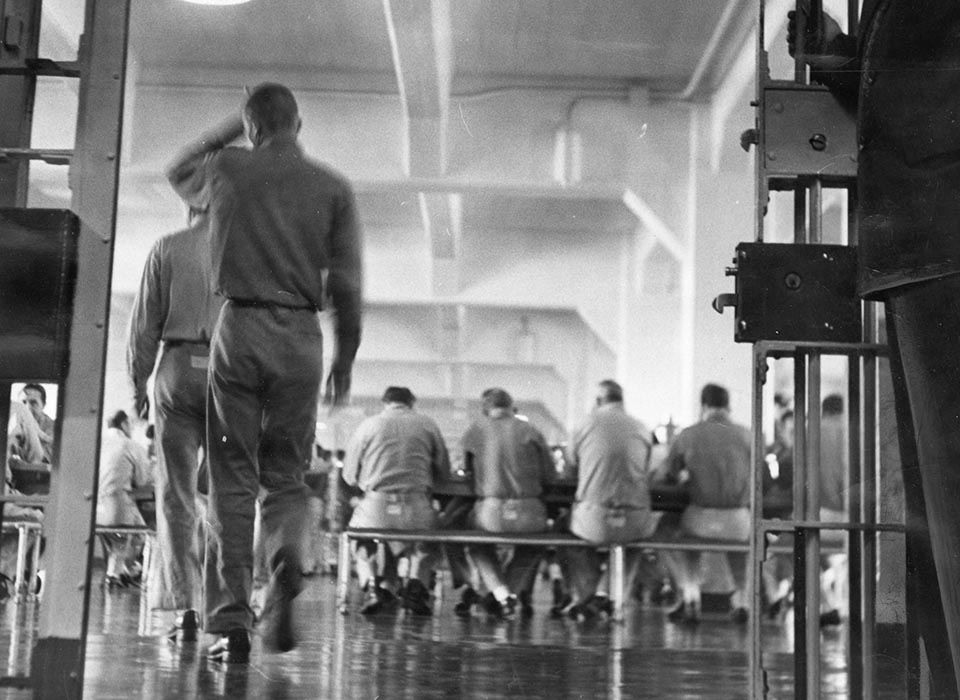
The archive permits a less convenient account. Alcatraz was a federal penitentiary between 1934 and 1963, following its military use. Its dining arrangements changed during those decades. Mary Grassick’s 2005 National Park Service Historic Furnishings Report separates the military and federal periods and reconstructs the latter through regulations, correspondence, inspections, photographs and recollections. It describes a functioning food institution, with equipment purchases, sanitation problems, labour assignments and arguments about how people should be fed. NPS historical report
The federal regulations cited there instructed men to observe the ration displayed on the menu board and take what they wished within the allotted quantities, while eating everything they took. Food was not to be removed from the dining room. Jim Quillen’s memoir, quoted in the report, remembers measured servings and the option to refuse a particular dish, but disciplinary consequences for leaving what had been accepted. This was a limited choice made under supervision.
Earlier arrangements prevented men returning to the steam table themselves, although servers could bring seconds to their tables. By 1951, the report records a self-service system. A description of generous provision cannot be detached from its date, its distribution rules or the distinction between receiving another portion and being allowed to move to obtain it.
The institution had to supply food three times a day while controlling the movement of the population. In April 1934, before the federal prison opened, Warden James Johnston wrote about the dining hall as a potential site of collective action over food, rules, privileges and the conditions of confinement. Ten tear-gas discharge units were installed there. The report says they were never activated. Their presence nevertheless belongs in any account of the room. Johnston also described watching the noon service to see which foods men accepted or passed over, including during wartime shortages. Administration involved observing appetite as well as enforcing order.
Park Archives, Golden Gate NRA / National Park Service · Public domain
So do the people who cooked. A 1955 roster recorded twenty-five incarcerated workers in the culinary department, including cooks, bakers, dish-machine operators, washers and dining-room staff. An inspection that year praised food, supervision and sanitation. In 1961, officials criticised cleaning in the bakery; in February 1962, improved conditions were credited to persistent work by the men assigned to the department. Quality required labour, and the record occasionally allows that labour to become visible.
An NPS-held Christmas 1954 programme lists turkey with oyster dressing and giblet gravy, potatoes, buttered peas, cranberry sauce, rolls, pumpkin pie, fruit cake and coffee. This is a holiday menu, not evidence of an ordinary Tuesday. It establishes what was planned and printed, not how every portion arrived or how anyone felt while eating it. Christmas 1954 programme
A prisoner’s letter dated 30 May 1960, reproduced by Grassick, describes half a Southern-fried chicken every other Sunday and a Memorial Day dinner with T-bone steak, potatoes, corn and chocolate cake. The writer, identified in the report as Alvin Karparauz, was addressing his sister. This is a contemporary letter, rather than a later interview; it is still one person’s account of selected meals, not a complete institutional menu history. Letter cited in the NPS report
Guilford remembered the bakery favourably: fresh rolls, doughnuts and coffee cakes. His recollection of 1959 also records permission to order a two-pound box of chocolates; he said every one of the 262 men ordered one. That is evidence of the demand he remembered, with an unusually concrete count. It is not a measure of the happiness of the prison population. Guilford’s testimony

Park Archives, Golden Gate NRA / National Park Service · Public domain
Frank Heaney, a correctional officer there from 1948 to 1950, remembered the food very differently. He called it “completely unappetizing,” singling out string beans whose fibres made them unpleasant to chew. He also recalled buying sandwiches from a delicatessen in San Francisco. He was an officer, not a prisoner. His alternative lunch was available because he could leave. Heaney’s oral history
The disagreement does not require a winner. A bakery might produce good rolls while vegetables were badly chosen or cooked. Different years, meals, positions within the institution and personal standards can produce different testimony. The official aspiration, the inspector’s assessment and an individual’s appetite are separate kinds of evidence.
There is a further complication. Guilford recalled looking forward to spaghetti and meatballs on an evening when tables were overturned before he could begin. Grassick reproduces the account without assigning the episode a secure date. It should not be turned into a scene about gratitude interrupted by ingratitude. Approval of a meal could coexist with anger about the institution providing it. Food was one condition of confinement among many; liking it did not constitute consent to the rest.
This is where Alcatraz interrupts the argument about scarcity. The men were deprived of liberty. It does not follow that every meal was scarce, that food tasted better, or that confinement produced a superior faculty of appreciation. A person could like the bread, dislike the beans and want to leave. The apple offers no instruction for a person choosing dinner in Paris.
What the archive does expose is how inadequate it is to explain a meal through its contents alone. The question of who decides, who serves, who works, who can refuse and who can go elsewhere cannot be scraped off the plate.
Return, then, to a voluntary table, where the possibility of leaving changes everything.
At L’Effervescence in Tokyo, Shinobu Namae has made repetition part of a dish’s purpose. The turnip known as Teiten Kansoku, or observation from a fixed point, returns across seasons. TABLEALL’s restaurant profile describes four hours of cooking, a finish with browned butter and an accompaniment of Japanese prosciutto. The premise is to encounter the same ingredient over time and notice how it changes. Continuity becomes a means of attention. Restaurant profile
This is an expensive place to study a turnip. The current official omakase price is ¥49,500 including tax, with a further fifteen per cent service charge: ¥56,925 before beverages. The turnip is part of a complete meal, not a financial argument against luxury ingredients. The menu’s cost supports a restaurant, its staffing, its procurement and its many preparations. Whether it represents value remains a legitimate question for the guest. Calling the ingredient ordinary does not answer it. Official menu
Namae’s cooking is rooted in French technique and Japanese produce; his professional history includes Michel Bras Toya Japon and The Fat Duck. It would be reductive to call the turnip a rejection of sophistication. A preparation that takes hours, returns year after year and exposes small differences has its own demands. The less a dish conceals, the more consequential its texture, seasoning and temperature become. Chef biography
The current Michelin account describes hot risotto after the aperitif, drawing on the freshly cooked rice of cha-kaiseki, the meal associated with formal tea practice. It identifies the vegetable composition as a signature and the concluding matcha with the Sowa school of tea. Those details describe a sequence with an opening and a recognisable end. Rice is permitted to introduce the meal; tea is permitted to finish it. Michelin’s account
Between them, there is ample room for richness. TABLEALL describes Kyoto duck roasted in a wood-fired oven and Spanish mackerel aged near freezing, gently cooked in oil and finished over charcoal before the guest. The turnip lives among these preparations. It does not have to defeat them. A guest could reasonably prefer the duck, or find the turnip the more interesting technical achievement, or enjoy both without appointing either a symbol of how to live.

© Vanessa Bucceri / Unsplash · Unsplash License
A dated account helps recover the food from the philosophy. Writing about dinner on 25 November 2016, Yao Wong singled out a shirako preparation with snow-crab roe and sweet-potato soup, intensified by a wild-boar caramel, as his favourite. He admired the cooking of pigeon and the bitterness of chicory against its richness. His turnip came with Basque ham, parsley and brioche; a warm pairing of turnip juice and dashi echoed it. The meal’s varying temperatures and textures left him full but not overwhelmed, and he regretted its ending. Wong’s review
That dinner belongs to 2016. It cannot certify the cooking of a current service. What it does establish is a particular diner’s response to an elaborate meal: satisfaction and an appetite for a return. The supposed simple course did not have to become the favourite. Nor did fullness retrospectively invalidate the pleasure that preceded it.
The contemporary restaurant still gives diners reasons to attend closely to familiar materials. That proposition is more interesting than insisting it makes them feel something. A kitchen can create conditions; it cannot guarantee the interior life that meets them.
Namae described presenting a detailed farmers’ list with his vegetable course in a March 2022 interview with Jens Jensen. Some guests did not welcome it. He recognised their wish to enjoy the meal without that information. The guest was allowed a different emphasis. Namae’s interview
A knowledgeable diner is not necessarily asking for more information. Sometimes knowledge has made another explanation unnecessary. Sometimes it has made one detail fascinating. Hospitality must discover the difference without treating silence as ignorance or curiosity as a demand for a lecture.
At Plénitude, restaurant director Alexandre Larvoir described another approach in a 2024 interview with William Drew for 50 Best. Guests entered the wine cellar before sitting down; conversation about wine could expand or contract with their interest. The evening included movement into the kitchen and the cheese room. Larvoir saw those changes of place as ways for guests to participate, rather than remain passive. Donckele, meanwhile, spoke of asking cooks and servers to work with the generosity they would bring to people they loved. Donckele and Larvoir’s interview
These are the team’s descriptions of its intentions, published in connection with a hospitality award. They are not independent proof that every evening achieves them. But they show serious professionals thinking beyond the upgrade. The intervention is sometimes conversational, sometimes spatial. Another ingredient is not the only available response to a guest who has encountered many ingredients already.
There remains a delicate distinction between offering participation and requiring it. For one person, a visit to the kitchen may release an evening from its formality. Another may have been perfectly happy in the chair. An experienced host needs to notice when a carefully devised moment has become an obligation. Generosity includes what can be offered; its precision lies in understanding what is wanted.
Science supplies no single mechanism for all these differences. In their 2018 review of hedonic decline, Jeff Galak and Joseph Redden distinguish physiological feedback, perceptual changes and self-reflection among the influences on diminishing enjoyment. The category reaches beyond being physically full. It also reaches beyond a simple account in which repetition wears pleasure away at a predictable rate. How an experience is perceived and considered matters alongside exposure. Galak and Redden
The time scales must remain distinct. Becoming less interested in the food currently being eaten, becoming accustomed to a restaurant over repeated visits, and adjusting to a more comfortable life are not interchangeable observations. Evidence for one does not automatically establish the others. A laboratory experiment is not a biography of an affluent diner.
Expectation can also contribute to pleasure. In a 2008 wine experiment, Hilke Plassmann and colleagues gave participants price information while they tasted wines, including the same wine represented at different prices. Higher stated prices increased reported pleasantness under the study conditions. The finding complicates the easy claim that a price merely fools someone into saying they like something. Context can enter the experience being reported. Plassmann and colleagues
It does not follow that expensive wine is interchangeable with inexpensive wine, that expertise is fraudulent, or that raising a restaurant’s bill reliably improves dinner. It means a diner’s assessment does not arrive untouched by what the diner knows. An expectation can prepare pleasure as well as burden it.
The distinction between liking and wanting is similarly useful, provided it is handled without theatrical neuroscience. Ileana Morales and Kent Berridge’s review of food reward describes interacting but distinguishable mechanisms involved in hedonic response and motivation to obtain food. Physiological states can influence both. These technical uses of liking and wanting do not map neatly onto every ordinary sentence about desire. They certainly do not license a diagnosis from a restaurant reservation. Morales and Berridge
Still, the distinction gives language to a question criticism does not always ask. Was the dish accomplished? Was it pleasurable while it was eaten? Does someone want it again? The answers need not rise and fall together.
Much of the anxiety around abundance may begin when we insist they should. A person who has worked to make travel possible, learned how to book difficult restaurants and acquired the confidence to order wine has achieved something. The achievement can bring real ease. It can remove humiliating calculations and permit generosity without the fear that follows it home. There is no reason to wish those freedoms away.
Yet ease can change what an experience signifies. A first expensive dinner may also be evidence that a life has opened. A later dinner can be equally good without bearing that additional meaning. The kitchen has reproduced the cooking. It cannot reproduce the threshold a person crossed on the first occasion.
This is an interpretation, not the account of an unnamed diner secretly confessing emptiness. But it identifies the emotional risk worth taking seriously: the suspicion that what was once wanted has become an efficient part of life, while the capacity to look forward to it has grown less vivid. Everything necessary for pleasure appears to be in place. Its arrival feels less certain.
The person facing that possibility need not be unhappy in any general sense. They may still enjoy dinner, their work, their friends, the city outside. What has altered may be narrower and harder to describe: an old source of anticipation no longer generates the same future. The expensive meal was once somewhere the imagination went before the body could follow. Now the body can go whenever arrangements permit, and the imagination has become harder to persuade.
There is a particular loneliness in believing one has no acceptable language for this. To complain seems graceless. To pretend seems worse. Buying another increment of rarity can look like a practical response because it is a response that can be completed. The more difficult inquiry has no confirmation email: what, precisely, is missing from the wish?
© Julie Mallet / Unsplash · Unsplash License
EDIT27 cannot regard this question as someone else’s mistake. We make distinctions for a living. We explain which kitchen deserves an evening, which hotel deserves an extra night, which room changes the experience of a city. Done well, this work saves a reader money, time and disappointment. It can make competence visible where publicity has made only expense visible.
It can also make pleasure contingent on correct selection. The reservation is no longer simply a plan for dinner; it becomes evidence that the traveller knows how to travel. Before anything arrives, the evening has been burdened with the requirement to justify the choice.
An editorial culture organised around the best can leave little language for the sufficient. Not mediocre, not indifferent, but a choice good enough to release the person who made it. There are circumstances in which the most useful thing a guide can do is explain the meaningful differences and then stop multiplying them. A reader should not need to carry the unchosen restaurants into the chosen one.
That is not an invitation to lower culinary standards. Temperature, texture, seasoning and service still matter. A badly timed meal remains badly timed even if its guests are determined to be agreeable. But criticism can distinguish between a defect that damages the evening and a difference that merely supplies something else to compare.
Perfect selection and a profound experience are separate ambitions. The first can prepare the second. It cannot compel it.
Anticipation belongs to that second ambition, though it is often treated as an inconvenience on the way to the first. The reservation has to be secured; the dates have to work. Once the obstacles are removed, there can still be an interval in which dinner exists as a possibility. A menu is read. Someone else is told about it. A season approaches. The experience occupies time before it occupies a table.
In four studies published in 2014, Amit Kumar, Matthew Killingsworth and Thomas Gilovich found that anticipating experiential purchases tended to be more pleasurable than anticipating material purchases. Their evidence included questionnaires about planned purchases and experience sampling. The relevant point is modest: some pleasure can precede possession or participation. The research does not establish an ideal waiting period for dinner, or show that longer waits make meals better. Kumar and colleagues
A difficult reservation is therefore no certificate of a powerful experience. Scarcity can make access socially valuable without making a sauce more balanced. It can also turn anticipation into an administrative burden. There is a difference between looking forward to dinner and repeatedly refreshing the page that may permit it.
The interval worth considering is the one that remains available to the guest. A seasonal return to Namae’s turnip offers one possibility: familiarity with enough change to make looking worthwhile. A reservation made for a particular occasion offers another. Neither requires making life harder. Nor must every evening carry weeks of preparation. Spontaneity has its own appetite; being able to walk into somewhere good is one of a city’s pleasures.
Ordinary physiological hunger before dinner is also distinct from poverty, food insecurity or forced restriction. Being ready to eat is a bodily condition, not an achievement of character. Nothing in the prison record or the restaurant accounts makes withholding necessary food a reasonable technique for recovering pleasure. There is no useful passage from Alcatraz to a programme of deprivation.
The more interesting freedom is permission for one good experience to end without immediately appointing its successor. An upgrade can remain an option. A favourite restaurant can remain a favourite without being required to provide the next important evening. These are possibilities, not a schedule for managing desire. The point at which they become another optimisation project would be the point at which this essay had defeated itself.
Memory complicates the matter further. Walther’s return to Plénitude included a sardine preparation he rated a little below his first encounter, while still judging it exceptionally highly. He could not locate the difference in particular details. His tomato tart, meanwhile, generated an immediate wish to return. Familiarity and fresh desire occupied the same dinner. Walther’s return visit
No verdict on adaptation can be extracted from that discrepancy. The food may have changed; the eater may have changed; comparison itself may have changed the encounter. What matters is that an attentive account can preserve uncertainty without becoming useless. A critic can know what was pleasurable and remain unsure why one evening differed from another.
Such reviews are records made near the meal, however, often with photographs and notes. They are not the same evidence as an unaided recollection six months later. A dish described in exact detail on a website may have needed the website to remain exact. That does not diminish the cooking. It changes what the document can tell us about the life the meal subsequently had.
Namae’s interview offers a different kind of memory. Recalling a New York research trip years earlier, he described eating extensively and becoming stuffed. Travelling with another chef, he happened upon a cookbook shop and found Michel Bras’s Essential Cuisine. The photographs altered his understanding of what French cooking could be. He subsequently pursued work with Bras. The enduring discovery in his account occurred between meals. Namae’s recollection
It would be perverse to turn this into proof that the dinners were wasted. Eating, travelling, professional curiosity and the encounter with a book belonged to the same opportunity. Abundance had given him a field in which to discover something he had not known how to seek. The memory contains another person, too, without making companionship its mandatory explanation. What mattered in the telling was an image of cooking that opened a possible future.
© Kate Laine / Unsplash · Unsplash License
This is one reason the demand to identify a greatest meal can be so distorting. It asks a single event to carry judgments about technique, sensation, company, circumstance and aftermath. Those measures may diverge. A companion’s account would be valuable precisely because it could differ. The food need not lose its excellence because conversation occupied someone’s memory; conversation need not become the secret explanation for every enjoyable dinner.
The meal is also allowed to have been worth eating without changing a life. There is something exhausting about requiring every expensive evening to become an enduring possession of the self. A beautiful sauce can justify attention for the minutes in which it is eaten. Hospitality can provide ease that leaves no spectacular anecdote behind. Forgetting is not a retrospective invoice demanding repayment.
Perhaps this is where abundance offers another freedom: the freedom to stop escalating the demand placed on pleasure. The excellent dinner need not be the best dinner yet. The next reservation need not restore an earlier version of the person making it. There can be curiosity about what remains possible without contempt for what has become familiar.
Guilford’s apple remains where the evidence places it, in a Christmas package remembered by a man who could not choose to leave. There is no reason to ask it to solve the difficulties of people who can. Its presence in the record establishes a food and a circumstance. It does not establish a scale on which the pleasures of lives can be ranked.
In Paris, the documented wish is more particular, and more ordinary than the elaborate dinner that produced it. Walther wanted the tomato tart again. He did not need it to expose the fraudulence of other pleasures. It had simply made another encounter desirable.
What will do that next time?
Reporting note. This essay draws on National Park Service records and oral histories, peer-reviewed research, published interviews and attributed restaurant criticism. No restaurant visit or interview was conducted for this commission. Sensory judgments belong to the named writers; menus and prices were checked on 5 September 2026 and can change. The apple is documented in Robert Guilford’s retrospective account of Christmas packages, without a description of tasting it. Historical testimony is presented as individual recollection, not a collective verdict. The essay’s discussion of diminished desire is an editorial inquiry, not a diagnosis of its named diners.
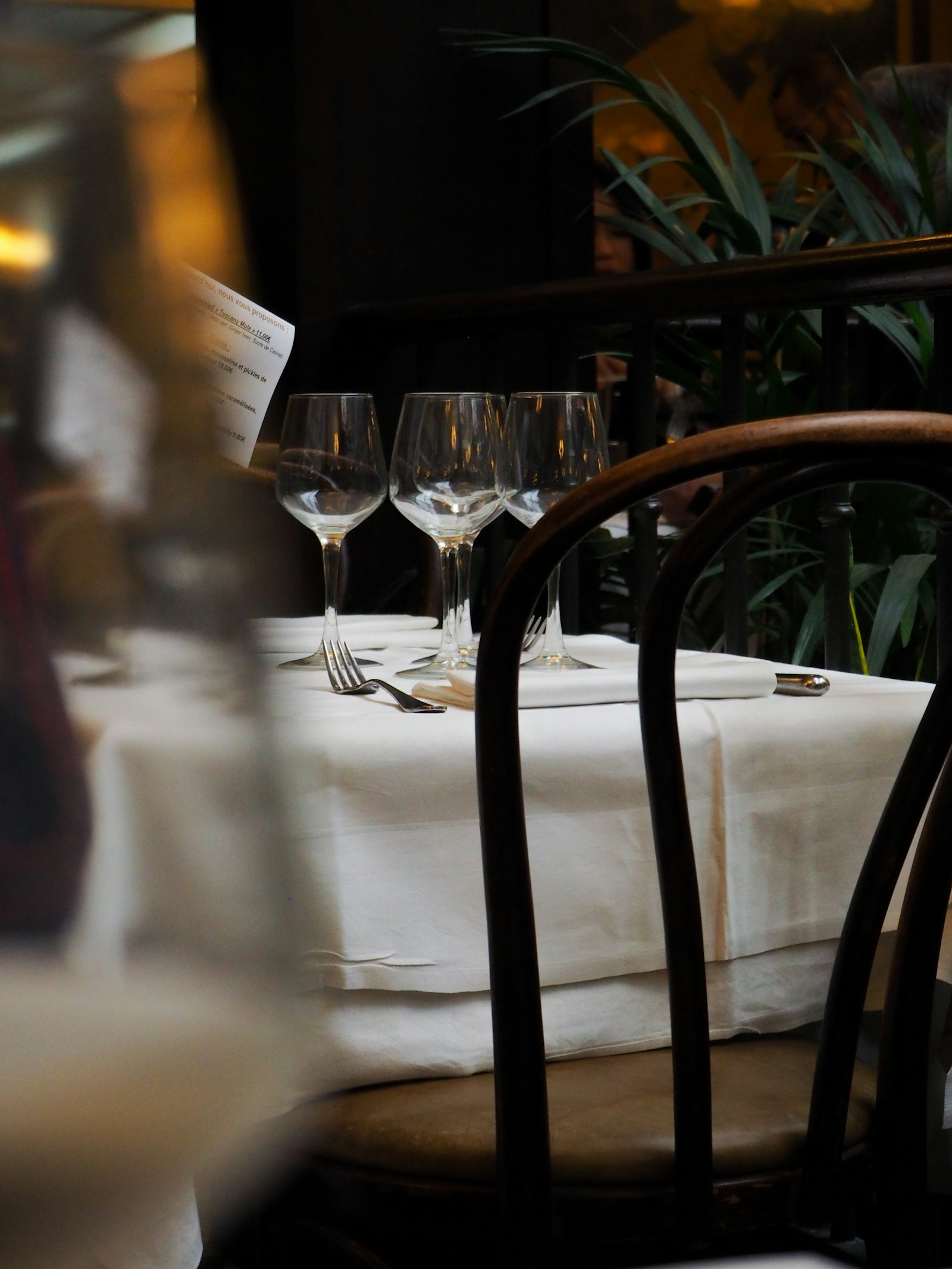
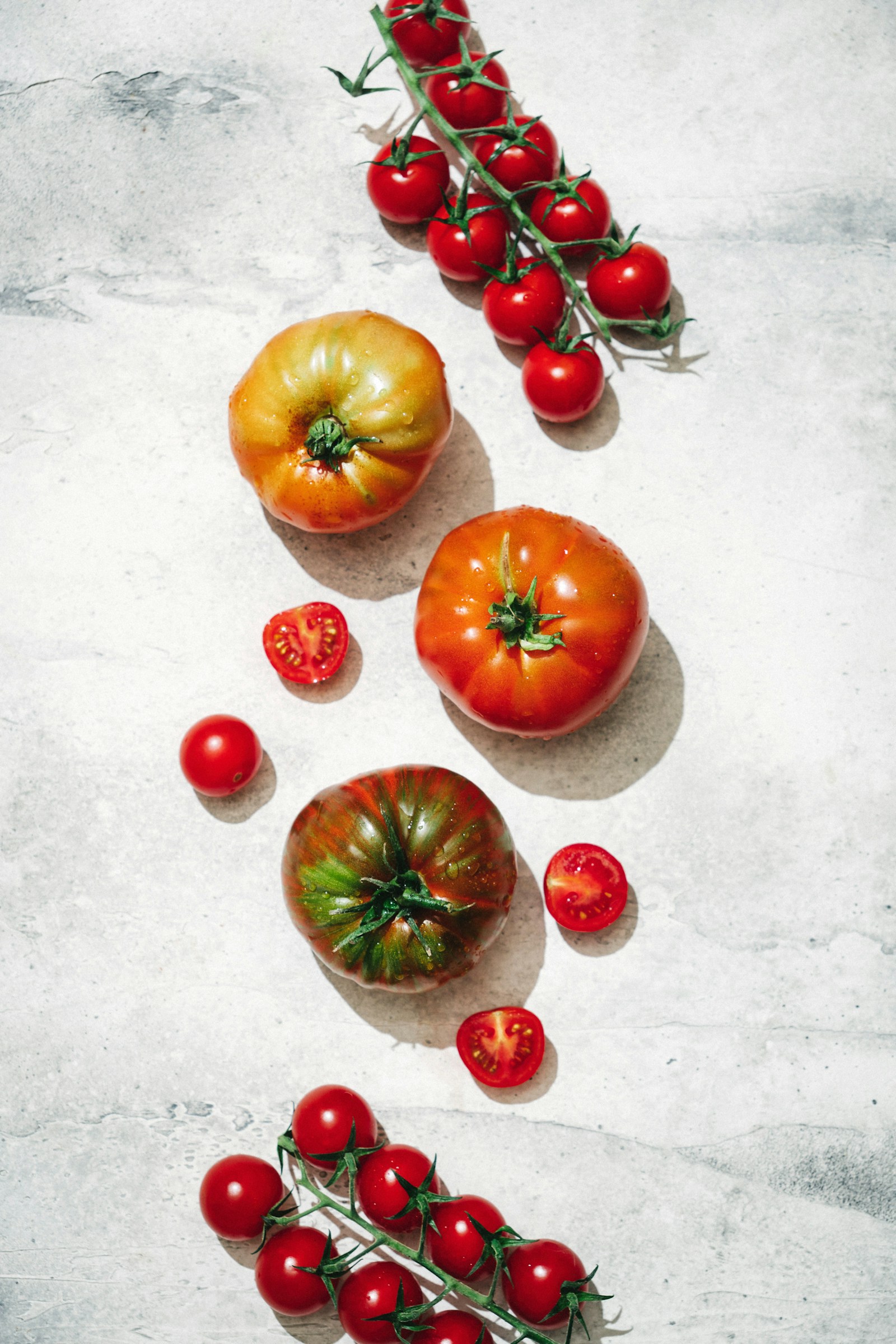
The market, table-setting and tomato photographs are illustrative; they do not depict the named restaurants or their dishes. Archival images are dated in their captions. No claim is made to original U.S. Government works.
.png)



.png)
