



At Sawada, you may write down what you eat. The notebook must stay below the counter.
The instruction appears in the Ginza restaurant’s booking conditions, alongside a prohibition on photographs, video and the use of a phone. It is an unusually revealing qualification. Dinner need not go unrecorded. The recording should take place out of the way.
Perhaps that seems entirely reasonable. A counter is a working surface, not an office. Perhaps it sounds like an expensive evening spent worrying about your hands. Before deciding, there ought to be some sushi.
Much of the language surrounding camera-restricted restaurants contrives to postpone that encounter. The rules arrive first, followed by the difficulty of the reservation, the small number of seats and the honor supposedly conferred by occupying one. By the time the food appears, approval can feel almost compulsory. Yet none of those preliminaries tells us whether the rice is well judged or whether dinner is enjoyable. A restaurant can control its image more successfully than it cooks.
There are good reasons to keep a camera out of a room. There are also good reasons to want a picture. In a 2021 essay, Stephen Robinson counted Sawada among the meals he most valued and accepted its restrictions. He still wished he could have photographed some of the seafood to share with his readers. Enjoyment and disappointment survived quite comfortably together. He did not need to disown one to establish the sincerity of the other.
That small, unresolved wish is a useful companion in Tokyo. At Lion, a classical-music café in Shibuya, the prohibition belongs to a room built around listening. At Kabukiza, an audience may not record a performance, but can later buy an approved photograph of it. Sawada goes further than either by restricting phone use as well as photography. The differences matter. They determine what is being protected, what is being sold, and how much room remains for the guest.
They also lead to three quite different reasons to go out: a piece of music someone else has chosen; sushi whose rice is allowed to argue back; an actor finding his way through a role his father and grandfather played. None requires an opinion about social media.
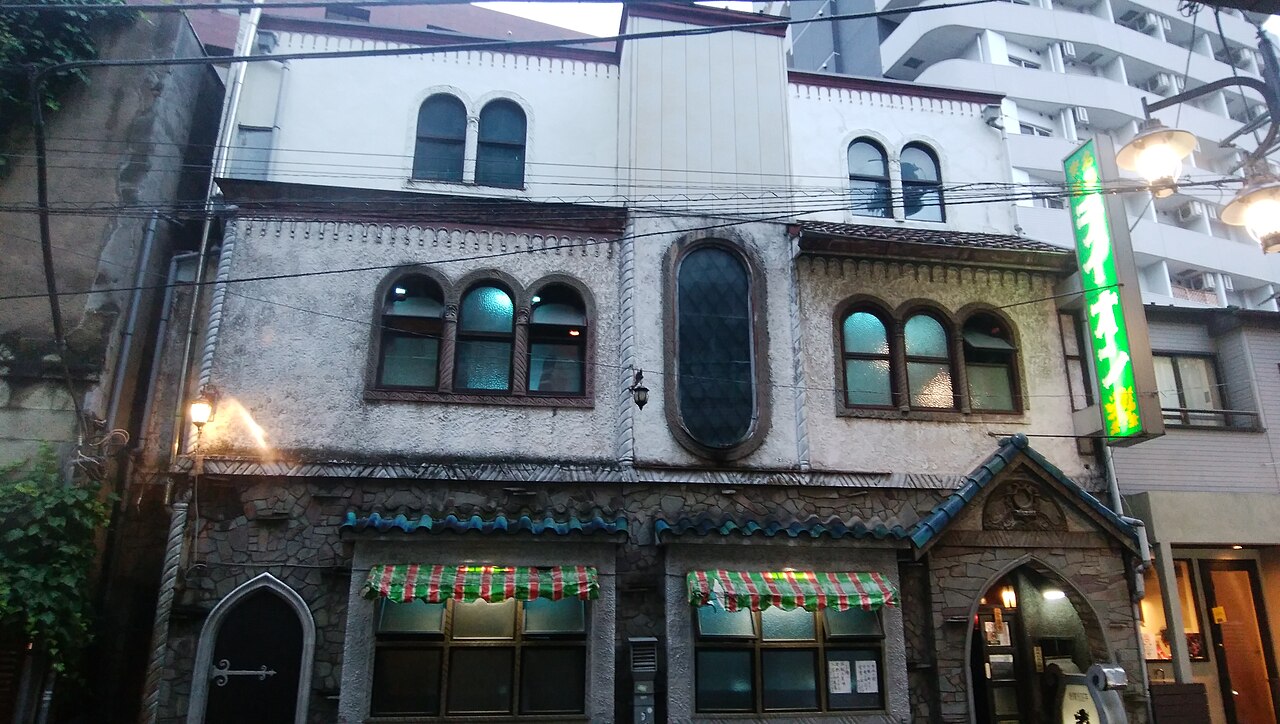
Photograph © 遡雨祈胡 · 19 June 2020 · Wikimedia Commons · CC BY-SA 4.0. Resized for display; uncropped.
A room with requests
Lion’s address is in Hyakkendana, off Dōgenzaka. The district was developed in 1924 in an attempt to give Shibuya an entertainment and shopping quarter to rival places such as Ginza and Asakusa. It was a commercial proposition before it became anyone’s picturesque old neighborhood. In a 2019 interview, Keiko Ishihara, then Lion’s third-generation proprietor, remembered arriving from Nihonbashi and finding Shibuya disconcertingly provincial. The geography of fashionable Tokyo looked rather different from where she stood.
The café dates from 1926. Its prewar premises were destroyed in the air raids; what followed was reconstruction, not miraculous survival. Ishihara showed her interviewer photographs of the earlier and later buildings, pointing out changes to the carving. The founder, Yanosuke Yamadera, had designed and made much of the décor himself. Here, photographs did a useful job: they prevented the impression of continuity from obscuring the work of rebuilding it.
The same distinction applies to the interior. Its visible age is only part of its interest. An enormous loudspeaker faces rows of seats; the arrangement makes the music a common destination without requiring the listeners to regard one another. It is possible to enjoy company without having to supply conversation. For that purpose, the room has a more convincing design than many cafés whose furniture insists that every visit should be a meeting.
Lion’s published listening arrangements offer scheduled recorded concerts at three and seven, with requests at other times. A group may ask for one work; a long piece may be divided. These are recordings, not live recitals, and the distinction is part of the attraction. Interpretation is available to be heard again. A performance can become familiar without becoming yours to command.
There is a social pleasure in that limited arrangement. Asking for a work is different from taking over the music, just as finding something unexpectedly compelling in another person’s choice differs from being congratulated by an algorithm for your established taste. Neither requires specialist credentials. The visitor who cannot name a preferred recording still has a perfectly good question: what is playing?
The room is also a business with coffee to make and equipment to keep working. In an interview published by Panasonic, Ishihara described an old preparation involving dark-roasted coffee, boiled in a large pot, rested and boiled again. That is a specific brewing method, not a tasting note. It gives a prospective visitor a better idea of the establishment’s priorities than the suggestion that every old café must secretly anticipate the contemporary specialty-coffee bar.
In the same interview, she described repairs once undertaken by a craftsman in Komaba, and her son’s trips to Akihabara for speaker components. Those errands belong in the picture. The carved wood and the recordings remain available because someone has dealt with the unromantic parts of keeping them available. Age alone cannot do the work.
Nor did Ishihara describe a room in which everybody had to adopt the same posture of concentration. Working on a laptop or holding a business conversation in a rear booth could be acceptable, she explained, provided it did not interfere with the music. That was her account at the time of the interview, not a newly negotiated exception for this article. It nevertheless complicates the idea of Lion as a place designed to correct its customers’ relationship with technology.
The current published notice prohibits photography and video, asks for phones to be silenced and calls to be taken outside, and discourages loud conversation. It does not prohibit all speech. A venue-supervised listing updated in March 2026 also confirms Wi-Fi. The music itself, of course, arrives through technology. What the café offers is a particular use of a shared room, rather than a purification of modern life.
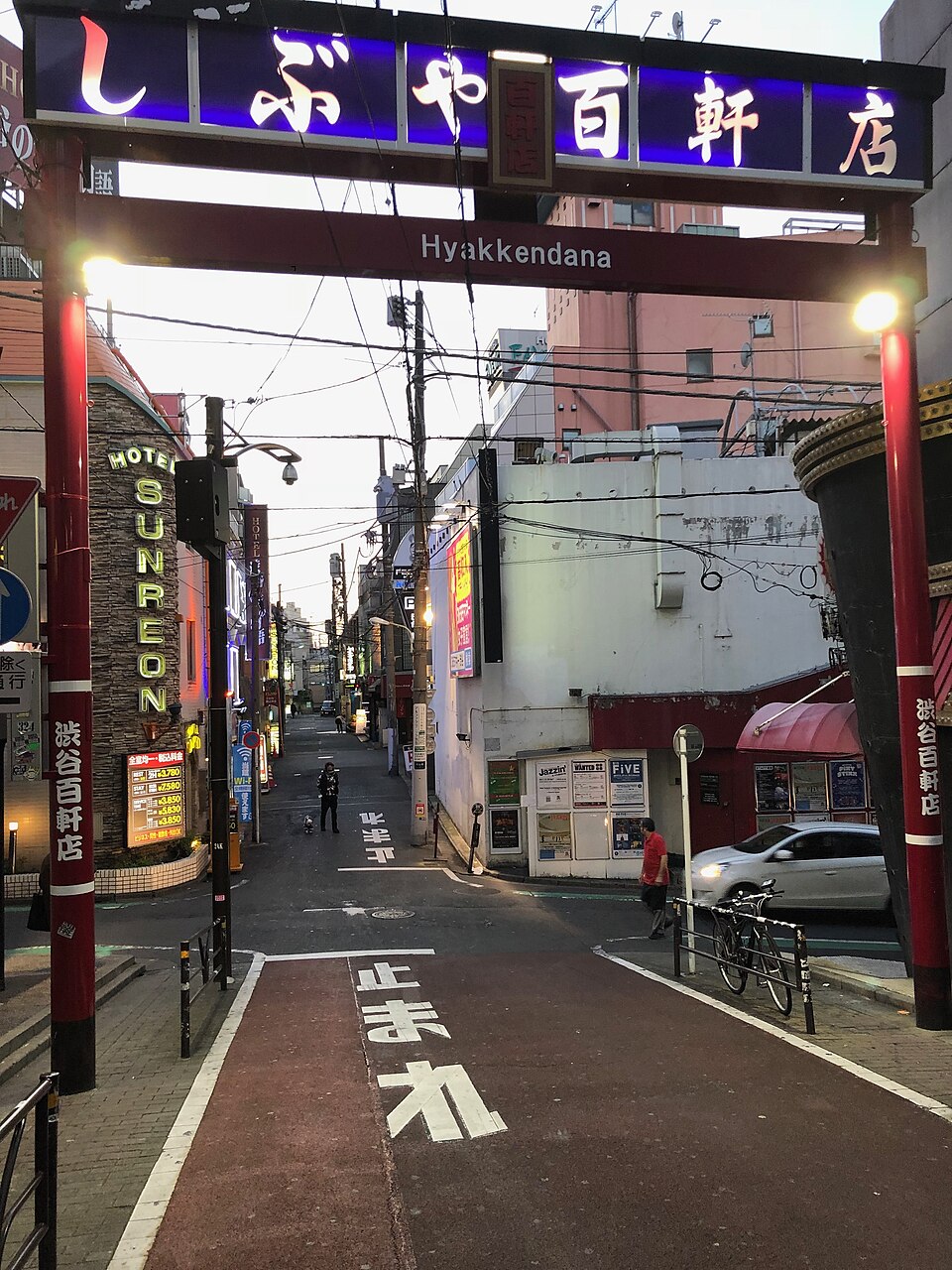
Photograph © Zachary Smith · 21 December 2017 · Wikimedia Commons · CC BY-SA 2.0. Faces pixelated by Krorokeroro in the Commons version; resized, uncropped.
That is a defensible reason for a boundary. A listener who has come for a work should not have to become the incidental subject of a photographic tour. It does not follow that every discreet photograph would ruin the afternoon, or that the desire to take one is necessarily shallow. Lion’s own history supplies a particularly awkward example for anyone hoping to make that argument.
In an interview published in 2016, Ishihara recalled a regular who generally came alone. One day he arrived with someone she thought might be his son, brought a film camera and photographed the café. Afterward, he stopped coming. She wondered whether he had returned to his hometown. She had not asked.
She remembered his seat, in the middle of the second row, and his repeated requests for Mozart. Privately, she thought of him as the Mozart man. The account does not establish the date of his photographic visit, the permission he had or what the pictures were for.
There is enough here without supplying a farewell speech. He knew the place well enough to have preferences. On one visit, he wanted pictures. Perhaps they became important to him; perhaps they went into an envelope he rarely opened. We cannot make his decision serve as evidence that he had finally learned to appreciate Lion, or that he had suddenly forgotten how.
Lion, meanwhile, has not withdrawn from being represented. Its website provides a telephone route for media inquiries about reporting and photography. Negotiated access can allow a room to be photographed under conditions ordinary service cannot accommodate. It is not permission for everyone else to follow suit, and it is not proof that the resulting image tells the whole truth.
For a visitor, the more useful decision concerns music. Come because you would like to spend time with a recording in the company of other listeners. Come because the existence of such a room still seems worth supporting. Choose somewhere else for an animated reunion or a proper meal. The café does not become more suitable for either purpose because it refuses to be photographed.
The rice has a say
At Sawada, the most persuasive argument for a reservation begins with seasoning.
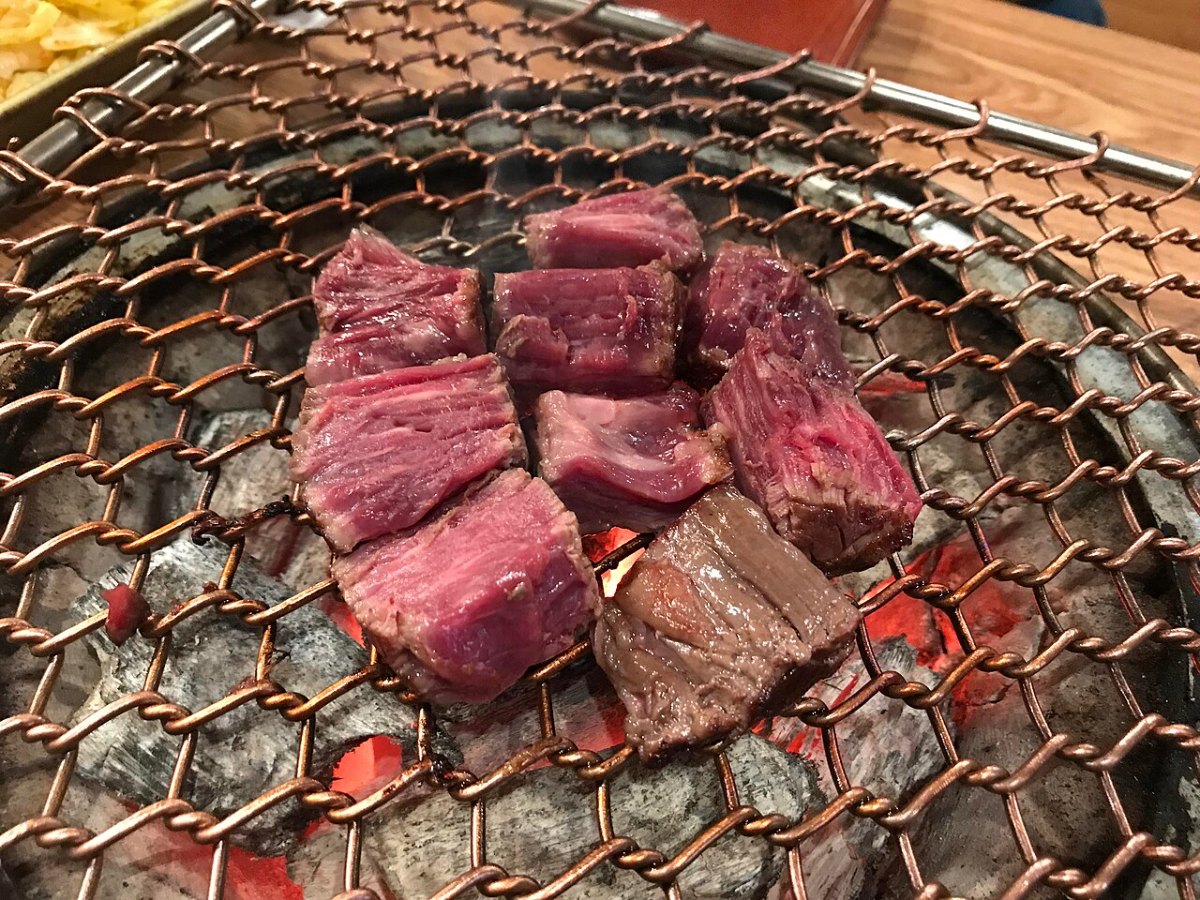
Writing about a meal in April 2013, the critic Andy Hayler described white-vinegar rice, loosely packed, and generous freshly grated wasabi. His cuttlefish retained a little firmness without becoming rubbery. He also recorded an arresting piece of technique: fatty tuna heated by charcoal held above it at the counter.
These details suggest an approach rather than merely a shopping list of costly ingredients. The rice is a participant in the mouthful. The wasabi has work to do. Heat is applied to an individual piece of fish, rather than treated as a general condition of cooking. That last operation is especially interesting: the cook is managing the relationship between the surface and the fat beneath it on a very small scale.
Hayler’s account is more than a decade old. It should not be made to underwrite the present dinner in its entirety. A more recent, less independently accountable source describes a recognizable continuation. Posting about a meal on 28 May 2026, the diner using the name shawnerie praised sour, salty rice, restrained smoke on Spanish mackerel and a sequence of tuna moving from marinated lean flesh toward richer cuts. Charcoal-heated tuna appeared again.
The account is anonymous and should be read as one diner’s report. Even so, the points of agreement are more useful than a chorus of superlatives. They give a prospective diner an intelligible expectation: rice with enough acidity and salt to register alongside the fish, and a meal interested in the differences within tuna rather than simply in the announcement of its quality.
Such sushi can be appealing precisely because it is not self-effacing. It can also be wrong for a diner who prefers a gentler balance. Calling seasoning assertive leaves room for that person; calling it perfect does not. A recommendation should help someone anticipate pleasure, rather than make disagreement feel like a defect in their palate.
The progression matters as much as any individual mouthful. A succession of increasingly fatty pieces can disclose real differences, but richness alone is not movement. What happened immediately before a piece of tuna affects what it can do. So does appetite. At some point a diner may be full, however expensive the next ingredient happens to be.
The listed dinner runs to approximately ten appetizers followed by thirteen to fifteen nigiri, at ¥61,600 including tax, with seasonal variation. The restaurant says portions cannot be reduced. This is useful information to consider while still free to book somewhere else. A small appetite is not a failure of seriousness.
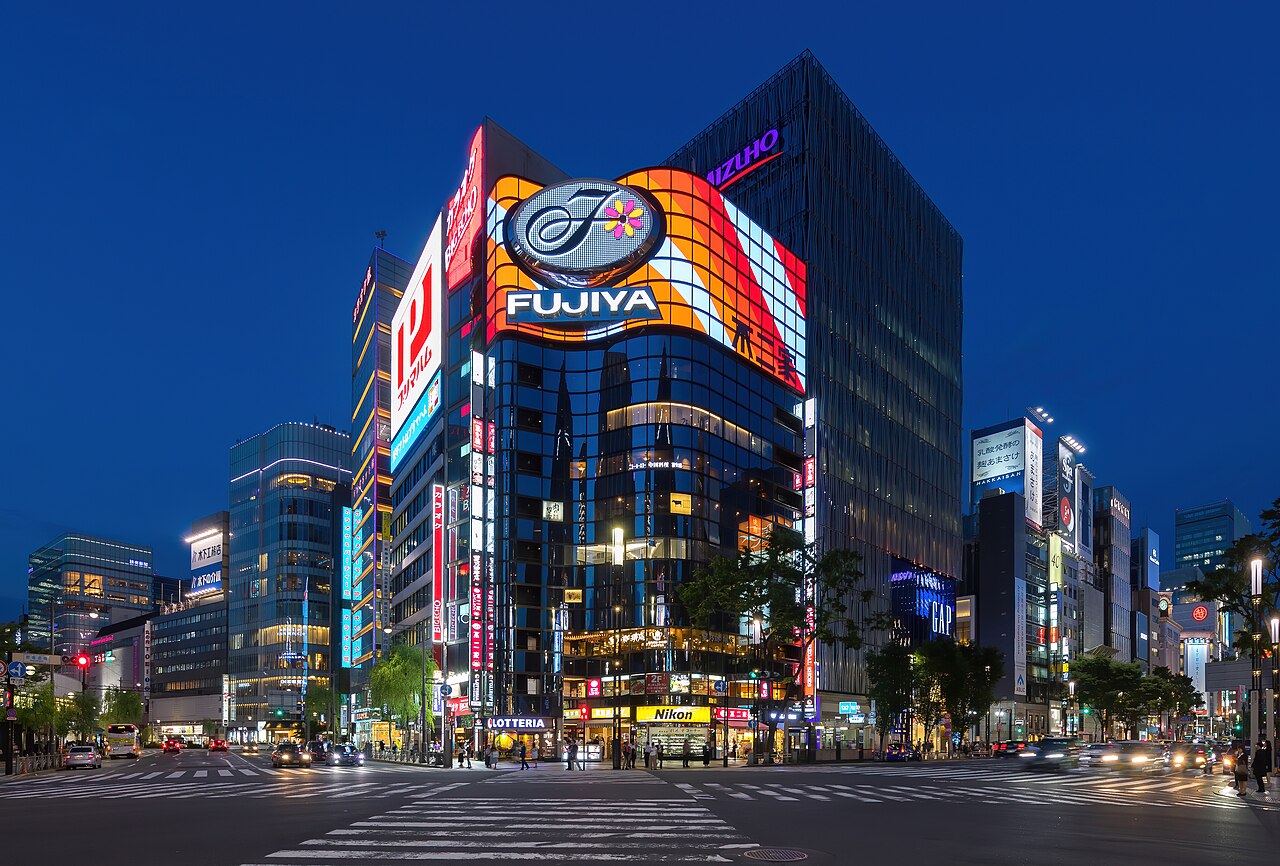
Photograph © Basile Morin · 5 June 2019 · Wikimedia Commons · CC BY-SA 4.0. Resized for display; uncropped.
The price makes the distinction between precision and abundance particularly important. At this level, another valuable ingredient does not automatically improve the meal. The compelling prospect is that each addition sharpens the understanding of what came before it. That is the standard to take to Sawada, not gratitude for having obtained a seat.
The six-seat counter makes the cook’s work unusually close. It also makes the guest unusually visible. The same proximity can be reassuring to one person and laborious to another: the ease of being attended to, or the feeling of having to respond correctly. No photographic policy can tell us in advance which version a particular evening will supply.
The May diner’s account is valuable for refusing to make the food answer every other question. In the discussion beneath the review, shawnerie described feeling like an outsider while the chef conversed warmly with other guests. They could not follow the conversation and would have liked more exchange. Their high opinion of the sushi remained intact.
This was not evidence that the room had fallen into solemn silence. Conversation was happening. Nor was it evidence of deliberate unkindness. It was an account of a meal in which culinary pleasure and social participation did not quite coincide. A photograph of handsome fish would have missed the difficulty; removing the photograph had not resolved it.
Translation is one reason a guest might need a phone, though this diner did not report asking to use one for that purpose. Sawada’s published conditions establish no device-use accommodation. Anyone who depends on one needs an answer before committing to the reservation. It would be irresponsible to promise an exception, and just as irresponsible to invent a confrontation.
The restaurant does communicate its restrictions before payment. That deserves credit. It does not settle whether every restriction is necessary. The booking page supplies no specific explanation for prohibiting every use of a smartphone; an admiring visitor should resist the temptation to provide one on the restaurant’s behalf.
Robinson’s response to his own meals offers another way of inhabiting the disagreement. His wish for photographs was connected to sharing something he valued. At the beginning of his essay, menus and photographs rediscovered while clearing his home had prompted memories of meals. The objects had been useful to him. That modest account does not prove anything universal about memory, but it is enough to make the dismissal of such objects seem careless.
There is no contradiction in saying that Sawada deserves consideration for its cooking and that its conditions ask a good deal of a guest. There is a contradiction in recommending the conditions as though they were the cooking. Someone drawn by seasoned rice, textural distinctions and the handling of tuna has a reason to pursue the reservation. Someone drawn mainly by how difficult it will be to document the meal has not yet found one.
The image approved for sale
Kabukiza is less coy about what will be available to take home. The audience cannot make its own recording of the performance. The theatre sells stage photographs.
Its shop information explains the process plainly: a photographer makes the images, the actors approve them, and sales usually begin around the middle of the run, though the timing can change. There is an interval between seeing the work and buying its picture. An early visitor may have to return, or order later.
Protection, artistic permission and commerce coexist here without requiring a theory of hidden motives. The theatre controls the conditions under which a performance is recorded and the images through which it circulates. That control can serve legitimate interests while also producing a polished public account. An approved photograph is not automatically a dishonest one. Neither is it an independent witness.
The admission terms prohibit unauthorized photographs, video and audio of performers and productions, and separately restrict photographing staff and other spectators. This is not a blanket prohibition on photographing the entire building. Nor should the end of an act be mistaken for permission to photograph the stage: the stage rule is stated separately.
The practical explanation for audience discipline is refreshingly physical. Shochiku’s beginner guidance addresses alarms, illuminated screens and obstructed views. Even leaning forward may block the person behind. Attention is not being presented as a special virtue bestowed on the obedient. It is being negotiated between people who need to see and hear the same work.
Then the theatre rents out a screen. Its captioning service supplies synchronized text in English or simplified Chinese, with Japanese captions also available. English captioning is distinct from the Japanese audio guide. While personal phones are to be switched off during performances, this device has an explicit job to do.
A visitor reading captions divides attention between the text and the actor. That is a compromise, and sometimes an awkward one. Understanding enough to remain interested may be worth it. The useful standard is participation, not the imaginary spectator who needs no assistance and never looks in the wrong direction.
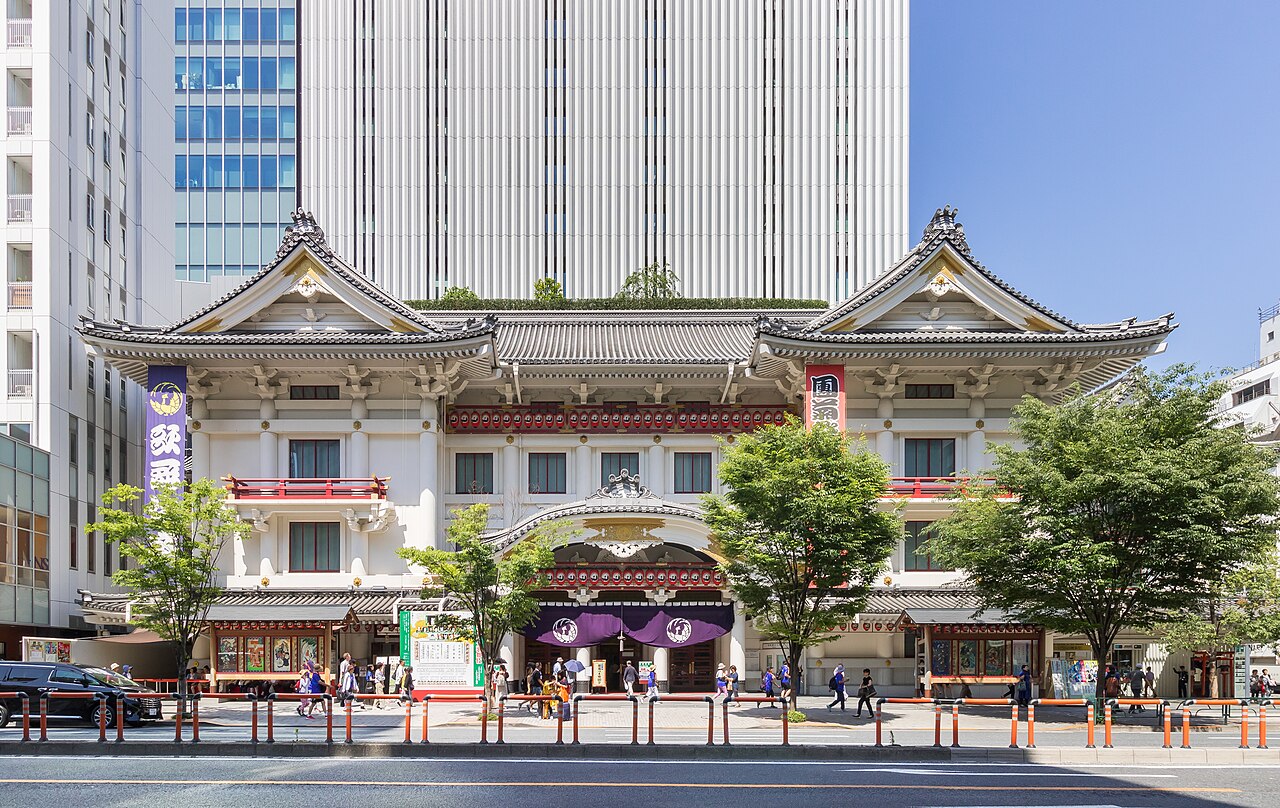
Photograph © Kakidai · May 2019 · Wikimedia Commons · CC BY-SA 4.0. Resized for display; uncropped.
For the October 2026 program, the evening has a particular reason to command that attention. Onoe Shōroku plays the boatman Ginpei, revealed as Taira no Tomomori, in the Tokaiya and Daimotsu no Ura episodes of Yoshitsune Senbon Zakura. The apparent boatman is concealing a defeated commander and a surviving loyalty to the child emperor in his care.
The story offers disguise, attempted revenge and a fatal reckoning by the sea. Its danger, for an actor, is that the successive revelations could become merely successive poses: the working man, the commander, the wounded figure. Making them belong to one person is a more interesting challenge than changing from one impressive image to the next.
That is also how Shōroku framed part of the task in a September interview published by Shochiku. Returning to the role after fourteen years, and performing it at Kabukiza for the first time, he spoke of versions played by his grandfather and father. He recalled advice from Nakamura Tomijūrō V about distinguishing the boatman, the man going into battle and the wounded man at the end while preserving the continuity of the character.
The attraction is not simply a famous part passed down a family. It is the problem of what to retain from previous performances, and what an actor of a different age and disposition must find for himself. A tradition capable of sustaining that problem is more interesting than one understood as an exercise in exact copying.
Nakamura Tokizō, playing the woman who is revealed as Suke no Tsubone, described instruction from Bandō Tamasaburō to feel the sea. Read as an acting note, this is quite practical: the surrounding world must affect the body and the situation. A setting cannot consist solely of whatever the scenery department has supplied.
The actors’ accounts suggest something worth watching for beyond the plot. Does the figure remain recognizably himself as the circumstances alter? Does the surrounding danger inhabit the acting, rather than simply the plot? There is more to attend to here than the effort of decoding an unfamiliar theatrical vocabulary.
The evening bill then changes register with Yashiki Musume and Ōmi no Okane, danced by Nakamura Kazutarō and Onoe Maholo. Okane is a woman of formidable strength, associated with restraining a runaway horse. Elsewhere in the same month’s program, Koi Tsukami offers a struggle with a carp and action involving real water. An account that turned the whole theatre into an occasion for hushed reverence would have difficulty accommodating the actual entertainment.
There is no obligation to buy the longest possible experience. October has three separately ticketed parts, and single-act seats offer another way in. Interest in one actor or one work is sufficient. So is curiosity about how a human body might persuade an audience that it possesses impossible strength. The newcomer does not have to acquire a comprehensive cultural education before being entitled to enjoy the attempt.
The intervals are part of the occasion too. Shochiku suggests eating, shopping and talking between acts. You can discuss what worked, admit that something was hard to follow, or discover that a companion has been watching an entirely different detail. None of this requires continuous solemnity, and none is evidence of having failed to respect the work.
A purchased stage photograph may later help identify a performer, recover a costume or reopen a conversation. It may also show a moment rather different from the one that mattered to its owner. Professional access can give it a clearer view than the audience had; that improvement can make it less representative of a particular evening as well as more satisfying as a picture.
What it cannot do is stand in for every photograph a visitor might reasonably have wanted. An image of the production and an image with a companion are different objects. The theatre may be unable to accommodate the latter in a particular place or moment without the desire for it becoming foolish. Hospitality does not have to satisfy every wish. It should not require a guest to be embarrassed by having one.
What was worth keeping
The most persuasive restrictions leave something other than themselves to discuss. At Lion, that could be a recording. At Sawada, the balance between rice and fish—or the uncomfortable difference between being close to a conversation and joining it. At Kabukiza, it could be the instant an actor’s disguise ceases to persuade, or the surprise of a dance after a tragedy. Those possibilities are reasons to consider the places. The prohibition is a condition attached to them.
There is no guarantee that much will remain clear afterward. An evening can be deeply enjoyed and poorly recalled. It can also be poorly recalled because it never interested the guest very much. Without a particular person’s account, the distinction is unavailable. Forgetting is not a certificate of depth.
Nor does every absent photograph need to be replaced by a more elevated form of possession. Robinson wanted pictures of seafood he admired. Ishihara’s regular took pictures of the café where he requested Mozart. Their wishes do not need improving into a philosophy. Something had appealed to them, and an image seemed useful.
Of the Mozart listener, Ishihara retained a fairly exact piece of information: the middle of the second row. She could place him in the room more confidently than she could say where he had gone. His photographs might have added something important to that account. We do not have them.
The café had given him somewhere to return and a way to ask for what he liked. Once, he brought someone with him. Whether the pictures explained the place any better, or helped him keep it, remains his part of the story.
Planning the visits
Details checked on 9 October 2026. These are separate visits, not a one-evening itinerary. Recheck the linked booking pages before committing.
Lion — 名曲喫茶ライオン
Shibuya. 2-19-13 Dōgenzaka. Recorded classical music and drinks; scheduled programs at 15:00 and 19:00. The venue-supervised March 2026 listing gives 13:00–20:00, last orders 19:30, an indicative ¥800 spend, no reservations and no credit-card payment. Older pages show different hours. All photography and video are prohibited inside. Silence phones; take calls outside. Loud conversation is discouraged, not all speech. Audio recording is not separately addressed; do not assume permission. Media photography requires a separate inquiry. Visitor information · House notice.
Sawada — さわ田
Ginza. MC Building, third floor, 5-9-19 Ginza. Sushi omakase; reservations through OMAKASE only, released at short notice. Lunch ¥50,600; dinner ¥61,600, tax included, with seasonal variation and a separate booking fee. Ages 20 and over; matching identification required. Cancellation is charged in full from confirmation. Read the conditions before booking. No photographs, video or phone use; notes below counter level. Standalone audio recording and device-use accommodations are not specified. The booking page states that the building cannot accommodate wheelchair access. Official booking conditions.
Kabukiza Theatre — 歌舞伎座
Ginza. 4-12-15 Ginza. The October 2026 program runs 2–20 October, with no performances on 9 October. Three separately ticketed parts begin at 11:00, 14:30 and 18:00; full-part tickets ¥4,500–¥17,000. Single-act options vary by work. English or simplified-Chinese captions: ¥1,500 per full part, or ¥1,000 for a single act. No unauthorized performance photography, video or audio. Switch off personal phones during performances. Separate restrictions cover the stage and photographs of staff, performers and other spectators. This is not a building-wide camera ban; follow signs and staff instructions elsewhere. Programs change monthly. October program and tickets · Captioning · Audience guidance.
This is a researched cultural feature drawing on published interviews, criticism and official information. No EDIT27 visit, tasting, interview or special photographic access is claimed.


.png)


