



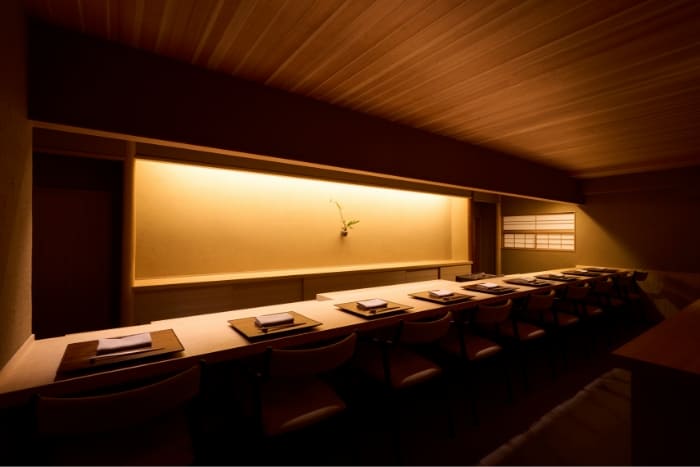
WITHIN REACH
Tempura in Ebisu, sushi in Ginza, chicken over charcoal in Oshiage and a different kind of Japanese cooking in Nishiazabu. Four Tokyo dinners worth taking a seat for.
This is a researched critical feature, drawing on published dining accounts, Japanese-language interviews and restaurant information checked on 9 October 2026. EDIT27 did not visit or taste for this article. The meals described are dated where relevant; seasonal dishes are not promises of a future menu.
At Tempura Motoyoshi, shrimp have been served in two quite different coats. The first is finely battered and eaten with salt. The second wears more batter, which helps steam the flesh, and comes with dipping sauce. In food writer Mika Kitamura’s account, the point of the second shrimp is its fuller, softer interior. Thinness, so often taken as an automatic compliment to tempura, would defeat the purpose. 1
It is an attractive beginning to dinner: the same ingredient, a change in technique, another reason to eat. The comparison is close enough to remember without taking notes. There is nothing much to decode. A cook has made two decisions, and the guest gets to discover whether both were good ones.
A counter can give an evening that kind of clarity. It can also make dinner feel oddly public. There is less time between receiving something and being seen to receive it; the private interval in which you decide what you think becomes a little smaller. Someone has done exacting work. You would like to enjoy it. Ideally, your face will not be asked to file a report.
This is not a complaint about formality. A formally served meal can be wonderfully restful. Nor is conversation with the chef necessarily an improvement: sometimes the person you came to talk to is sitting beside you. The useful question is what the arrangement contributes to eating. Does the shorter journey improve a dish? Does the view explain something worth knowing? Can service respond to you while the cook is occupied?
Four Tokyo restaurants offer unusually substantial answers. Motoyoshi’s tempura changes the relationship between coating and flesh. Hakkoku builds a long sushi dinner around the force of its rice. Omino, in Oshiage, lets the guest decide how far a succession of skewers should go. At Myoujyaku, the most expensive and most debatable proposition here, a knife cut can be more consequential than a prestigious ingredient. Their counters serve different kinds of work; they do not prescribe a single way to spend an evening. 261115
These are four argued choices, not a ranking of Tokyo. Each is worth considering for the meal it offers. None needs the difficulty of obtaining a reservation to make its case.
Tempura Motoyoshi
Ebisu · What the batter is for
The sea urchin preparation is another useful correction to expectations. Kitamura describes a fried shiso leaf with the uni placed on it raw. Calling the dish fried sea urchin would obscure the decision that makes it interesting: the leaf takes the heat and provides the fried element; the uni retains the character she admired. An expensive ingredient is allowed to contribute a contrast rather than disappear inside a technically impressive parcel. 1
There is equipment behind these effects. Her report describes flour chilled with liquid nitrogen and a blend of sesame, corn and rapeseed oils. Those details help explain the method; the equipment is not the meal. The more interesting business is deciding how much coating an ingredient needs, and what should accompany it once it leaves the oil. 1
A February 2026 dining account, published on Hatena, records kisu—Japanese whiting—with salted rakkyo, the small allium bringing acidity against the fish. Nodoguro appears with grated daikon and broth, its liver contributing bitterness against the rich flesh. The same writer describes butterbur buds and udo with miso. Across these preparations, the menu has more ways of moving forward than simply producing another immaculate crust. 3
That is where a long tempura dinner becomes persuasive. After the comparison of two shrimp, bitterness and acidity can redirect the appetite. The richer fish has a reason to be rich because something else on the plate resists it. Vegetables bring their own flavors rather than merely marking a pause between more valuable seafood. The meal’s intelligence lies in these relationships, not in an uninterrupted run of premium ingredients.
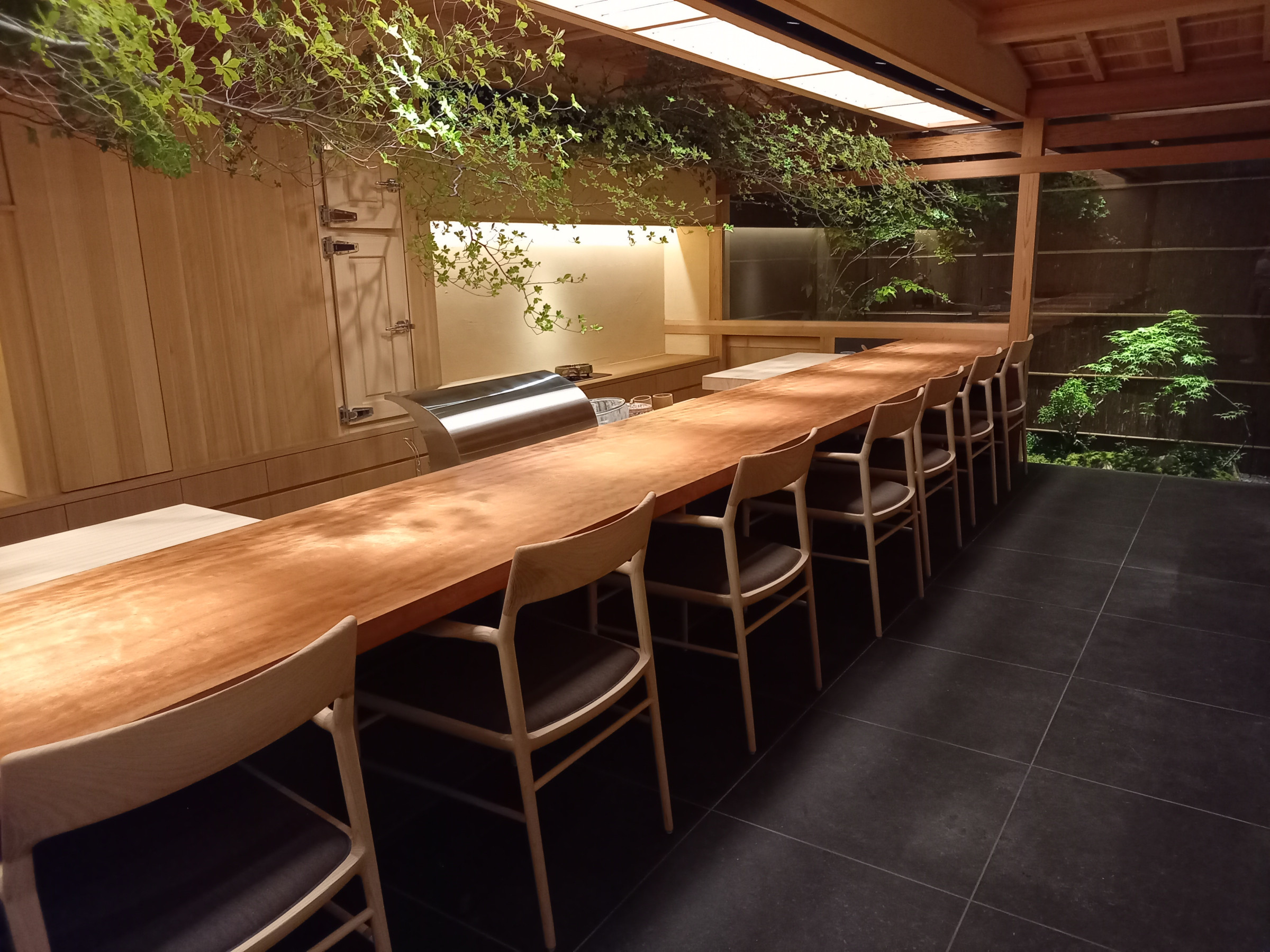
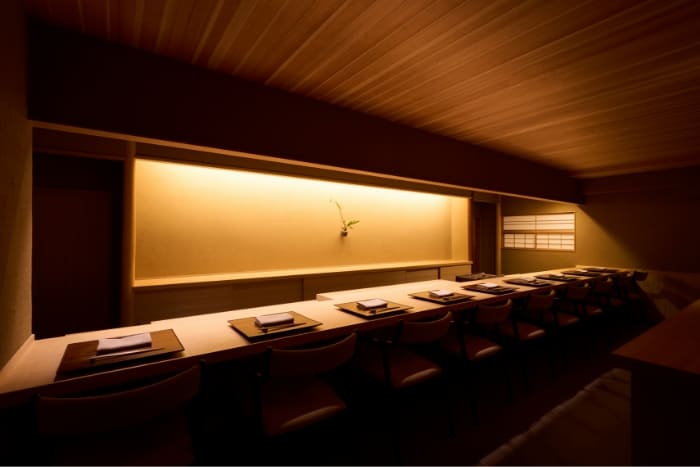
Motoyoshi’s current premises are in Ebisu, not the earlier Aoyama location still encountered in older coverage. The restaurant’s photographs show backed chairs along a straight counter, with a guard around the frying station. This is not eight versions of the same unobstructed view. The protection needed for the work is allowed to interrupt the picture. No particular numbered seat has been verified as requestable, and there is little justification for pretending that the chair nearest the fryer confers a superior dinner. 2
The sharper question is what happens when the food reaches the person sitting there. Motoyoshi’s menu page explicitly asks guests who are sensitive to hot food to say so; it states that the restaurant has a way of removing excess heat, without describing the method. The note is brief and quite practical. It also changes the terms of the evening. Someone can admit that a piece is too hot without appearing to reject the reason it has been cooked so carefully. 4
This is a more convincing hospitality detail than a promise that every diner will feel like family. Families are variable. A restaurant that anticipates a physical difficulty and makes it easy to mention has solved a specific problem.
The allowances are not unlimited. The booking conditions warn that exclusions affecting two or more dishes may make the menu unworkable. Extensive preferences need to be discussed before the reservation is accepted. A small kitchen is entitled to define what it can cook; the guest is entitled to know the limits before paying. Neither party should have to renegotiate the entire dinner across a hot working surface. 5
The price also deserves that degree of clarity. Published channels disagree, with the active OMAKASE listing currently implying ¥36,300–48,400 after service, before drinks and its booking fee. This is an expensive meal even before the discrepancy is resolved. Its strongest claim on that money is the discrimination between one preparation and the next. The two shrimp matter because they offer two distinct pleasures, not because repetition has been elevated into a ceremony. 5
Hakkoku
Ginza · Rice with a point of view
At Hakkoku, the rice refuses to behave like a neutral support. Hiroyuki Sato’s red-vinegar seasoning was developed in relation to the tuna he bought from Yamayuki. In a 2020 Hitosara interview, he explained that the supplier tasted the rice when selecting fish for the restaurant. The much-cited wholesaler’s name becomes useful here: it describes a buying decision linked to a recipe, rather than provenance displayed for its own sake. 7
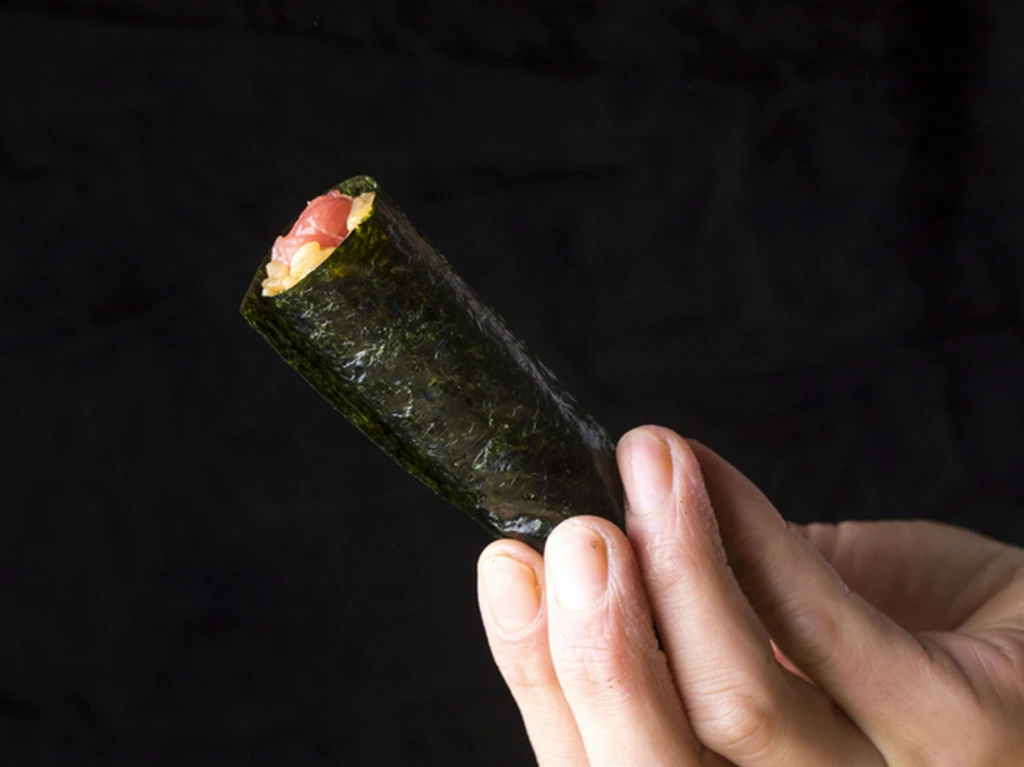
The tossaki hand roll makes that relationship easy to understand. Sato has traced its development to his supplier’s suggestion that he use the strongly flavored, sinewy meat near the base of the tuna’s head. Nori, rice and tuna are hardly an unfamiliar combination. What matters is the choice of meat and the force of the seasoning meeting it. The attraction is concentrated and quite edible; it does not depend on admiring a fish auction from a distance. 8
There is an obvious risk to rice with so definite a personality. Fatty tuna may thrive against it while a quieter fish struggles to make itself heard. The best test of this dinner is therefore not its most anticipated bite. It is what happens between the tuna and the other obvious attractions, when the same rice has to support a different register.
DanielFoodDiary’s April 2025 review supplies a properly mixed response. Eating at Hiroki Fukasawa’s counter, the writer found the rice assertively seasoned but balanced, enjoyed the sweet firefly squid and the smoothness of monkfish liver, and was particularly taken with warm, tender anago. Greenling, young sea bream and pen shell made less impression. The account is enthusiastic without requiring every piece to justify a superlative. 9
A long sequence benefits from quieter passages, but “quiet” should not be a courtesy title bestowed on everything unmemorable. An understated piece can sharpen the next one; it can also pass without leaving very much behind. At this price, diners should be allowed to distinguish those experiences. The restaurant’s conviction about rice makes the question more interesting, not less legitimate.
The current advertised dinner is twenty-five pieces, rather than the thirty still mentioned in older profiles. That is a meaningful distinction when planning an evening. Hakkoku gives sushi the greater part of the meal instead of making it the final movement after a long series of appetizers. It suits someone who wants sustained variation within that form and has the appetite for it. 6
Some of the most consequential work remains out of sight. Hakkoku’s published description of its anago preparation, in a profile dated 2023, involves simmering in sake and water, resting overnight and then searing; the glaze uses the cooking liquid. That earlier account cannot establish every detail of a current service. It does explain why watching a piece of sushi assembled is not the same as watching all of it being made. The moment at the counter completes a preparation with a much longer timetable. 10
There is pleasure in understanding that division. The eventual warmth does not belong to the same stage as the long rest, and the glaze is connected to the flesh rather than added as an unrelated flourish. A diner can appreciate the final piece without observing the night before. Visibility is useful at the counter; completeness is an unreasonable expectation.
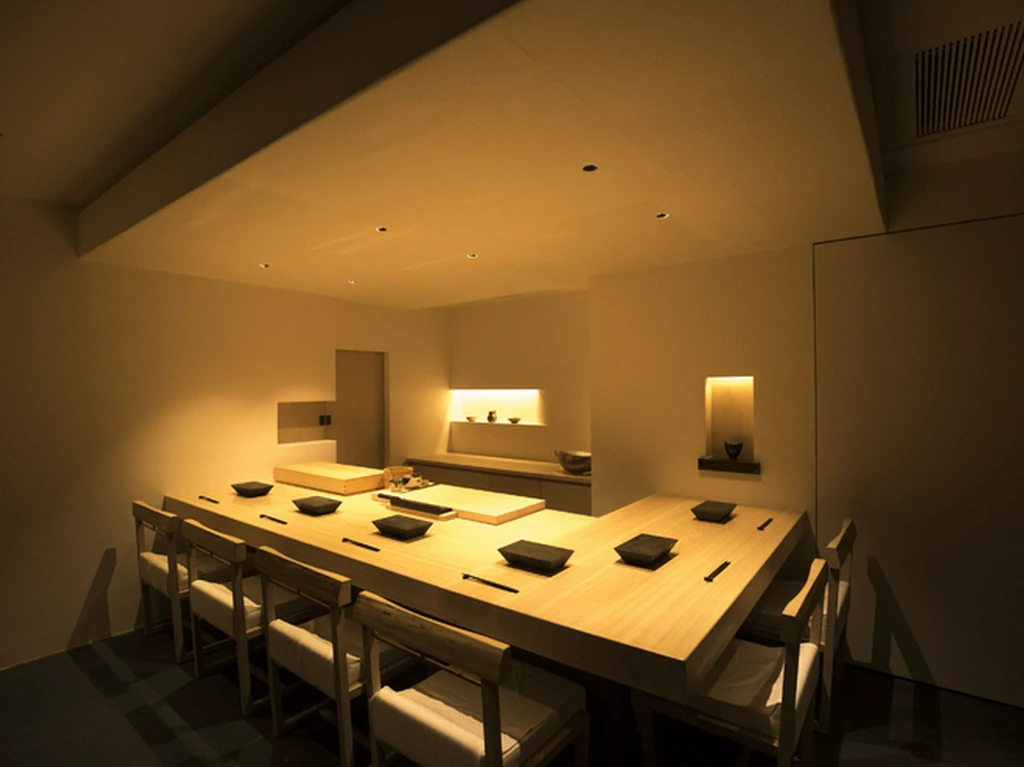
Hakkoku’s rooms offer another, less obvious division of labor. Eighteen places are distributed among three six-seat counters. Sato told Hitosara that putting younger chefs beside him at a single continuous counter risked making them self-conscious, while inviting him to keep too close an eye on them. Separate rooms gave them a different measure of responsibility. The small counter, so readily interpreted as intimacy for the customer, also organizes a workplace. 7
That makes the chef attached to a reservation more relevant than the usual search for a privileged chair. The booking page distinguishes Sato’s service from those of named colleagues; the restaurant name alone does not promise his attendance. The favorable 2025 dining account belongs to Fukasawa’s counter. It describes a welcoming manner and some English, not a surprise appearance by the founder. 69
Delegation does not abolish differences in execution. Neither does it make everyone except the founder a consolation prize. What a guest can reasonably expect is a clear booking and a kitchen whose name describes standards beyond one person’s hands. Someone particularly interested in Sato should select his service. Someone interested in this style of sushi has a broader choice.
Companionship needs considering, too. Twenty-five pieces create repeated occasions to turn towards what has just arrived. For two people looking forward to discussing food, that can be much of the enjoyment. For a conversation that needs room to develop without interruption, another format may be preferable. It is a question of the evening you are trying to have, not a distinction between serious diners and everyone else.
Yakitori Omino, Oshiage
Oshiage · The right to say enough
Omino leaves one substantial part of dinner undecided. Its Oshiage restaurant operates what it calls an omakase stop system: skewers continue until the guest asks to stop. The restaurant says it adjusts their timing to individual eating pace. Here, the word omakase describes an ongoing selection with an ending chosen by the diner, rather than Hakkoku’s fixed sequence. 11
This sounds agreeably permissive. It also asks for a decision. At some point you need to say that the next skewer should be the last—or that the last was enough. Skewers already cooking will still arrive, and the charge increases with what is served. Someone who finds a fixed tasting menu restful may prefer knowing the extent of dinner in advance. Someone who dislikes being committed to a final hour of food may value Omino’s arrangement considerably more. 12
It would be a mistake to cast this as the inexpensive, relaxed truth after the extravagance of Ginza. The advertised amount is a floor, not the cost of a representative full meal. After service and OMAKASE’s fee, that floor is ¥11,940; extra skewers, rice dishes and drinks add to it. The counter offers control over appetite without fixing the bill. Those are different forms of reassurance. 12
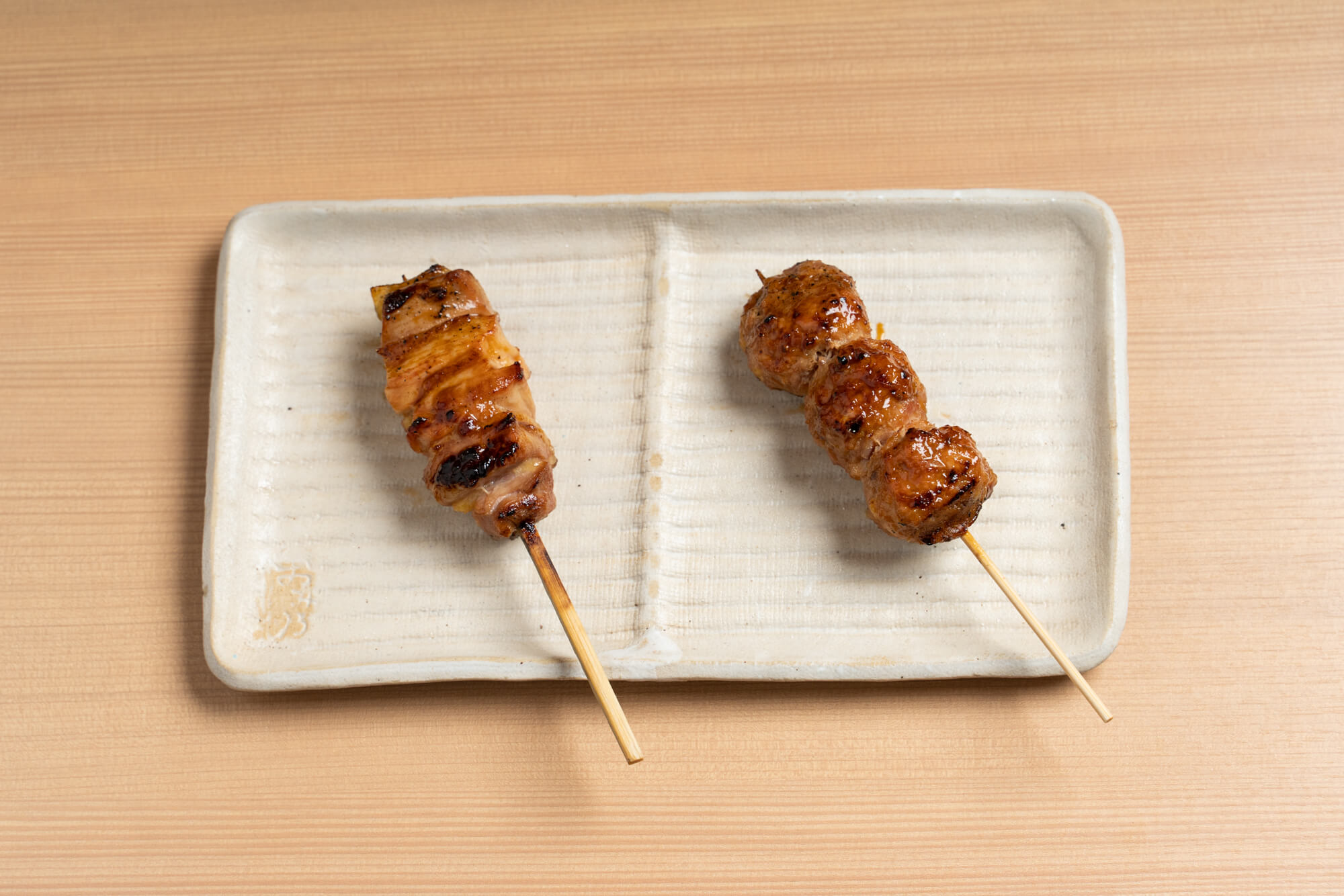
The chicken deserves to occupy most of the attention. In a May 2026 account, the Japanese dining writer behind Kenji’s Solo Meals describes the contrast between yielding liver, firmer gizzard, thigh with a crisp exterior and a light application of sauce, and a large tsukune combining softness with small resistant textures. These are different reasons to use the same fire. The interest of the sequence depends on maintaining those differences rather than covering them with a single dominant seasoning. 13
The vegetables in that account are particularly appealing: sweet snap peas with bite, thick lotus root, broccoli whose stalk retained some resistance. Grated daikon and sharp pickles provided further changes of texture and seasoning. Chicken alone need not exhaust a menu’s range, but the things eaten alongside it deserve more than the designation “palate cleanser.” They are part of the dinner, and can be the parts a diner most wants to repeat. 13
For all the attention paid to perfect heat, appetite is also a matter of sequence. A soft, rich interior and a firmer cut ask different things of the mouth. A vegetable can change the pace more effectively than another luxury addition. These contrasts offer a reason to continue that is more persuasive than simply wondering what the kitchen has kept in reserve.
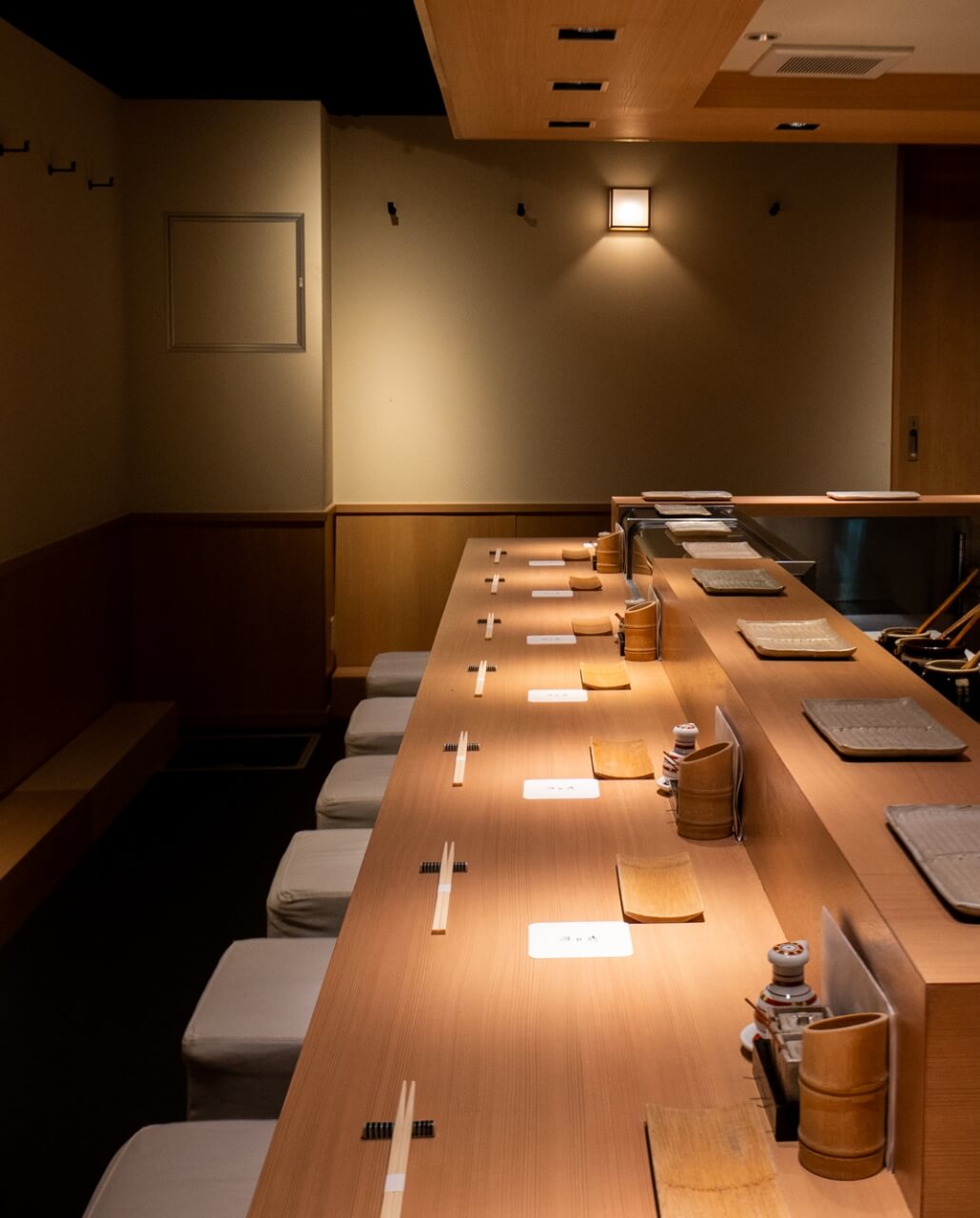
The Oshiage counter surrounds the grill. The restaurant explains its counter-only format through the continued cooking of meat after it leaves the charcoal and the short distance to the guest. That is the operator’s rationale, not proof that a few seconds of table service would ruin every skewer. Still, the arrangement has a clear practical purpose: it keeps the final transfer close to the person controlling the heat. 11
Much of the necessary competence is less visible. In a conversation recorded in January 2022 with fellow yakitori chef Yuta Shiraishi, founder Masayoshi Omino discussed learning to break down birds and prepare skewers. He also recalled discovering that his early grilling, despite years around the work at Torishiki, was not yet ready for customers. Further practical experience came before opening. It is an unusually candid account of the distance between observing a skill and possessing it. 14
A guest can make the same distinction without becoming a student. The charcoal is absorbing to watch, but it does not explain the whole skewer. Cutting and skewering have already determined what the grill can do with it. When the visible work is successful, the preparation disappears into something that seems straightforward to eat.
The institution has changed as well. That 2022 conversation recorded the delegation of Oshiage after Omino established his Kamiyacho restaurant. This recommendation concerns Oshiage’s continuing-skewer dinner, not the promise of the founder at its grill, and not a claim that every branch offers the same evening. The present booking does not make his attendance part of the purchase. 1412
The guest has a role, but need not be recruited into the business of judging every turn over the charcoal. It is enough to notice whether the next piece offers another pleasure, and to know when the pleasure would be better served by stopping. An open-ended dinner works only when the ending is allowed to be ordinary.
There are reasons to leave a little space. Omino lists oyakodon and soboro rice with chicken soup among its finishes. After eating the animal in successive, distinct cuts, a bowl offers a different sort of satisfaction: something to settle into, rather than one more skewer to assess. It is charged separately. That is worth knowing before appetite and curiosity have agreed to keep going. 1112
Myoujyaku
Nishiazabu · A dinner allowed to divide opinion
A bowl of radish is a bolder proposition at the beginning of a dinner costing around ¥55,000 than an obvious luxury ingredient would be. It has very little to hide behind. The question is whether removing familiar sources of richness reveals something worth the attention, or simply leaves the guest wishing that something had been added. Both responses remain possible at Myoujyaku. 161719
Hidetoshi Nakamura’s cooking repeatedly asks an ingredient to supply the liquid supporting it. In Keiko Moriwaki’s opening-year report, winter melon was separated into flesh, peel and seeds. The latter parts made the broth; components were cooked separately. The result could look spare while depending on extraction, preparation and timing that the final bowl did not announce. “Just water” would have been an inadequate account of the work. 18
That earlier preparation helps explain the approach without turning it into a promise about the current menu. More recently, in April 2026, Takeshi Kadokami praised radish cooked with water and salt for its rounded sweetness and the flavor lingering in the liquid. Another repeat diner, writing as The Tokyo Gourmet, preferred a shiitake version to a subsequent radish one. The same apparent restraint elicited different levels of pleasure. 1719
This is where criticism becomes more useful than admiration. The recipe’s idea can be intelligible even when a particular bowl does not move the person eating it. A convincing explanation cannot retroactively make something delicious. Equally, one disappointing course need not invalidate a restaurant pursuing an original way of cooking. The interesting judgment is more particular: what earned its place in that meal, and what did not?
Kadokami’s second April report gives a stronger physical reason for wanting the counter. He watched Nakamura make fine incisions in octopus, and attributed its unusual spreading sensation across the tongue to that knife work. He also described a bowl of mushrooms and shellfish with a liquid made from several clams, water and salt. One preparation made a process visible; the other concentrated work in a broth. Neither needed a showier ingredient to explain his enthusiasm. 20
There is a considerable difference between seeing a knife used and understanding why this cut matters. In the octopus account, the answer survives the moment of looking: it changes how the food meets the mouth. That is the counter doing something more lasting than supplying an image of concentration.
The hand-rolled sushi is less austere than descriptions of the restaurant might suggest. In Matthias Ruhl’s October 2025 account, a thin egg wrapper held vinegared rice and fried fish bones. Grilled Hokkaido smelt was added directly from the grill, and the diner folded the package. Ruhl enjoyed the contrast of soft egg and crunchy bones. It sounds like something to eat while it is ready, rather than a dish to keep discussing while it waits. 21
Kadokami encountered a spring version with Lake Biwa moroko that had been fried and grilled. His account also describes burdock with kumquat, vinegar and perilla seeds. These are useful counters to the idea that Nakamura’s cooking consists of subtraction. There can be several preparations inside an apparently simple form; there can also be sharpness, bitterness and conspicuous textural contrast. Restraint does not require a meal to remain in one key. 20
Even so, Myoujyaku is the selection here that calls for the greatest appetite for an argument. Ruhl found a chestnut-and-edamame preparation dry. He also questioned the premium drinks pairing: six of eight glasses were shared with the lower-priced option. Those were conditions of his 2025 dinner, not a description of the pairing currently offered. They remain a sensible reminder to ask what an upgrade buys. Prestige is not an itemized explanation. 21
The base meal and the optional expenditure should be judged separately. A compelling sequence of food does not automatically make the most expensive pairing good value. Nor should disappointment with an addition flatten the assessment of everything the kitchen has done. At this level, the distinctions become more important, not somehow impolite.
Service has evolved alongside the cooking. Comparing visits from 2022 to 2026, The Tokyo Gourmet describes more finishing and explanation at the counter in later meals, where earlier ones had involved more dishes arriving from the back kitchen. A detailed written menu helped on a visit when fluent English explanation was unavailable. The account describes a change over time; it does not guarantee a particular member of staff or language provision at the next service. 19
A written menu is a modest but valuable piece of hospitality. It can be consulted again. It leaves room for a specific question rather than requiring every unfamiliar ingredient to be explained while dinner cools. It also permits someone who has understood enough to put it down. The guest can decide how much information is useful.
More visible finishing should not be confused with greater honesty. The preparation of a broth, a cooked component or a wrapper does not become suspect because it happened elsewhere. A restaurant that displayed every stage would be showing a working day, not serving dinner. What matters is whether the last stages benefit from the counter and whether the food arrives as intended.
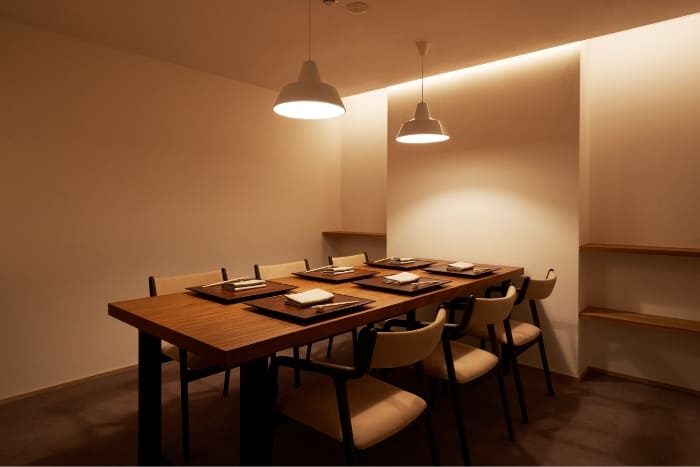
Myoujyaku also offers an escape from the supposed obligation to sit there. Alongside its eight-seat main counter and a separate six-seat counter are private rooms for four and six. A table may be the better choice for a personal conversation. Someone coming for the knife work should confirm the main counter rather than assume that a reservation anywhere in the restaurant provides the same view. 15
This is the most qualified recommendation of the four. The published responses point to originality and moments of considerable pleasure, but also to courses that do not convince everyone. That is a reasonable dinner to seek, provided originality is something you actively enjoy. It is a less obvious choice for someone wanting the reassurance of a sequence whose appeal is immediate and consistent.
None of this requires a solemn evening. The egg-wrapped fish offers a reassuringly practical interruption to all the questions a meal can raise. It has to be folded. The bones contribute crunch. The work of deciding what it means can wait until after the bite. 21
A little room for rice
There is another decision worth leaving to the guest, back at Motoyoshi. Its published rice finishes include tendon, with sauce and a trace of yuzu; tencha, with a choice of roasted or green tea; and a separate kakiage with rice, red miso soup and pickles. They are not interchangeable ways of filling the last part of the meal. One brings sauce, another broth-like comfort, another keeps the components apart. 4
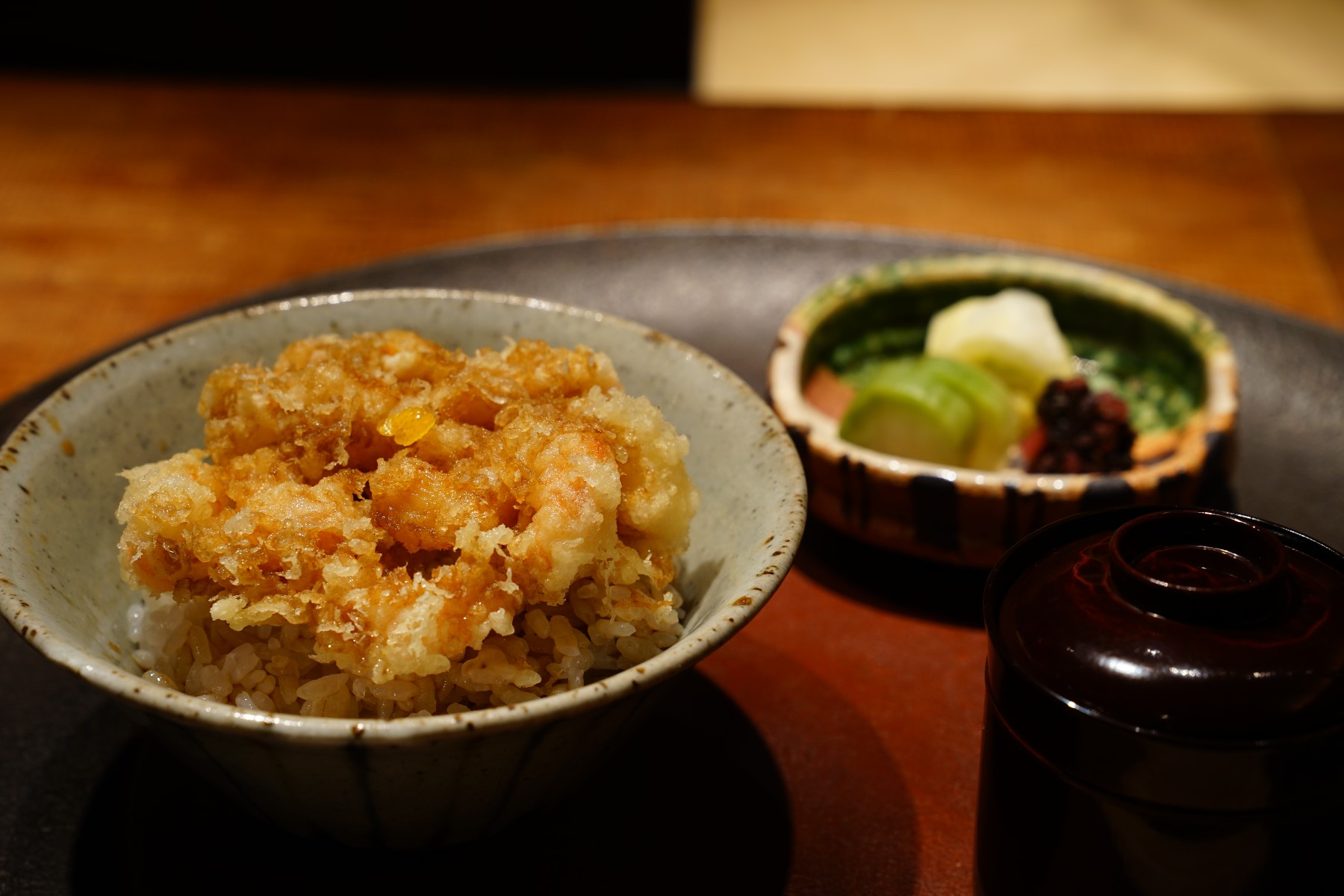
The restaurant offers five bowl sizes and explicitly allows a small bowl of rice with a larger kakiage. Someone has considered the entirely ordinary possibility that a diner might have had enough of one thing and still want more of another. 4
A small bowl, then, with the larger fritter. No need to finish dinner quite as sensibly as planned.
Before you book
Checked 9 October 2026. Figures are per person in yen; drinks are extra. Booking fees below apply to OMAKASE, not necessarily to hotel-concierge or other routes. Confirm the final quotation, seating and cancellation terms before committing.
Tempura Motoyoshi 天ぷら 元吉
Where / seat. Granbell Ebisu IV, 3F, 2-8-11 Ebisunishi, Shibuya. Eight-seat tempura counter; no specific position guaranteed. Dinner starts at 17:30 or 20:30. 25
Budget / booking. Active listing: ¥36,300–48,400 including service; ¥390 booking fee where applicable. The official menu shows a lower range: obtain a written quotation. Overseas guests are directed to their hotel concierge; the domestic OMAKASE allocation excludes overseas residents. Domestic telephone bookings open one month ahead. 452324
Principal limitation. Extensive exclusions can make the menu unavailable. OMAKASE cancellation: 50% from three days before; 100% from two days before. 5
Hakkoku はっこく
Where / seat. La-Pe Building, 3F, 6-7-6 Ginza, Chuo. Three six-seat counters; fixed 25-piece dinner. Choose the named chef’s service when it matters. A particular chair is not guaranteed. 7106
Budget / booking. From ¥36,690, including tax, service and the ¥390 OMAKASE fee; ingredient costs can increase it. Reserve through the linked OMAKASE page, up to two months ahead. Card payment only. 6
Principal limitation. No vegetarian or raw-fish-free menu. Cancellation: 5% after booking, 50% from seven days before, 100% from two days before. 6
Yakitori Omino, Oshiage 焼鳥 おみ乃(押上)
Where / seat. Seiryu Building, 1F, 1-38-4 Oshiage, Sumida. Counter-only yakitori; 17 places listed. This is the Oshiage branch, not a promise of the founder at the grill. 1112
Budget / booking. ¥11,940 minimum, including service and OMAKASE’s fee. Additional skewers, rice and drinks increase it. Book through OMAKASE; the next advertised release is 1 November 2026 at 10:00 JST. Cashless only. 12
Principal limitation. Skewers already cooking when you ask to stop remain part of the meal. Cancellation: 30% from seven days before, 50% from three days before, 100% from the preceding day. 12
Myoujyaku 明寂
Where / seat. B1F, 3-2-34 Nishiazabu, Minato. Seasonal Japanese tasting menu. Confirm the eight-seat main counter; the separate counter and private rooms are different arrangements. 15
Budget / booking. Approximately ¥54,840 at the base rate, including service and OMAKASE’s fee. The booking page warns of a roughly ¥10,000–15,000 seasonal price change when domestic matsutake is used; confirm the complete total. Reserve through the official site’s OMAKASE link. Next advertised release: 1 November 2026 at 23:00 JST. 1622
Principal limitation. Confirm room allocation, dietary needs and language support in advance. Cancellation: 50% from seven days before; 100% from two days before. Anyone needing step-free access should confirm it directly. 2216


.png)