



The bone marrow is a good place to begin.
In Cesare Battisti’s published recipe for risotto alla Vecchia Milano, saffron rice receives a piece of veal bone with its marrow, a dark meat reduction and a gremolata containing lemon peel, parsley, rosemary and anchovy. The butter comes from mountain dairying; the grated cheese is Lodigiano. The composition offers a reason to want dinner: rice carrying dairy and meat, with enough aromatic interruption to make the richness an interesting prospect. Battisti’s published recipe, Reporter Gourmet.
It is also a useful beginning because the desire is specific. You could want this rice. You could want to understand what happens when a familiar Milanese preparation is handled by someone who has made its ingredients a sustained subject of attention. An evening can start with that much appetite, before it has acquired a guest list.
Then comes the calendar.
For anyone who has kept a restaurant indefinitely in mind, the postponement will be familiar enough. There is someone to invite, a journey to coordinate, a week that almost works. The intention survives each adjustment. After a while, wanting the meal and arranging the meal become separate activities. One remains pleasantly vivid. The other has disappeared into a conversation about dates.
Eating alone seems an obvious solution until the restaurant is somewhere beautiful, expensive or sufficiently anticipated to feel like an occasion. Then the administrative problem can acquire a peculiar moral weight. Going without the other person begins to resemble spending something that belonged to both of you. Or the opposite anxiety appears: perhaps a dinner this elaborate needs another person to justify it.
Neither feeling has to be foolish. Shared anticipation is part of friendship. There are meals whose pleasure lies in showing someone a place. But a restaurant can also become a small, respectable way of putting off one’s own life. The reservation remains hypothetical; the appetite has to wait.
Milan offers three different ways of examining that delay. Ratanà brings regional cooking into the working day. Trippa makes the allocation of a scarce table unusually explicit. Seta, Antonio Guida’s restaurant at Mandarin Oriental, gives elaborate cuisine several different lengths and prices. Their published offers reveal how much of the decision is already being made before anybody welcomes the guest.
The useful question is what each arrangement allows one person to do.
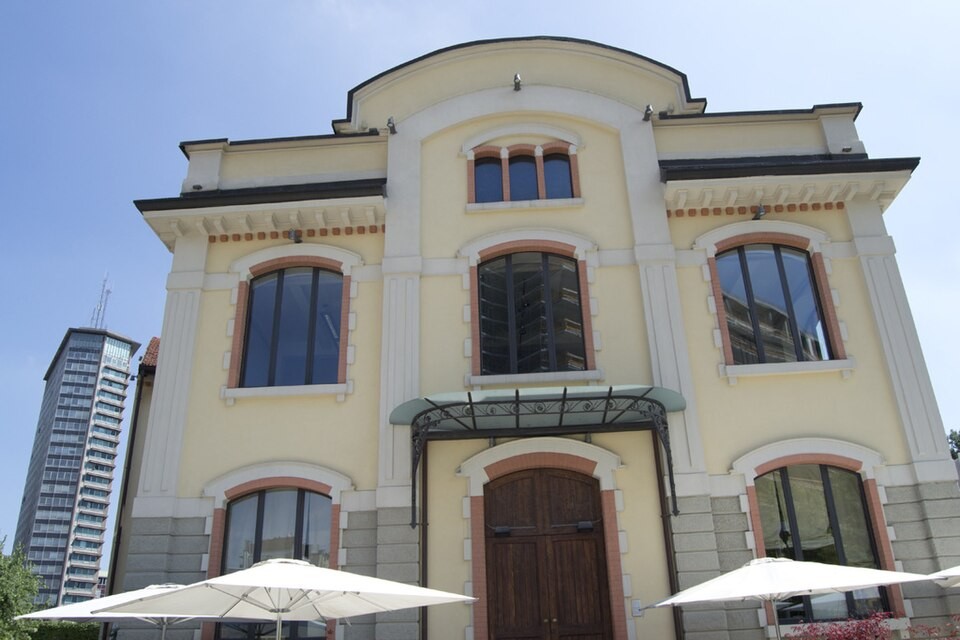
Ratanà occupies an early twentieth-century building in the Garibaldi–Porta Nuova–Isola area, among a very different generation of construction. The restaurant credits RGA Studio with interiors using reclaimed ferrous materials, including furniture and an imposing wine display. Its own account places this material reuse within the building’s former railway function. The historical claim belongs to the operator; the present design intention is clear enough: the older structure is meant to remain legible inside the contemporary restaurant. Ratanà’s account of its building and interiors.
That intention has a counterpart in Battisti’s treatment of rice. In a 2017 interview with Il calendario del cibo italiano, he explained his preference for authentic Carnaroli and a relatively young Lodigiano cheese, chosen partly for its contribution to the final consistency. He also insisted on the interval between cooking and eating: a risotto needs time to reach a temperature at which its flavours can be perceived. The detail is more persuasive than a general declaration of respect for tradition. It identifies a decision the cook must make every service. Interview with Cesare Battisti, 20 April 2017.
A recognisable dish can conceal that kind of discrimination. Its name supplies familiarity; its execution still has to earn the order. Knowing what risotto ought to be may make a poor version more disappointing. Equally, an unfamiliar regional cheese or a different balance of garnish can renew attention to something the diner thought was settled.
There is no requirement to turn this attention into study. Someone can be curious about the rice and spend most of lunch thinking about something else. Hospitality should survive that, too.
On Ratanà’s Italian website, the weekday schiscèta is advertised at €24: one composed plate, a glass of wine, water and coffee, with the food changing daily. The format gives lunch a comprehensible boundary. A person can assess the proposition without first deciding how many courses constitute an acceptable visit. Ratanà’s Italian menu.
The name carries a history of food brought to work. In its account of the schiscetta, Gambero Rosso traces the term’s expansion from a portable food container to the meal carried inside it. The article also recalls Renato Caimi’s 1952 sealed lunchbox, a piece of industrial design addressing the very ordinary difficulty of transporting lunch without spilling it. Gambero Rosso on the schiscetta.
A restaurant lunch at €24 occupies a different economic position from bringing yesterday’s cooking from home. The borrowed word does not erase that distance. It does, however, retain the idea of a meal with a place in the day. Hunger has been anticipated. There is an interval for it, a portion, a cost.
For a guest who feels conspicuous eating alone, a working lunch may also supply an explanation nobody has requested. Work gives the solitude a purpose. A bag at the next chair can seem to account for the absence of a companion. The same person returning at dinner may feel exposed, although the restaurant’s view of them could be entirely unchanged.
This is one of the difficulties with writing about solo dining: a table cannot tell us what its occupant thinks. The confident-looking guest may be uncomfortable. The quiet guest may be having an entirely ordinary Tuesday. A public discussion on Reddit titled “Milan alone” contains a useful objection to the premise. One contributor recommends Seta while asking why eating alone should make a difference at all. It is an anonymous opinion, without a verified account of a solo meal, but the question punctures any assumption that embarrassment is universal. The “Milan alone” discussion.
It should remain possible to order lunch without becoming the subject of an emotional diagnosis.
Still, restaurants make choices that confidence cannot remove. Ratanà’s Italian tasting-menu description begins with four starters to share. That wording leaves the individual guest with a practical question about how the format translates for one. It establishes no prohibition. The English page describes a different tasting format and price, so neither version settles the current arrangement. Italian tasting-menu description, English tasting-menu description.
A capable answer from the restaurant might resolve the whole matter in a sentence. What matters is the substance of that answer: which food, in what quantities, at what charge. Encouraging someone to feel comfortable does little if they must purchase more dinner than they want.
This is also where the pleasure of company deserves its place in the argument. Sharing can widen a meal. Two appetites make room for an additional preparation; a companion’s order can interrupt your habits. A dinner for one may offer fewer dishes and still feel sufficient. Its completeness cannot reasonably depend on reproducing everything a larger table can eat.
At Trippa, the first scarce ingredient is the table.
Diego Rossi’s trattoria on Via Giorgio Vasari has a culinary reputation strong enough to make the pursuit understandable. Michelin recommends beginning with fried tripe and identifies offal as a recurring part of a menu drawing on several Italian regions. Its assessment credits the ingredients and Rossi’s abilities, while warning that advance booking is necessary. Michelin’s Italian assessment of Trippa.
More detailed criticism explains why the food deserves attention beyond the name on the door. Reviewing Trippa in September 2025, Davide Scapin Giordani of Passione Gourmet described the fried tripe’s restrained aroma and fine flour coating, and located much of the kitchen’s interest in verbally announced specials. He singled out a preparation of pajata in the manner of Lombard cassœula; he also discussed butter-and-Parmesan tagliatelle and vitello tonnato as dishes whose apparent simplicity depends on carefully judged textures. These are his tasting observations, from that review. They offer reasons to pursue Rossi’s cooking without promising an identical menu now. Passione Gourmet, 13 September 2025.
There is considerable appetite in that description. A thin coating around tripe proposes a different encounter with the ingredient from a prolonged braise. Pasta whose interest rests on butter, cheese and the behaviour of its sauce places the cook under a particular kind of scrutiny. The guest has relatively little to be distracted by. Such dishes make modest ingredient lists a demanding form of cooking.
They should also release the diner from the need to order adventurously. Offal can become its own performance of sophistication. The person who wants pasta has no obligation to prove that they understand the restaurant by choosing the least familiar part of an animal. Curiosity is useful; obedience to a culinary identity is less appetising.
Rossi’s published account of his own priorities supports taking the food seriously. In an Identità Golose profile, he says his starting point is the dish, explaining his resistance to building his cooking around trends or presumed customer preferences. That is a statement of authorship. It leaves the customer equally free to decide whether the result is something they want to eat. Identità Golose’s profile of Diego Rossi.
Trippa’s booking page is unusually direct about demand: the restaurant says it has fewer than forty covers and receives daily requests exceeding ten times its capacity. Its dinner system publishes a rolling twenty-eight-day window. First-sitting tables are allocated two hours; second-sitting tables remain available until closing. Those are the operator’s terms, not evidence that individual diners are excluded. Trippa’s dinner reservation conditions.
The distinction matters. An unavailable table can feel like a judgment when it is simply unavailable. Conversely, a general explanation about demand would not excuse a restaurant concealing a restriction that specifically affects one guest. The evidence needed to distinguish those situations is quite plain: an actual booking offer and its conditions.
The two-hour sitting also complicates the notion that informality means freedom. A guest who wants an early dinner may appreciate knowing its duration. Someone who hoped to settle in for the evening should make a different choice. Neither preference is inherently more discerning. A time limit becomes a hospitality problem when the guest discovers it too late, or when the kitchen’s pace makes it impossible to enjoy the meal within the period sold.
The sought-after reservation can create another pressure: once acquired, it seems to require appreciation. The effort of getting in begins to intrude on the ordinary business of deciding whether you like dinner. Eating alone might make that easier to notice. There is no companion with whom to maintain the mood, but there is also nobody to help rescue a disappointing course through conversation.
A famous restaurant remains entitled to an ordinary verdict. The pasta may be excellent; a second dish may matter less. The evening can justify the booking without becoming one of the defining meals of a life.

Wine introduces a more measurable complication. A bottle that makes sense across two or three appetites may be too much for one. The useful wine list is therefore partly the list the guest can actually order from at an appropriate volume.
In an interview published by cellar-software supplier Enoweb, Trippa co-owner Pietro Caroli described deliberately developing the wine selection and attracting customers with a stronger interest in wine. Asked whether the list followed a fixed natural or organic position, he described preferences concerning producers and the wines’ appeal rather than a rigid category. The commercial setting of the interview should be acknowledged; it nevertheless records Caroli’s own account of the restaurant’s choices. Enoweb’s interview with Pietro Caroli.
For a solitary diner, the significance lies in what that ambition makes available by the glass. A large cellar can offer tremendous possibility, but the number of labels does not answer the question. Nor does an expensive pairing necessarily fit the evening. A person may want one carefully chosen glass, two different ones, or no alcohol at all. The small order tests whether expertise can work at the scale of the guest’s appetite.
It is a precise form of generosity to understand that someone wants less.
Seta offers a useful place to continue that thought because its ambition is unmistakable. The restaurant occupies Mandarin Oriental’s second courtyard, with glazing between the interior and the open space, and a kitchen visible from the dining room. The arrangement gives a guest several possible objects of attention. It also makes the relation between exposure and privacy more interesting than the generic promise of a beautiful room. Seta’s official restaurant page.
A kitchen in view does not make every seat equivalent. The angle matters, as do the distance from the pass, the movement of staff and the comfort of remaining in the chair. A guest may want to watch cooking for three hours; another may prefer the courtyard. The appropriate seat begins with a preference, rather than the assumption that someone alone needs entertainment.
Published accounts of Seta illustrate why architecture has to be experienced from a particular position. A 2019 Misspector review of a 2018 lunch appreciated the daylight but found the divided room and low ceiling constraining. A much more recent account, published by AltissimoCeto in August 2026, praised the spacing and handling of service. These are different visits separated by years, rather than a controlled comparison. Together they offer a reason to be specific about seating and cautious about declaring a room universally comfortable. Misspector’s 2018 lunch, published January 2019, AltissimoCeto, 5 August 2026.
The food gives the attention somewhere to go. Guida’s risotto with raspberry and herb cream has a published construction more intricate than the short menu description suggests. Carnaroli is cooked with chicken stock and finished with two butters, Parmigiano, Castelmagno, sage and a little soy sauce. A second preparation cooks rice beyond the point required for distinct grains, combining it with spinach and chard before blending. Raspberry powder completes the plate. The same ingredient is asked to provide both individual grains and the body of a sauce. Guida’s published risotto recipe, Reporter Gourmet.
Read beside Battisti’s recipe, it opens up a different possibility for rice in Milan. The desire here is to discover whether the fruit, leaves, dairy and savoury depth cohere at the table. A recipe can establish the intelligence of the question; only eating can establish the quality of its answer. The colours may earn a photograph, but the second and fifth spoonful would matter more to the decision to return.
Seta’s published main menu includes both tasting sequences and a shorter à la carte format, the latter beginning with two courses and dessert. The separately advertised Tuesday-to-Friday lunch offers that same number of courses at a lower price, with a sommelier-selected glass available as an addition. These formats do not themselves confirm one-person booking eligibility, but they establish that the kitchen’s offer has more than one scale. Seta’s main menu, Seta’s weekday lunch menu.
That choice is meaningful. There is a tendency to treat the most extensive menu as the fullest expression of a restaurant, and therefore the most defensible use of a difficult reservation. Yet a kitchen can be encountered through a shorter sequence. Wanting the risotto does not automatically entail wanting the longest possible afternoon.
The sample lunch sheet also resists the assumption that a shorter meal means undemanding cooking. It lists fettuccine involving pistachio, herbs and green tomato, and a dessert bringing chocolate together with beetroot and pepper. The dishes change frequently, the restaurant specifies. These combinations are invitations to follow the kitchen beyond its best-known rice, with a smaller commitment of courses. Seta’s sample lunch menu.
A smaller commitment can permit more appetite. There is space to want dessert because dinner has left room for it, and to leave with a particular flavour still interesting. More food is sometimes a pleasure; sometimes it makes the final courses harder to attend to. The appropriate length belongs to this guest on this day.
The pleasure of a tasting menu is partly the willingness to let someone else organise the next few hours. For the guest who wants that, its continuity can be absorbing. Courses create intervals and renew attention; a sequence can introduce a dish the diner would never have selected. A good long meal has room for surprise, changing appetite and the gradual alteration of the room as the service proceeds.
The obligation arrives when duration becomes a measure of commitment. Tiredness is treated as inadequate curiosity; declining the pairing feels like missing part of the argument. None of this needs to be said by a waiter. A diner can impose it on themselves. The establishment’s contribution to ease may be to make the shorter choice feel entirely ordinary.
There is reason to give Seta’s formal service the benefit of an open mind. The August 2026 AltissimoCeto account describes explanations that remain concise and wine service that avoids technical self-display. That published experience cannot stand in for an unannounced solo visit. It does challenge the assumption that elaborate dining necessarily involves an elaborate social burden. AltissimoCeto’s account of Seta’s service.
Professional distance can be restful. A waiter need not become a temporary friend to look after someone well. The work might consist of explaining a sauce clearly, noticing that a glass is empty and allowing a question to end without extending it into conversation. Silence between courses can simply be time the guest has bought along with dinner.
It can also be boring. This possibility deserves to survive the enthusiasm for solitary pleasure. A person might discover that they enjoy elaborate food more with company, that they like comparing impressions, or that anticipation had made the restaurant larger than an actual meal could be. Going alone does not have to produce a conversion. It can produce information.
There is little freedom in replacing one demand with another: first the requirement to have a companion, then the requirement to demonstrate that no companion was ever needed.
The more useful possibility is smaller. A person can like the meal and miss someone. A well-chosen glass can be pleasurable during a sad evening. A dish can prompt the thought of a friend who would love it, and the thought can remain affectionate rather than become evidence that coming alone was a mistake. Eating first does not use up the restaurant. Returning together would be another evening, with its own appetite.
This does not make every postponement an error. Some experiences are worth saving for someone. The difficulty is recognising when anticipation has ceased to bring pleasure and become a habit of deferral. The distinction may become clear only after an ordinary event: the dates fail again, the invitation remains unanswered, or the person who wanted the meal discovers they no longer remember why.
Restaurants are unusually good at making the abstract idea of time concrete. Rice has a cooking time. Tables have reservation times. Kitchens close. The imagined future has to pass through an actual service.
In January 2026, Battisti offered a revealing account of that service to Identità Golose. Announcing a move to continuous opening at Ratanà, he explained that the principal reason concerned staff. Split shifts left employees living outside Milan with long stretches between duties and little useful time of their own. The proposed schedule replaced that arrangement with continuous eight-hour shifts over five days; he said additional staff had been hired. “Everyone rightly expects to have a better life,” he said, in translation. These were the chef’s statements about the change, rather than independently audited working conditions. Identità Golose’s interview, 24 January 2026.
The interview changes the scale of the question. An afternoon opening is convenient for a guest with an irregular day. In Battisti’s account, it was also part of an attempt to return usable hours to the people preparing and serving the meal. The restaurant’s website still displays split kitchen hours, so the present afternoon offer needs confirmation. The published explanation nevertheless gives hospitality a human purpose beyond extending availability. Ratanà’s published hours.
A guest’s unhurried evening depends on other people being at work. Any serious account of dining alone has to make room for their lives. The waiter may have a meal they keep postponing. The cook may want to get home while someone is still awake. We cannot know their circumstances from the dining room, but we can resist treating their time as an inexhaustible resource supplied for our convenience.
This makes the practical agreements seem more consequential. A disclosed table duration allows the guest to choose and the restaurant to plan. A well-sized portion respects appetite and labour. An explanation offered at the right moment gives the diner what they need while letting service continue. Competence makes several people’s evenings possible at once.
For the person considering a meal alone, that is a more substantial welcome than being congratulated on doing it. The restaurant has thought through the food, the seat, the price and the time. The guest can then bring whatever state of mind they happen to have.
Perhaps the evening will become memorable. Perhaps the rice will be the part that remains, while the room and the route home disappear. There may be a message to send afterwards, a dish to describe badly, a wish to return. There is room for all of this without turning the dinner into proof of independence.
“No one is joining me” can carry disappointment, relief or no particular feeling. It is also sufficient information for a restaurant to begin its work.
One person has arrived with an appetite. The meal can begin while it is still theirs.
Practical notes
Public-source check: 6 September 2026. These are three restaurants examined in the essay, not a tested ranking of Milan’s solo-dining options. Single-cover access and specific seats have not been confirmed. Published prices below are menu indications, not bills from EDIT27 visits.
Ratanà
Via Gaetano de Castillia 28. +39 02 8712 8855.
Booking and timing. Use the official reservation link; require a confirmation email. Ask about a single cover, the sharing format and seat allocation. The January interview announced continuous service, while the website still lists separate kitchen hours: confirm afternoon dining directly.
Published cost and material conditions. Weekday schiscèta €24, including a plate, wine, water and coffee. Italian tasting listing €85; English €70, with different formats. Obtain the applicable quote, additional charges and cancellation terms. Italian menu, English menu.
Trippa
Via Giorgio Vasari 1. +39 327 668 7908.
Booking and timing. Dinner: online, rolling twenty-eight-day window; new dates after midnight. Select the actual party size or waiting list. First sitting: two hours. Reconfirm through the reminder sent twenty-four hours before. An unannounced delay over fifteen minutes cancels the booking. Closed weekends. Dinner terms.
Published cost and material conditions. No current full menu total verified. Passione Gourmet reported €50–€60 in September 2025; that is historical context with inclusions unspecified. Dinner no-show: €50/person. Friday-only lunch has a €50/person no-show or post-11 a.m. cancellation charge; check dinner cancellation terms separately. Historical review, Friday lunch terms.
Seta
Mandarin Oriental, Via Andegari 9. +39 02 8731 8897.
Booking and timing. Use the official booking page or contact the restaurant for single-cover menu eligibility and seating. Published service: Tuesday–Saturday, lunch 12:30–14:30, dinner 19:30–22:30. The special lunch is Tuesday–Friday. Confirm cancellation terms; gentlemen are asked to wear long trousers and closed shoes.
Published cost and material conditions. Weekday lunch: two courses and dessert €125, VAT/service included; wine glass €15 extra. Main menu: tasting €260, pairing €200 extra; two courses and dessert €170, three and dessert €220. Listed lobster/langoustine à la carte supplement: €25. Main-menu prices include VAT; confirm service and other extras.
For all three, confirm any required step-free route, toilet access, dietary adaptation and alcohol-free offer before booking; those details were not verified here. Request the exact total and menu available to one person. An unavailable online result alone does not establish a policy against solo diners. Recipes and past reviews identify culinary interests; changing menus may offer different dishes.
Search-facing title: Eating Alone in Milan: Ratanà, Trippa and Seta
Editorial status: The essay is complete as a source-based draft. Meeting the original commission’s standard for firsthand restaurant recommendations still requires ordinary-channel solo meals, recorded bills and service observations, direct confirmation of unresolved policies, and original conversations with diners and staff.
.png)


.png)


.jpg)
